Deep Research & Description
The M-Tech Rise R407 (often branded as the MTI R407) is a definitive “power-user” motherboard from the high-water mark of the 486 era (circa 1994). Produced by M-Technology, Inc., it was a staple in high-end “white-box” clones that needed to balance the raw processing power of the 486 with the high-bandwidth demands of early 90s graphical environments.
The R407 is built upon the SiS 85C471 chipset, widely regarded as one of the most stable and high-performance logic sets ever designed for the Socket 3 platform. While many motherboards of the era struggled with timing issues, the SiS 471 was famous for its “rock-solid” memory controller and its ability to handle high bus speeds (up to 50MHz) with minimal fuss.
Technically, the R407 is a VESA Local Bus (VLB) champion. It features three 32-bit VLB slots (the long brown extensions at the end of the ISA slots). In 1994, this was the “Expressway” for your hardware; by plugging a VLB graphics card and a VLB I/O controller into these slots, you bypassed the bottleneck of the aging 16-bit ISA bus, allowing for smooth performance in “multimedia” applications and early 3D games like Doom.
The board is also a “Hybrid Memory” pioneer. It features both four 30-pin SIMM slots and two 72-pin SIMM slots. This was a massive selling point during the mid-90s “RAM Drought,” as it allowed users to keep their expensive 1MB or 4MB 30-pin sticks from their older 386 systems while adding newer, high-capacity 72-pin modules.
Era Context
-
The “Rise” Identity: While the board is an M-Tech product, the “Rise” branding often appeared on the packaging or silk-screening, signaling the board’s “Rise to Power” performance tier.
-
The VLB Bottleneck: While having three VLB slots was a luxury, using all three at once was often unstable if the bus speed was set to 40MHz or 50MHz. Power users usually reserved the slots for a high-end S3 805 or ET4000/W32i graphics card and a multi-I/O controller.
-
Operating System: The definitive MS-DOS 6.22 and Windows 3.11 platform. It was the “dream machine” for anyone wanting to experience the peak of 16-bit computing.
-
The R407E Revision: If you have the “E” (Enhanced) model, it added the voltage regulators necessary to run the Intel DX4-100 and the AMD 5×86-133, pushing 486 performance into the early Pentium territory.
Component Gallery
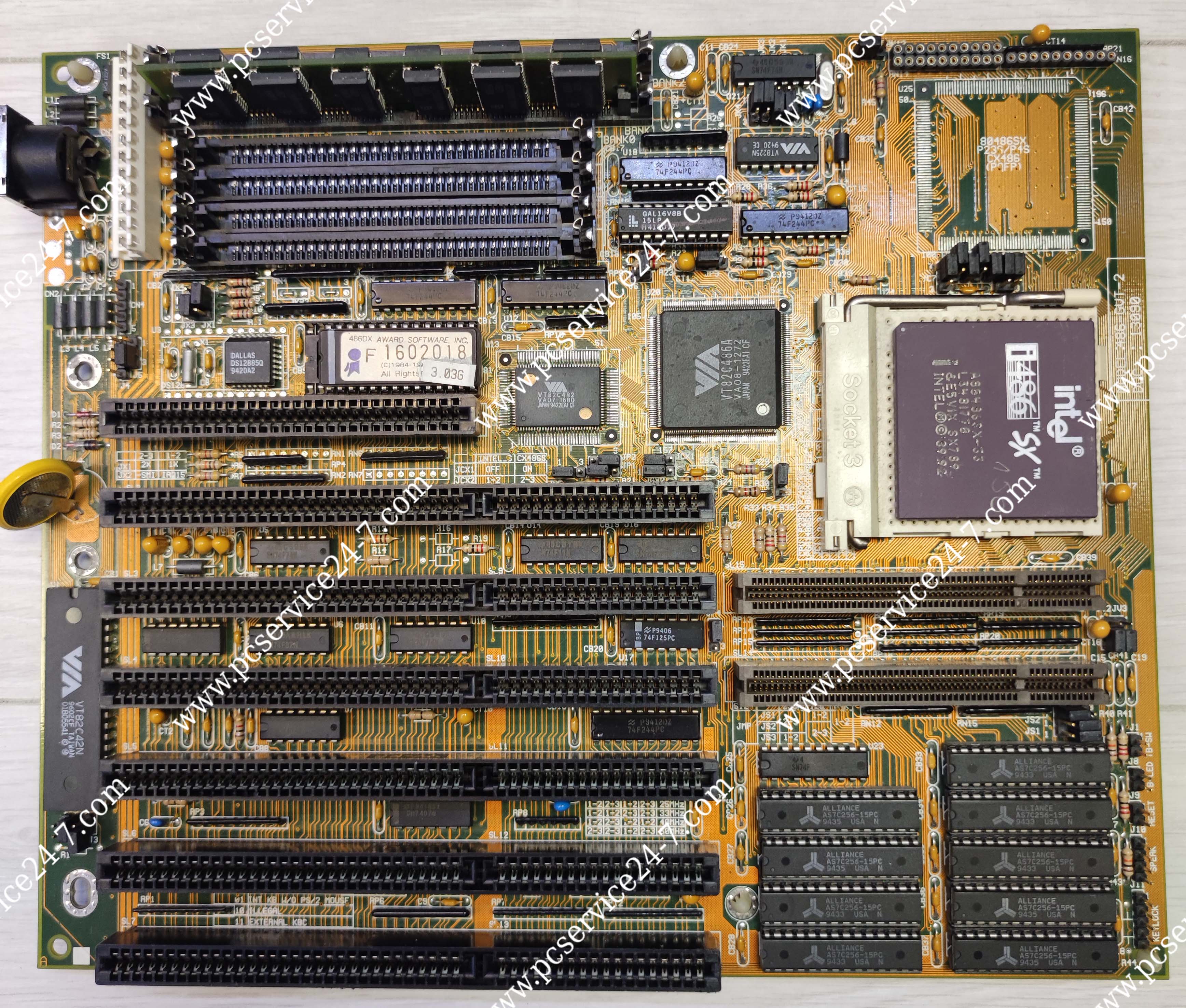
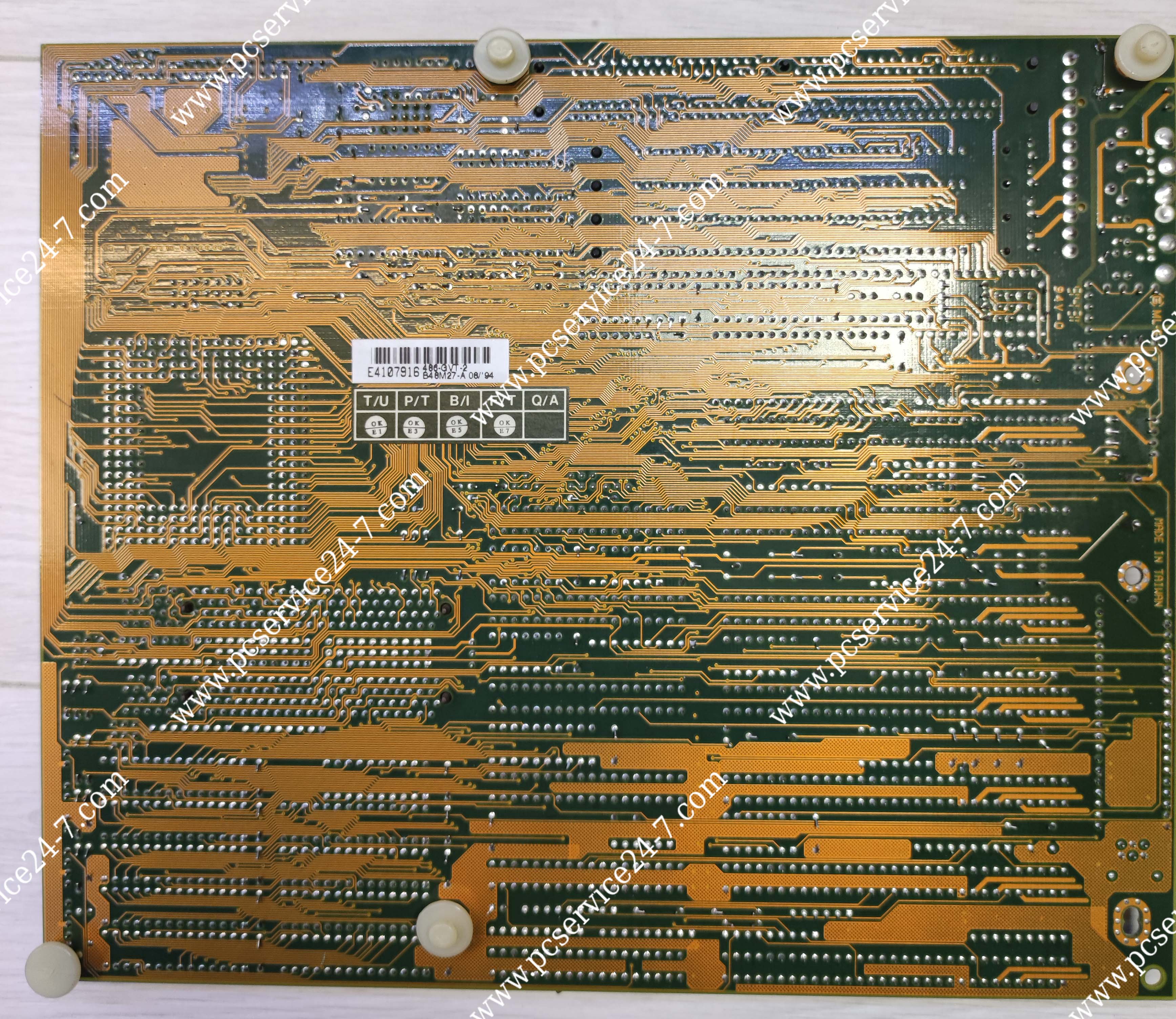
Quick Specs
| Feature | Specification |
| Manufacturer | M-Technology, Inc. (MTI) |
| Model | R407 / R407E (Enhanced) |
| CPU Socket | Socket 3 (ZIF) |
| Supported CPUs | Intel 486 SX/DX/DX2 (DX4 supported on R407E) |
| Chipset | SiS 85C471 / 85C407 |
| Bus Speed | 25 / 33 / 40 / 50 MHz (Jumper Set) |
| Memory | 4x 30-pin SIMM + 2x 72-pin SIMM Slots |
| Expansion | 3x VESA Local Bus (VLB), 4x 16-bit ISA |
| L2 Cache | Up to 512KB (DIP-28 SRAM) |
| Form Factor | Baby AT |