Deep Research & Description
The Pentium II 266 was a radical departure from the flat chips of the previous decade. By moving to the Single Edge Contact Cartridge (SECC), Intel solved a major engineering bottleneck: the L2 cache. In the Pentium era, cache sat on the motherboard and ran slowly. In the Pentium II, the 512 KB of L2 cache was moved inside the cartridge onto a dedicated circuit board. While it only ran at half the CPU speed (133 MHz), it was still significantly faster than anything that had come before, providing a massive boost in multitasking and 3D rendering.
Architecturally, the 266 MHz model was built on the Klamath core, a 0.35-micron evolution of the Pentium Pro. It was the first “mainstream” chip to fully embrace the P6 microarchitecture, which introduced speculative execution and dynamic data flow analysis. Essentially, the chip could “predict” and “reorder” instructions to keep its pipelines full. This made the Pentium II 266 the undisputed king of Windows 95 and the early days of Windows 98.
In the evolution of the PC, the Pentium II 266 marked the birth of the AGP (Accelerated Graphics Port). It was the first processor designed to work with the Intel 440FX and 440LX chipsets, allowing for a dedicated high-speed lane for the new generation of 3D graphics cards. If you owned a 266 MHz Pentium II in 1997, you didn’t just have a computer; you had a high-end multimedia workstation capable of smooth DVD playback and high-resolution 3D gaming.
Era Context
-
The “Slot” Strategy: This was Intel’s attempt to move away from the standardized Socket 7. By patenting the Slot 1 interface, they temporarily locked out competitors like AMD and Cyrix, forcing them to innovate on their own platforms.
-
Operating System: The “power user” choice for Windows NT 4.0 and the definitive CPU for the launch of Windows 98.
-
Gaming Legacy: This chip was the gold standard for the first generation of true 3D RPGs and shooters, like Final Fantasy VII (PC Port) and the original Unreal.
-
Thermal Design: Because it ran at 2.8V, the Klamath 266 was a “hot” chip. It required the massive, heavy heatsinks (often with dual fans) that give these cartridges their imposing, industrial look.
Component Gallery
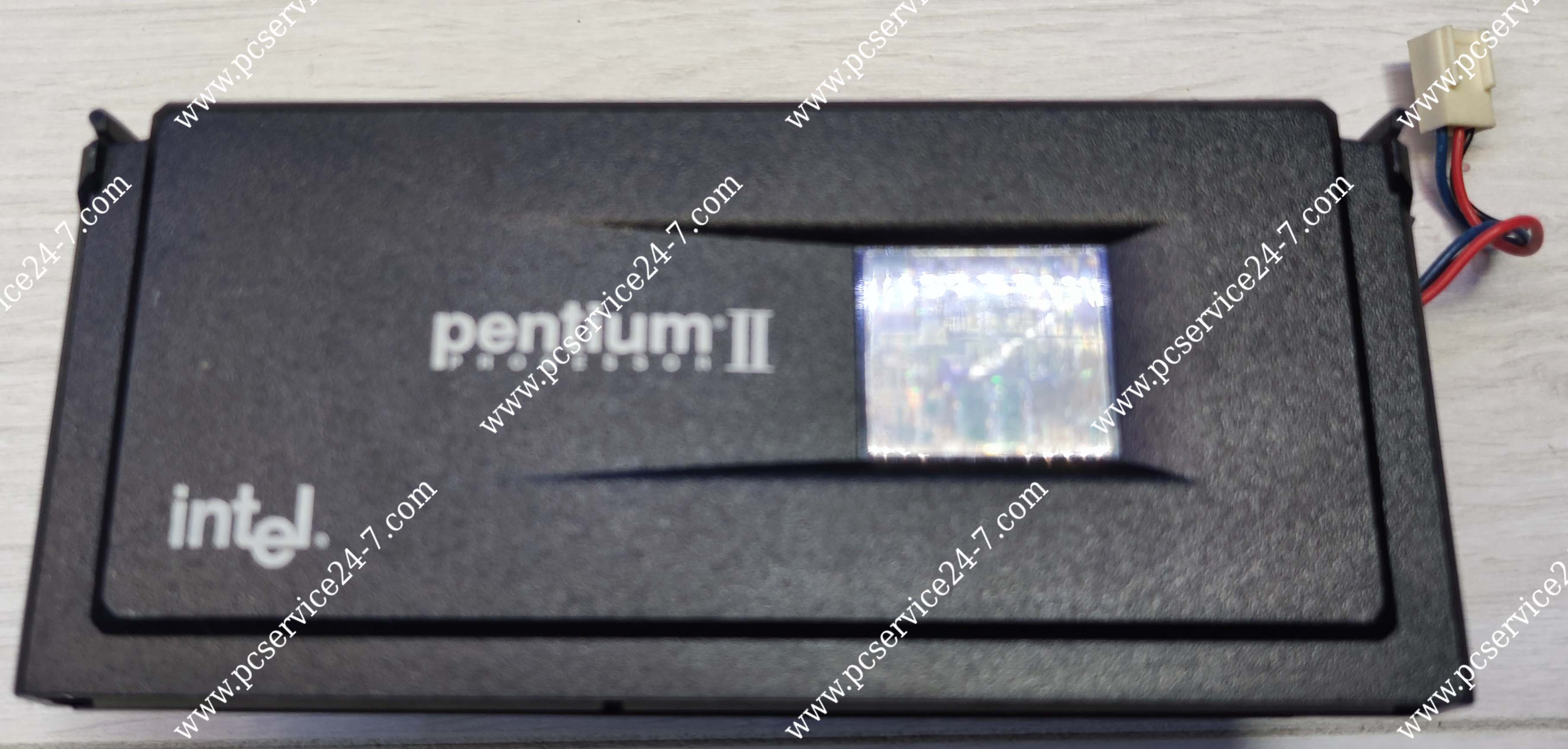
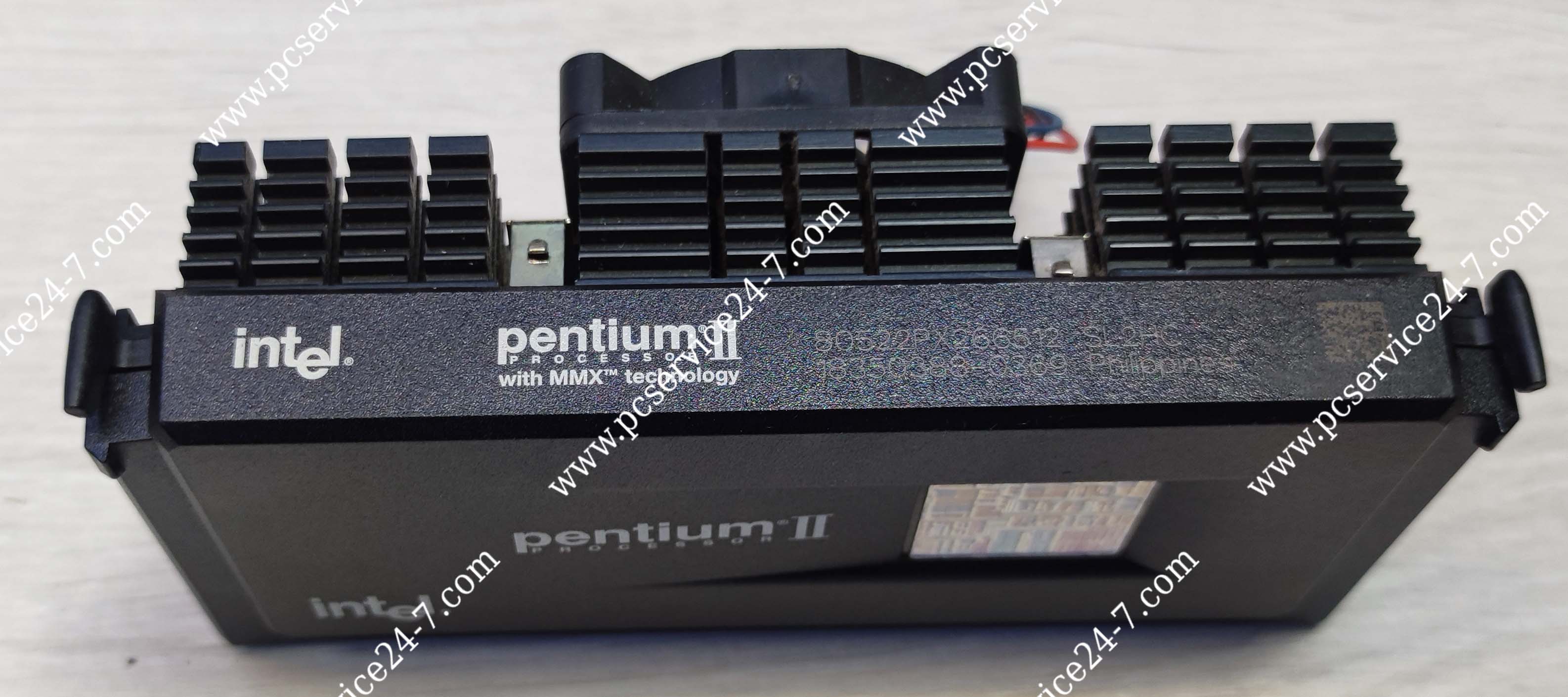
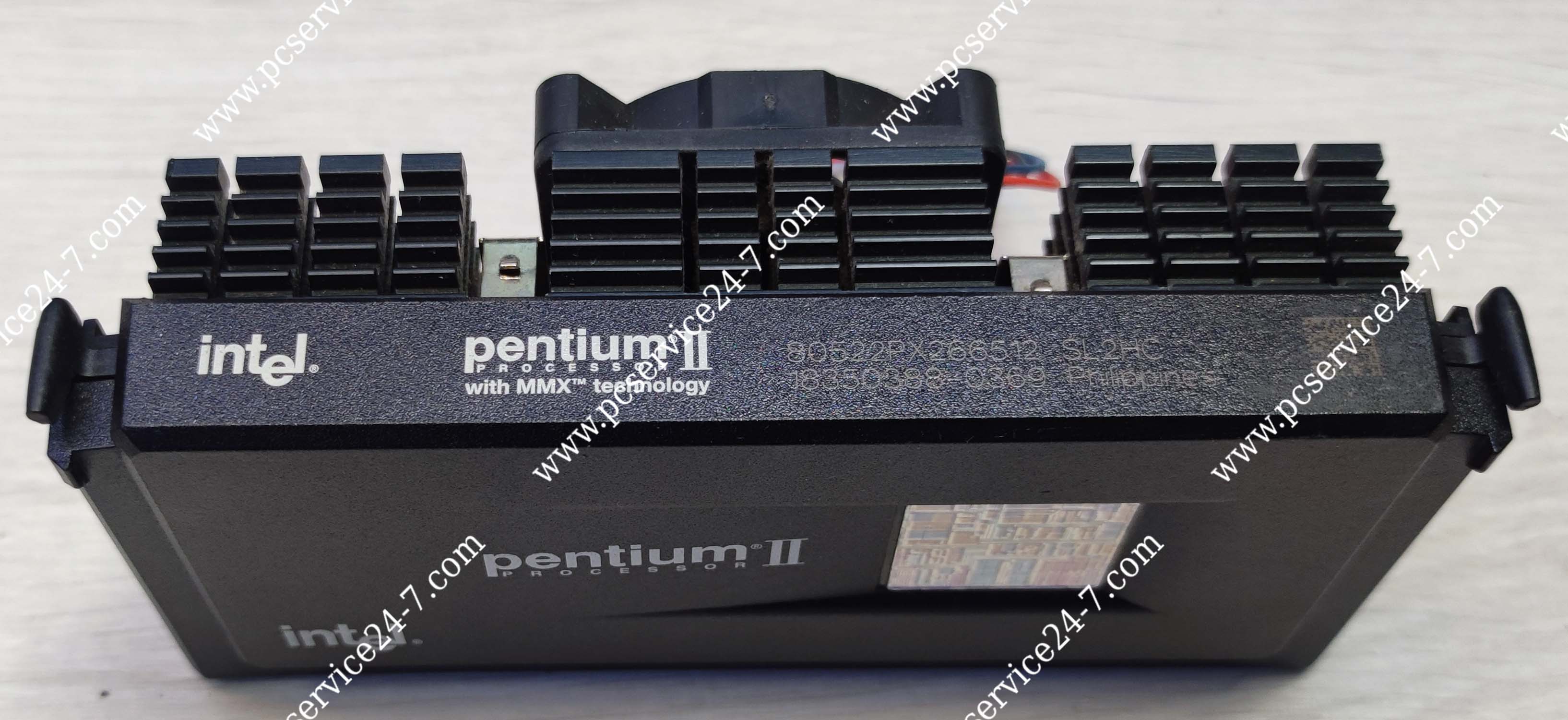
Quick Specs
| Feature | Specification |
| Model | Pentium II 266 |
| Part Number | B80522P266512 |
| Core Codename | Klamath (Model 3) |
| Clock Speed | 266 MHz |
| Bus Speed | 66 MHz (FSB) |
| L2 Cache | 512 KB (Off-die, Half-speed) |
| Socket | Slot 1 (SECC) |
| Manufacturing Process | 0.35 micron |
| Transistors | 7.5 Million |
| Voltage | 2.8 V |