Deep Research & Description
The Pentium II 350 is a significant evolutionary step because it was one of the first processors to utilize the 100 MHz Front Side Bus (FSB). Prior to this, mainstream Intel CPUs were stuck at 66 MHz. By jumping to 100 MHz, the Pentium II 350 effectively uncorked a massive bottleneck, allowing the CPU to communicate with the RAM and the rest of the system much faster. This change alone made the 350 MHz model feel significantly snappier than the 333 MHz model that preceded it.
Technically, this chip is based on the Deschutes core. Because of the smaller 0.25-micron process, it ran at a lower core voltage (2.0V) compared to the 2.8V of the earlier Klamath cores. This meant the 350 MHz model was not only faster but ran much cooler, allowing Intel to move from the massive, fully-enclosed SECC cartridges to the slightly more streamlined SECC2 designs later in its life cycle.
In the evolution of the PC, the Pentium II 350 was the engine of the “High-End Home Multimedia” era. It was often paired with the legendary Intel 440BX chipset—widely considered the most stable and successful motherboard chipset in history. Together, they provided the backbone for the first generation of true DVD playback, high-end 3D rendering, and the transition into the Windows 98 era.
Era Context
-
The 100 MHz Revolution: This chip, along with the 400 MHz model, forced the rest of the industry to upgrade to PC100 SDRAM, ending the dominance of the slower 66 MHz memory.
-
Operating System: The “dream” processor for Windows 98 and the ultimate workhorse for Windows NT 4.0 workstations.
-
Gaming Legacy: This was the era of the 3dfx Voodoo2 SLI setups. A Pentium II 350 paired with dual Voodoo2 cards was the absolute peak of 1998 gaming performance, capable of running Quake II and Unreal at previously “impossible” resolutions.
-
Longevity: Because it ran on the 100 MHz bus and the 440BX chipset, many of these systems stayed in active use for 5+ years, outlasting many of the budget chips that followed.
Component Gallery
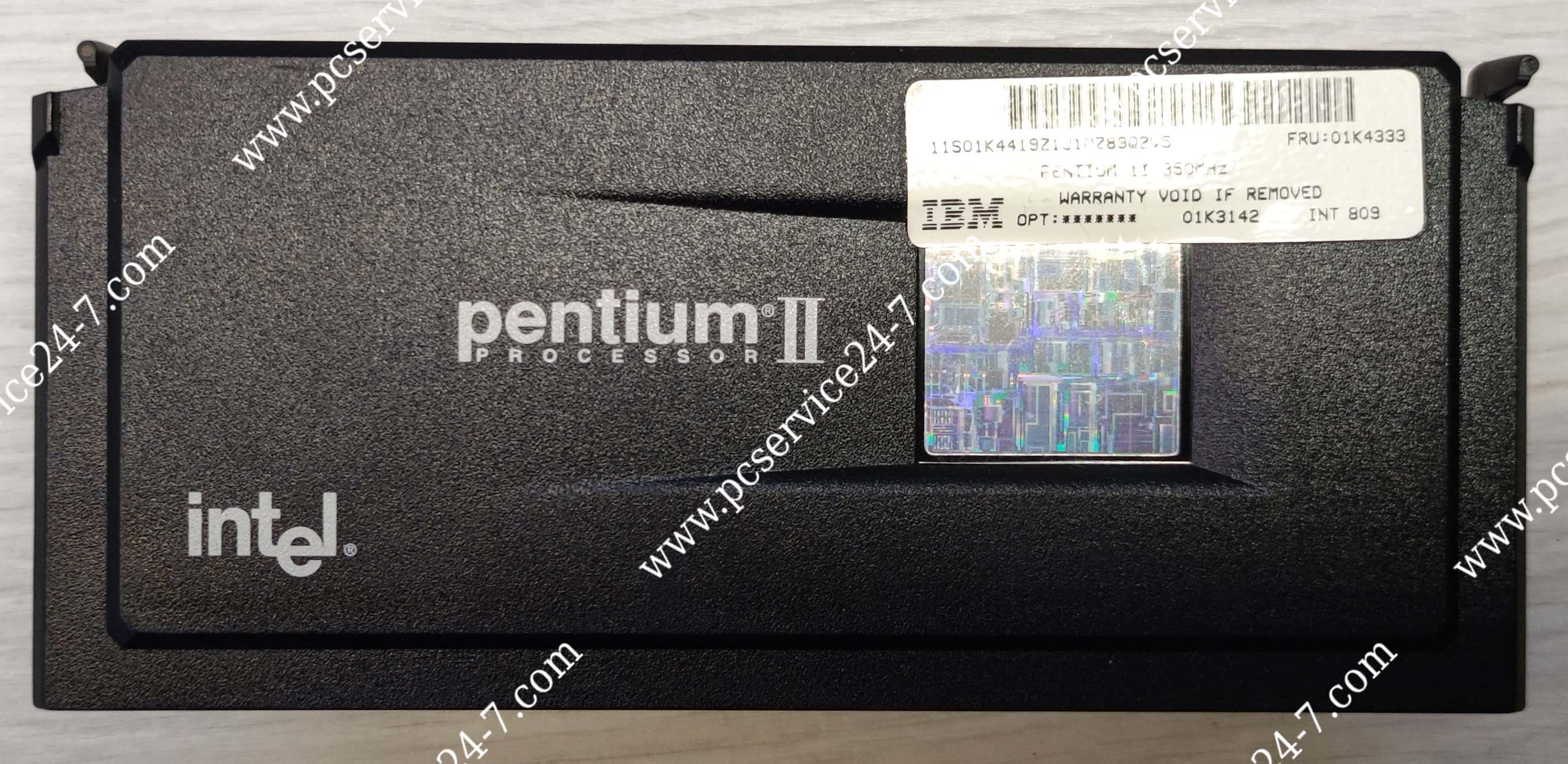
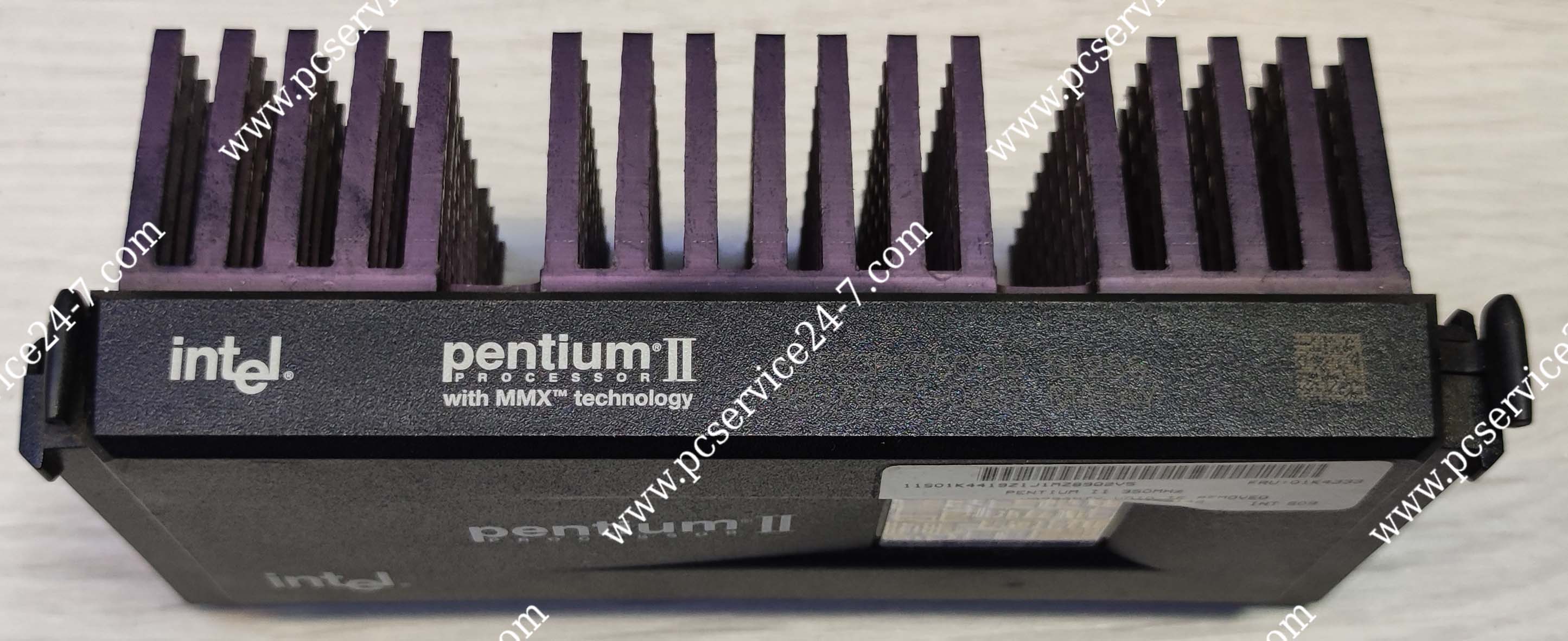
Quick Specs
| Feature | Specification |
| Model | Pentium II 350 |
| Part Number | B80523P350512 |
| Core Codename | Deschutes (Model 5) |
| Clock Speed | 350 MHz |
| Bus Speed | 100 MHz (FSB) |
| L2 Cache | 512 KB (Half-speed, 175 MHz) |
| Socket | Slot 1 (SECC / SECC2) |
| Manufacturing Process | 0.25 micron |
| Voltage | 2.0 V |
| Transistors | 7.5 Million |