Deep Research & Description
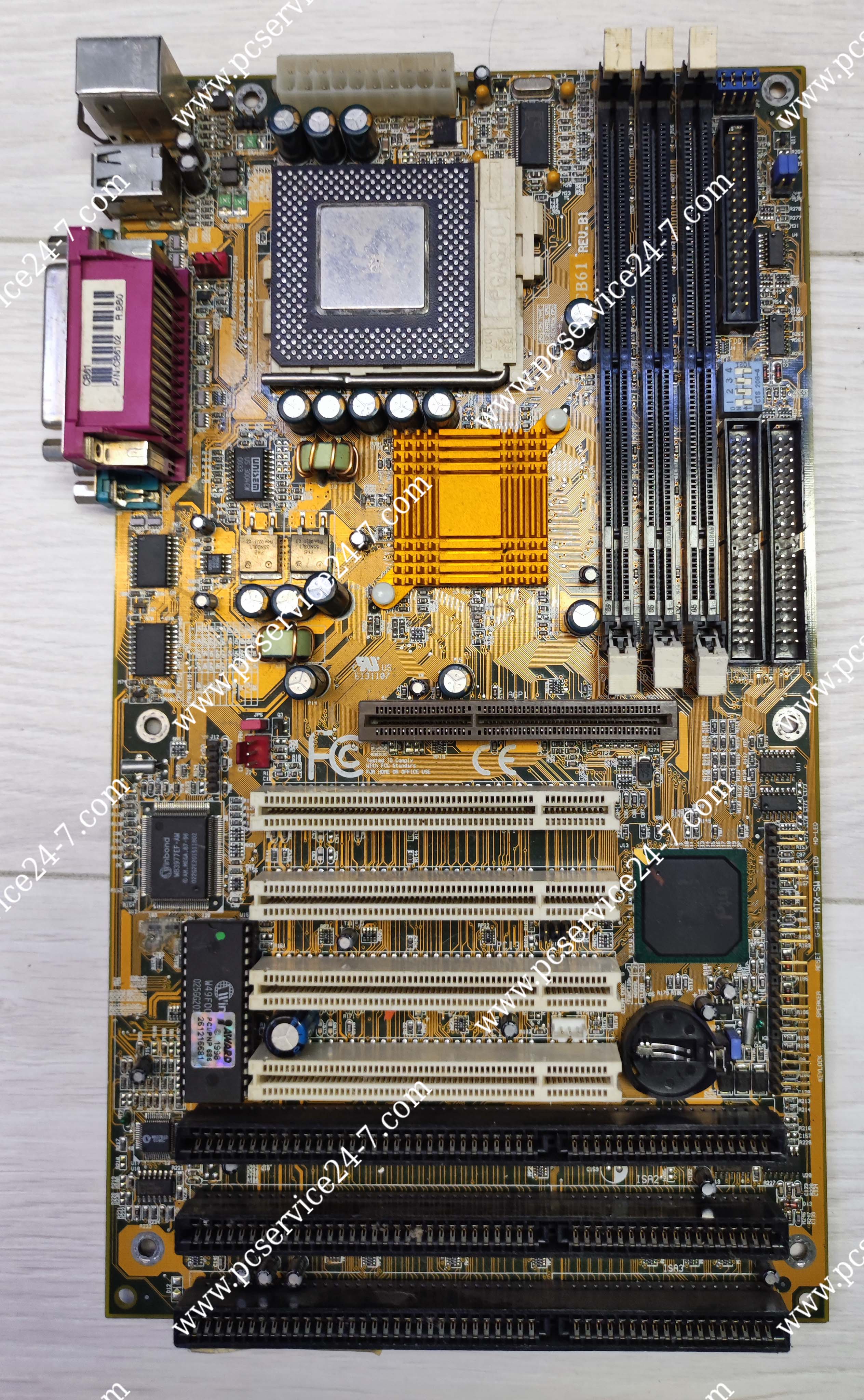
The DFI CB61 (Revision B1) in its Socket 370 form is one of the most respected “enthusiast” foundations of the late 90s. While many associate the legendary Intel 440BX chipset with Slot 1 cartridges, this specific DFI model brought that world-class stability directly to the socketed world, bypassing the need for “Slotket” adapters and offering a cleaner, more reliable signal path for the final generation of 100MHz FSB processors.
The “B1” revision is the critical detail that makes this board a gem. In the late 90s, the industry was struggling with the VRM (Voltage Regulator Module) transition. Older boards were designed for 2.0V “Klamath” and “Deschutes” cores (VRM 8.2). The CB61 Rev. B1 was engineered with an updated VRM (often VRM 8.4) specifically to handle the lower voltage requirements (1.6V–1.7V) of the Pentium III “Coppermine” and the later “Mendocino” Celerons.
Technically, this board is a purist’s dream. Because it uses the Intel 440BX Northbridge, it offers lower memory latency and higher throughput than many of the newer i810 or VIA-based boards that followed. However, because the BX chipset was natively designed for a 100MHz bus, the CB61 Rev. B1 is the “sweet spot” for 100MHz FSB chips like the Pentium III 700MHz or 850MHz. While it can be pushed to 133MHz, doing so overclocks the AGP slot to 89MHz (instead of 66MHz)—a feat only the most robust Voodoo or early GeForce cards could handle.
Architecturally, the board retains the classic “Enthusiast” layout: three 168-pin SDRAM DIMM slots (supporting up to 768MB of PC100/133 RAM) and, most importantly, two 16-bit ISA slots. This makes it one of the most powerful platforms available that can still natively host a high-end ISA sound card like the Sound Blaster AWE64 Gold without the compatibility issues of later PCI-emulated DOS sound.
Era Context
-
The “BX” Magic: The 440BX is widely considered the “Windows 98 Golden Chipset.” Its stability was so legendary that many companies refused to upgrade to the i820 (Rambus) or i815 chipsets for years.
-
The “Coppermine” Upgrade: This board allowed users to jump from a 300MHz Celeron to a 1GHz Pentium III (100MHz FSB version) on the same motherboard, an incredible lifespan for a late-90s platform.
-
Operating System: The definitive Windows 98 Second Edition and Windows 2000 workstation. It provided the perfect mix of modern AGP graphics and legacy ISA audio.
-
Legacy of Reliability: DFI built these boards for longevity. Unlike many budget boards of the era, the CB61 was often found in high-end medical or industrial systems because of its low failure rate.
This Socket 370 variant of the CB61 is the ultimate “clean” build for 1999. No adapters, no messy voltage mods—just pure BX performance in a socketed package.
Component Gallery
Quick Specs
| Feature | Specification |
| Manufacturer | DFI (Design for Innovation) |
| Model | CB61 Rev. B1 |
| CPU Socket | PGA 370 (Socket 370) |
| Chipset | Intel 440BX (Seattle) |
| Supported CPUs | Intel Celeron (PPGA), Pentium III (FC-PGA Coppermine) |
| Bus Speed | 66 / 100 MHz |
| Memory | 3x 168-pin SDRAM DIMMs (PC100/133) |
| Expansion | 1x AGP 2X, 4x PCI, 2x ISA |
| Storage | 2x IDE (Ultra DMA 33), 1x Floppy |
| Form Factor | ATX |
| Release Year | ~1999 |