Deep Research & Description
The VA-502 is built around the VIA Apollo VPX/97 (VT82C580VPX) chipset. In 1997, this was the “dark horse” competitor to Intel’s legendary 430TX. While Intel’s chipset was famously limited to caching only the first 64MB of RAM, the Apollo VPX was often preferred by power users because it could cache a larger memory area, making it a better choice for high-end workstations running 128MB or more.
Technically, the board is a “Hybrid” masterpiece. It features:
-
Memory Flexibility: It sports six memory slots in total—four 72-pin SIMM slots for older EDO/FPM RAM and two 168-pin SDRAM DIMM slots. This allowed users to recycle their old RAM while slowly upgrading to the newer, faster SDRAM standard.
-
Voltage Versatility: Unlike early Socket 7 boards that only supported “single voltage” CPUs, the VA-502 features a dual-rail voltage regulator. This means it can safely run the Pentium MMX and AMD K6 series, which require a lower “Core” voltage (2.8V – 3.2V) and a higher “I/O” voltage (3.3V).
-
The Baby AT Form Factor: It uses the classic 5-pin DIN keyboard connector and a rectangular shape that fits into older “Turbo” button cases, yet it provides headers for USB 1.1 and an Infrared (IrDA) port.
In the evolution of the PC, the VA-502 was the “bridge” board. It allowed a user with a 1994-era 486 case to jump into the world of 233MHz MMX performance without buying a whole new tower.
Era Context
-
The 8.4GB Barrier: Out of the box, the VA-502’s original BIOS usually struggles with hard drives larger than 8.4 GB. To use your 20GB or 40GB drives, you’ll likely need a “Dynamic Drive Overlay” (DDO) like OnTrack or a patched community BIOS.
-
The “TX” Alternative: Many builders chose this over the Intel 430TX because it didn’t have the 64MB cache limit. If you were running Windows NT 4.0 or early Linux with lots of RAM, the VA-502 was objectively faster.
-
Overclocking Legend: The “75MHz” bus setting was an unofficial “bonus.” While not officially supported by Intel CPUs, it was a favorite way to push an AMD K6 or a Cyrix chip to its absolute limit.
-
Operating System: The definitive Windows 95 OSR2 and Windows 98 platform. It provides enough legacy ISA slots for your Sound Blaster 16 while supporting the PCI video cards of the late 90s.
Component Gallery
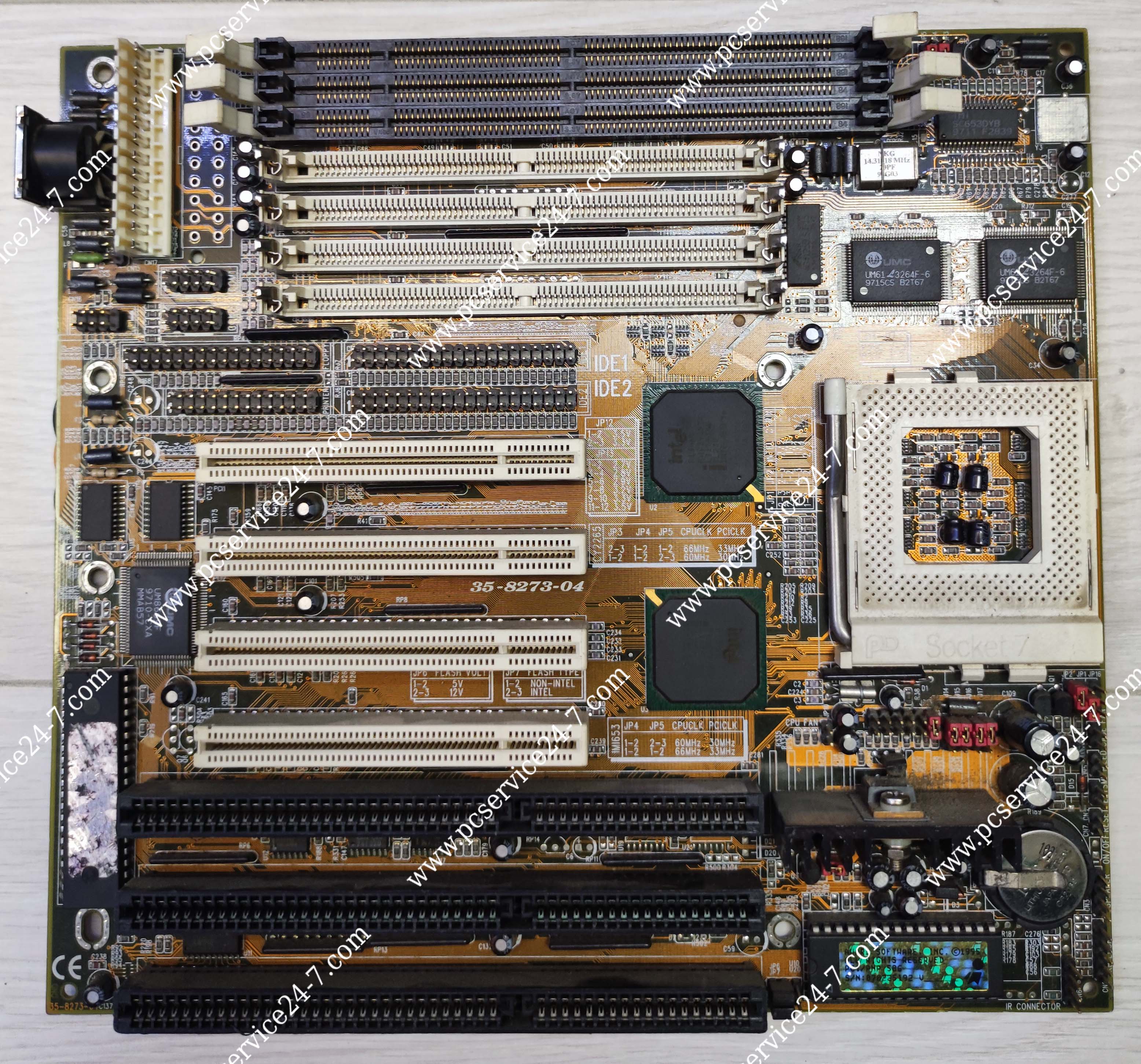
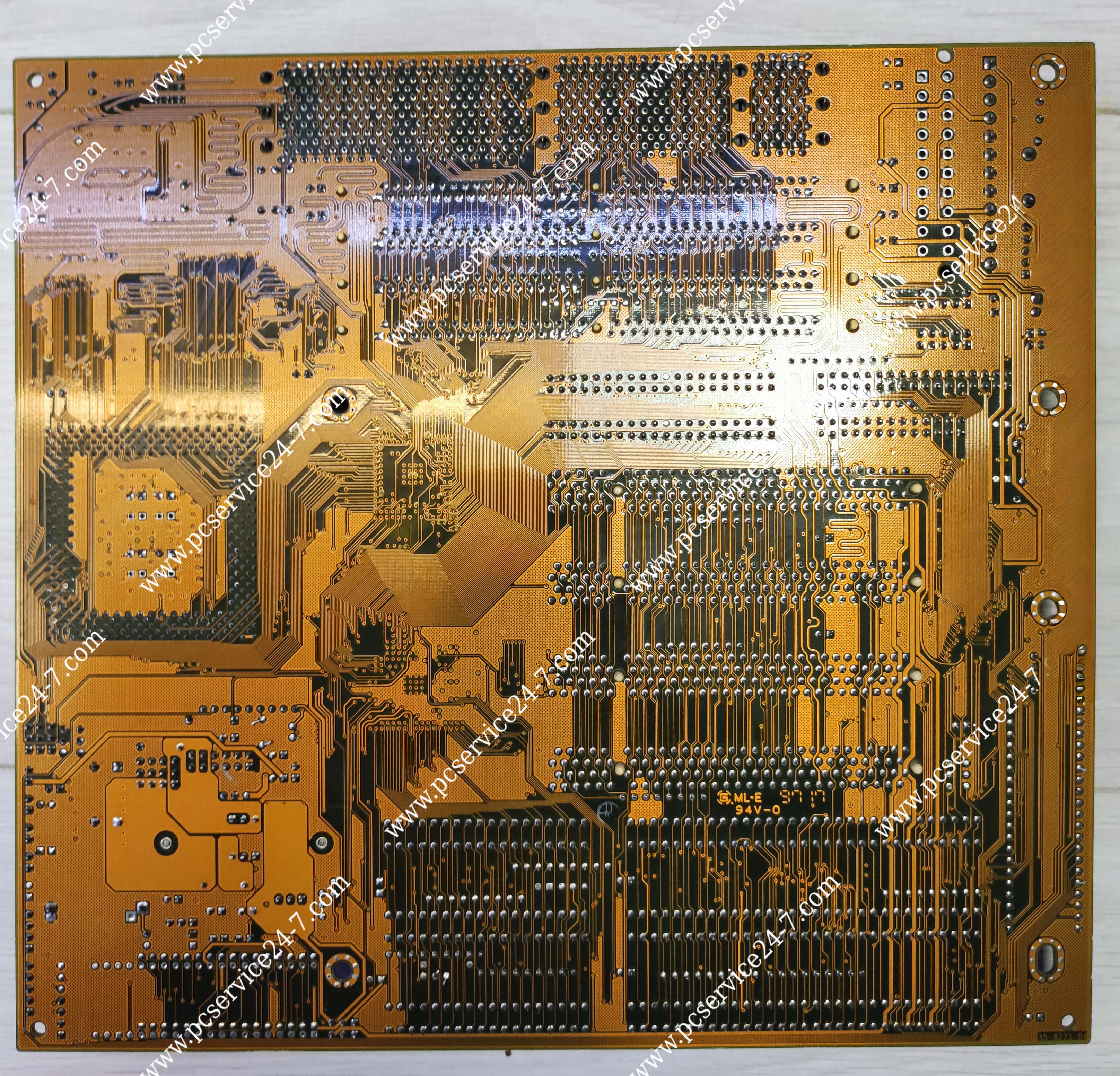
Quick Specs
| Feature | Specification |
| CPU Socket | Socket 7 |
| Supported CPUs | Intel Pentium / MMX, AMD K5 / K6, Cyrix 6×86 / MX |
| Chipset | VIA Apollo VPX/97 (VT82C580VPX) |
| Bus Speed | 50 / 60 / 66 / 75 MHz |
| Memory | 2x DIMM (SDRAM) + 4x SIMM (EDO/FPM) |
| Expansion | 4x PCI Slots, 3x ISA Slots |
| L2 Cache | 512 KB Pipeline Burst SRAM (Onboard) |
| Storage | 2x IDE (UDMA/33 supported), 1x Floppy |
| I/O Ports | 2x Serial, 1x Parallel, 2x USB (Header), PS/2 Mouse |
| Form Factor | Baby AT |