Deep Research & Description
The GeForce FX 5500 is built on the NV34 architecture. Its primary mission was to bring the CineFX Engine to the entry-level tier. This was a big deal at the time: it meant that even a budget card could technically support DirectX 9.0 (Shader Model 2.0). While the more powerful FX 5900 cards were the performance leaders, the FX 5500 allowed budget gamers to at least “see” the new visual effects in games like Far Cry or Prince of Persia: The Sands of Time, even if they had to dial back the resolution.
The “8X” in your model refers to its AGP 8X interface. By 2004, motherboards were transitioning away from the older AGP 2X/4X standards, and the FX 5500 was the perfect “plug-and-play” upgrade for these newer systems. Most FX 5500 cards featured a 128-bit memory bus, which made them significantly more capable than the “stunted” 64-bit versions of the FX 5200.
In the evolution of the PC, the FX 5500 is often remembered as the “Stability Hero.” While the FX series famously struggled with heavy pixel shader performance compared to ATI’s Radeon 9000-series, the FX 5500 was incredibly reliable and had excellent driver support. It became the go-to card for users who wanted a quiet, low-power GPU that could handle the transparent “Aero-style” glass effects that were starting to appear in the lead-up to Windows Vista.
Era Context
-
The Competition: This card was NVIDIA’s direct answer to the ATI Radeon 9550. While the Radeon was often faster in DX9 games, the GeForce was praised for its better compatibility with older OpenGL titles.
-
Operating System: The quintessential Windows XP card. It provided a very smooth experience for the OS and was one of the lowest-cost ways to get a “Vista Capable” rating later on.
-
Gaming Legacy: It was a champion for the “MMORPG explosion,” running early World of Warcraft, Lineage II, and Guild Wars perfectly. It was the card that let a whole generation of players enter these virtual worlds for the first time.
-
The “FX” Identity: Despite the controversies surrounding the high-end FX 5800 “Dustbuster,” the lower-end 5500 was a quiet, cool, and successful product that outlived many of its faster siblings in actual home usage.
Component Gallery
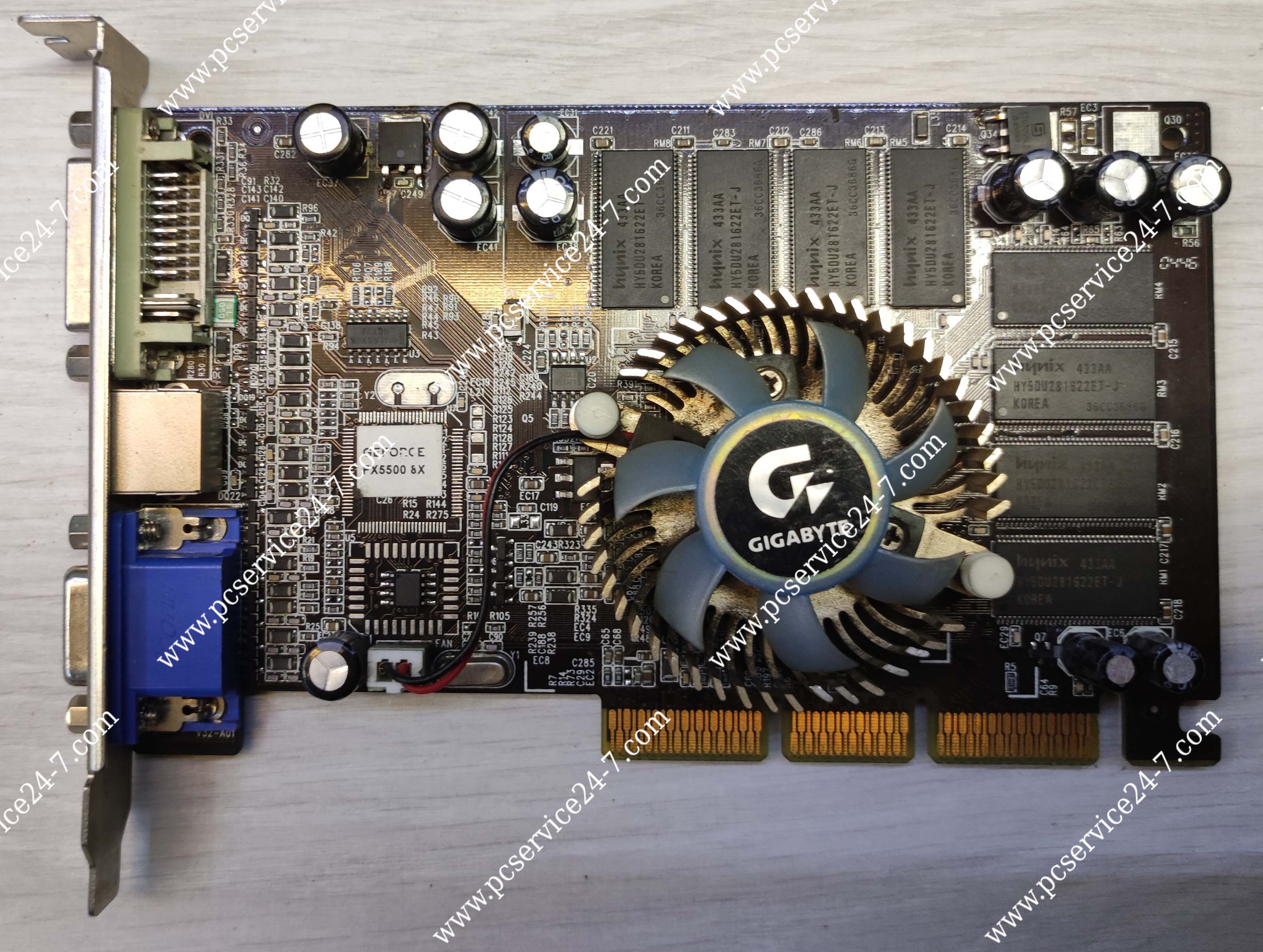
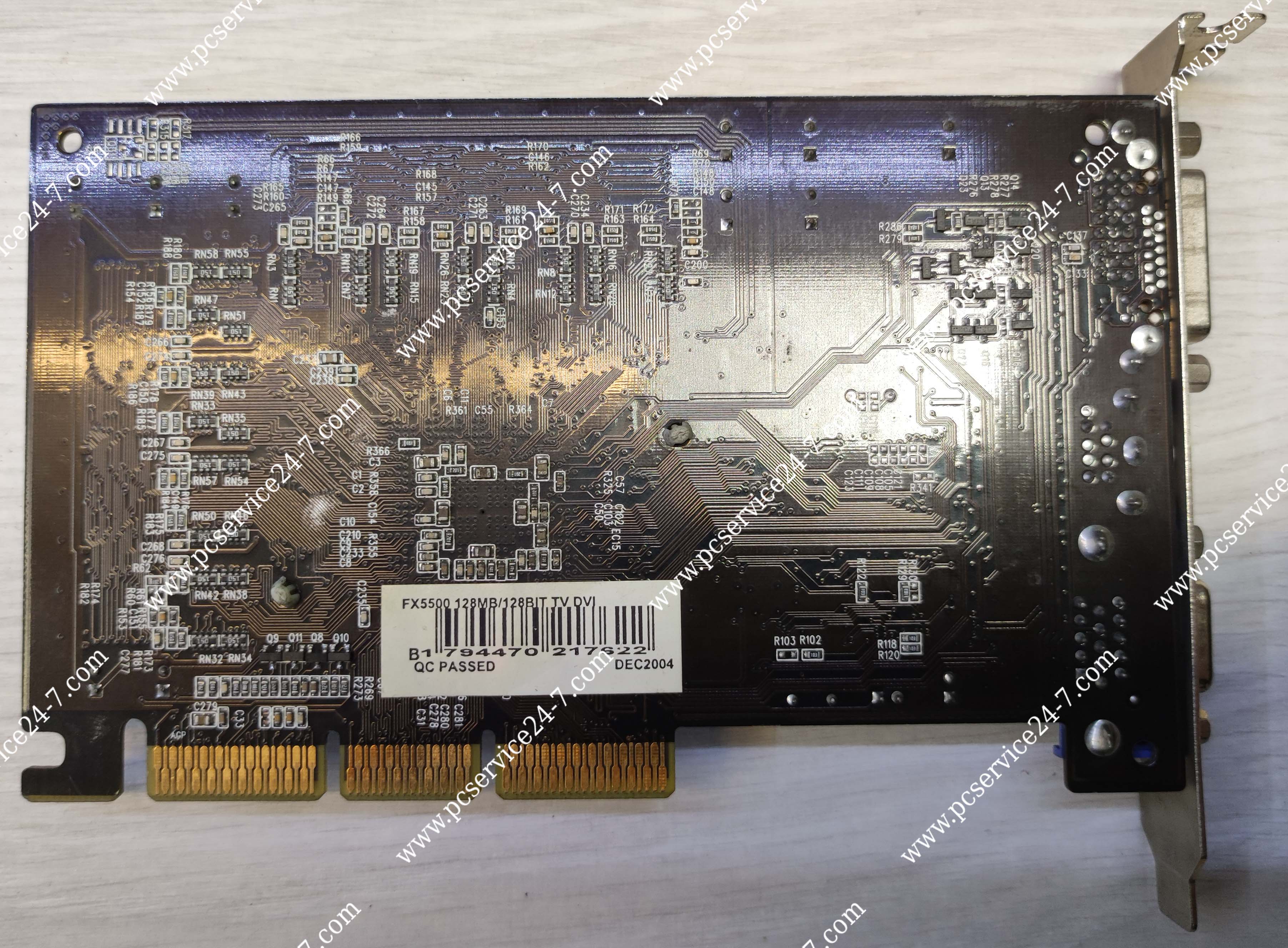
Quick Specs
| Feature | Specification |
| GPU Core | NV34 (CineFX Architecture) |
| Interface | AGP 8X / 4X |
| Core Clock | 270 MHz |
| Memory | 128 MB or 256 MB DDR |
| Memory Bus | 128-bit |
| DirectX Support | 9.0 (Shader Model 2.0) |
| OpenGL Support | 1.5 |
| Manufacturing Process | 150 nm |
| Transistors | 45 Million |