Deep Research & Description
The Prime 2C MKIII was manufactured by GoldStar (the company we now know as LG). It is a 16-bit ISA card that served as the central nervous system for a PC’s storage and communication. In 1992, if you looked inside a “white box” clone PC, you would almost certainly see this card’s distinctive gold-labeled “Prime 2C” chipset plugged into a long black ISA slot.
Technically, the MKIII revision was highly prized because it was a “high-integration” solution. It replaced what used to be three or four separate cards with one single PCB. It managed:
-
IDE Control: The gateway for your hard drives (like that Caviar 2850 we discussed).
-
Floppy Control: Supporting everything from the ancient 360K 5.25″ drives to the “modern” 1.44MB 3.5″ units.
-
Serial/Parallel Comms: Providing the connections for your mouse, external modem, and dot-matrix printer.
-
Game Port: The essential 15-pin connector for your Gravis GamePad or FlightStick.
The “Magic” (and the frustration) of the Prime 2C MKIII lies in its Jumpers. Because it lived in the pre-“Plug and Play” era, you had to manually tell the card which IRQs and I/O addresses to use by moving tiny plastic blocks. If you got it wrong, your mouse wouldn’t move, or your hard drive would “disappear.” It is the ultimate artifact of the era when building a PC required a manual and a pair of tweezers.
Era Context
-
The “I/O Wall”: Before this card, you might have had a separate “Serial/Parallel” card and a separate “Disk Controller” card. The Prime 2C saved valuable ISA slots for things like SoundBlasters and VGA cards.
-
Operating System: The backbone of MS-DOS 5.0/6.22 and Windows 3.1. It handled the low-level “interrupts” that made those OSs functional.
-
The Jumper Legend: On the back of the PCB, there is usually a “Jumper Map” printed in tiny white text. For a tech in 1993, that map was more important than the PC’s manual.
-
Retro-Gaming Importance: Today, these cards are highly sought after for 486 builds because the GoldStar chipset is famously compatible with a wide range of IDE drives and has very “clean” signal timing for floppy disk imaging.
Component Gallery
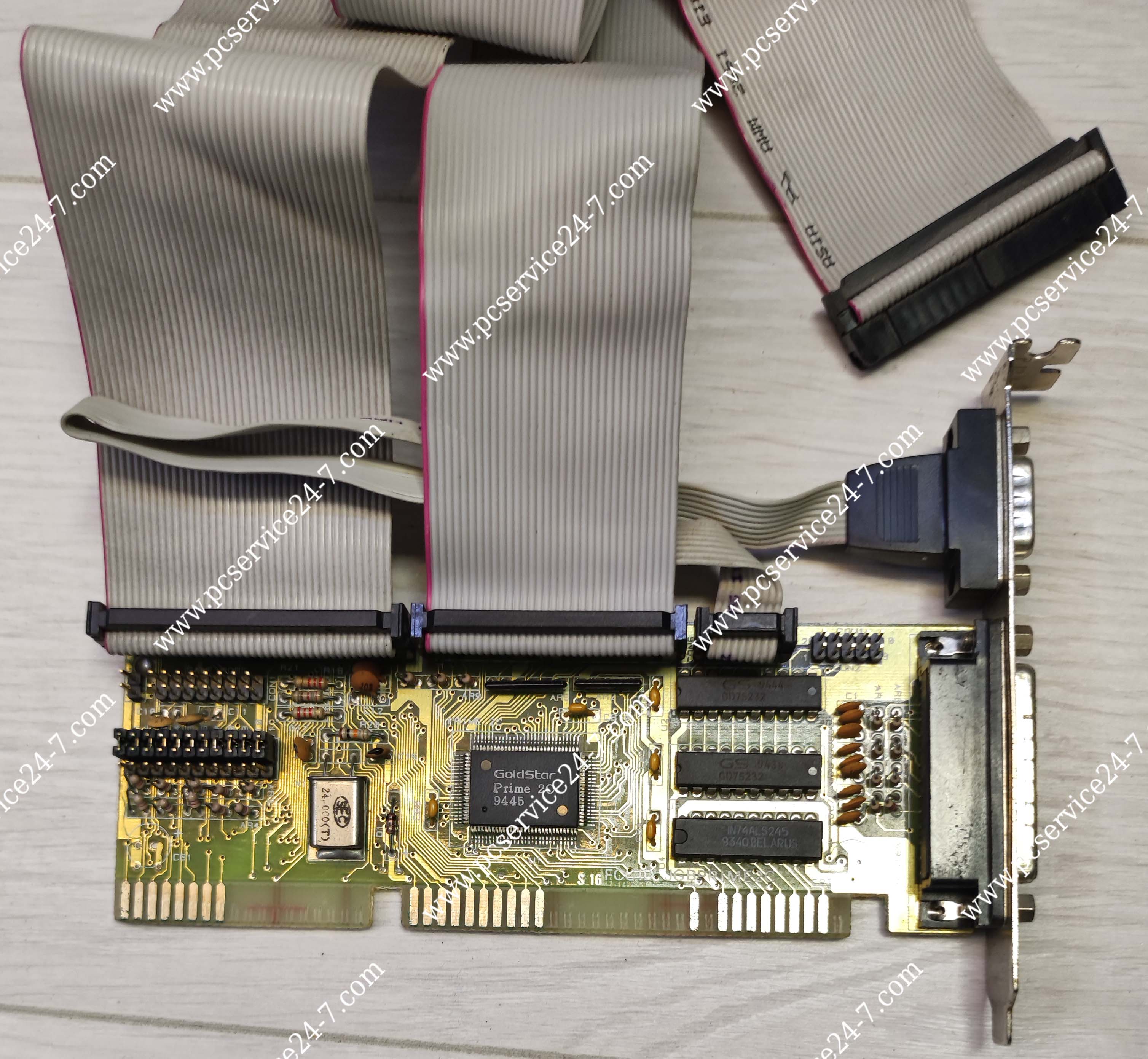
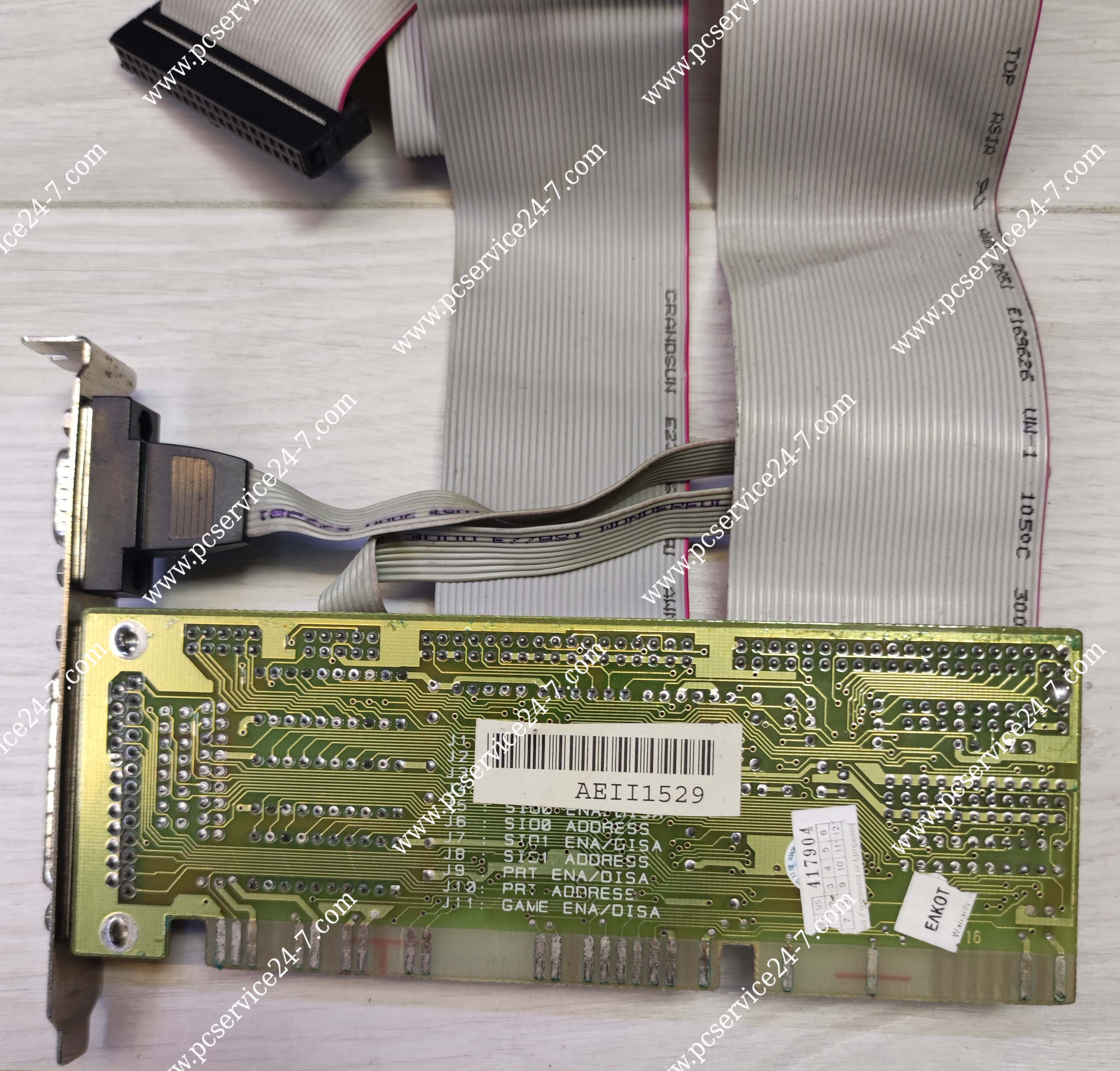
Quick Specs
| Feature | Specification |
| Chipset | GoldStar Prime 2C (LG) |
| Interface | 16-bit ISA |
| IDE Support | 1 Channel (Supports 2 Devices: Master/Slave) |
| Floppy Support | 2 Drives (360K to 1.44MB) |
| Serial Ports | 2x RS-232 (usually via 10-pin headers) |
| Parallel Port | 1x Centronics/LPT (EPP/ECP supported in later MK variants) |
| Game Port | 1x 15-pin Joystick/MIDI port |
| UART Type | 16450 (Standard) or 16550 (High-speed on some revisions) |
| Era | ~1991–1994 |