Deep Research & Description
The 4G120J6 belongs to the D540X series, which was Maxtor’s high-capacity “Value” line. While the DiamondMax Plus series focused on 7200 RPM performance, the D540X aimed for massive storage density at a lower price point and with significantly less noise. By spinning at 5400 RPM, the drive ran remarkably cool and quiet, making it a favorite for the emerging Home Theater PC (HTPC) and early “TiVo” style digital video recorder markets.
The most technically significant feature of this drive is its Ultra-ATA/133 interface. Following Maxtor’s acquisition of Quantum’s hard drive division in 2000, they inherited the “Fast Drive” technology that allowed for a theoretical burst rate of $133 \text{ MB/s}$. While the mechanical platters couldn’t actually sustain those speeds, the ATA/133 standard was crucial because it introduced 48-bit LBA (Logical Block Addressing). This was the key that finally allowed PCs to recognize hard drives larger than 137 GB, effectively “uncorking” the storage industry for the next decade.
Architecturally, the 4G120J6 utilized 40 GB per platter. To reach 120 GB, it packed three platters and six heads into its standard 3.5-inch frame. This high areal density allowed for surprisingly agile performance for a 5400 RPM drive, often outperforming older 7200 RPM units in sequential data transfers because the heads didn’t have to move as far to find the next bit of data.
Era Context
-
The 137GB Barrier: This drive was a pioneer in the move to 48-bit LBA. Without a compatible BIOS or the special “Big Drive” drivers Maxtor provided, many systems of the time would only see 137 GB, even on the larger 160 GB version of this same family.
-
The Quantum Heritage: You can see the DNA of the Quantum Fireball series in the logic board design and the command set, reflecting the successful merger of the two storage giants.
-
Operating System: The ideal drive for Windows XP (especially after Service Pack 1, which added native support for the larger capacities).
-
Consumer Electronics: Because of its low heat and high capacity, these drives were the “gold standard” for early DVR upgrades and external “OneTouch” backup drives.
Component Gallery
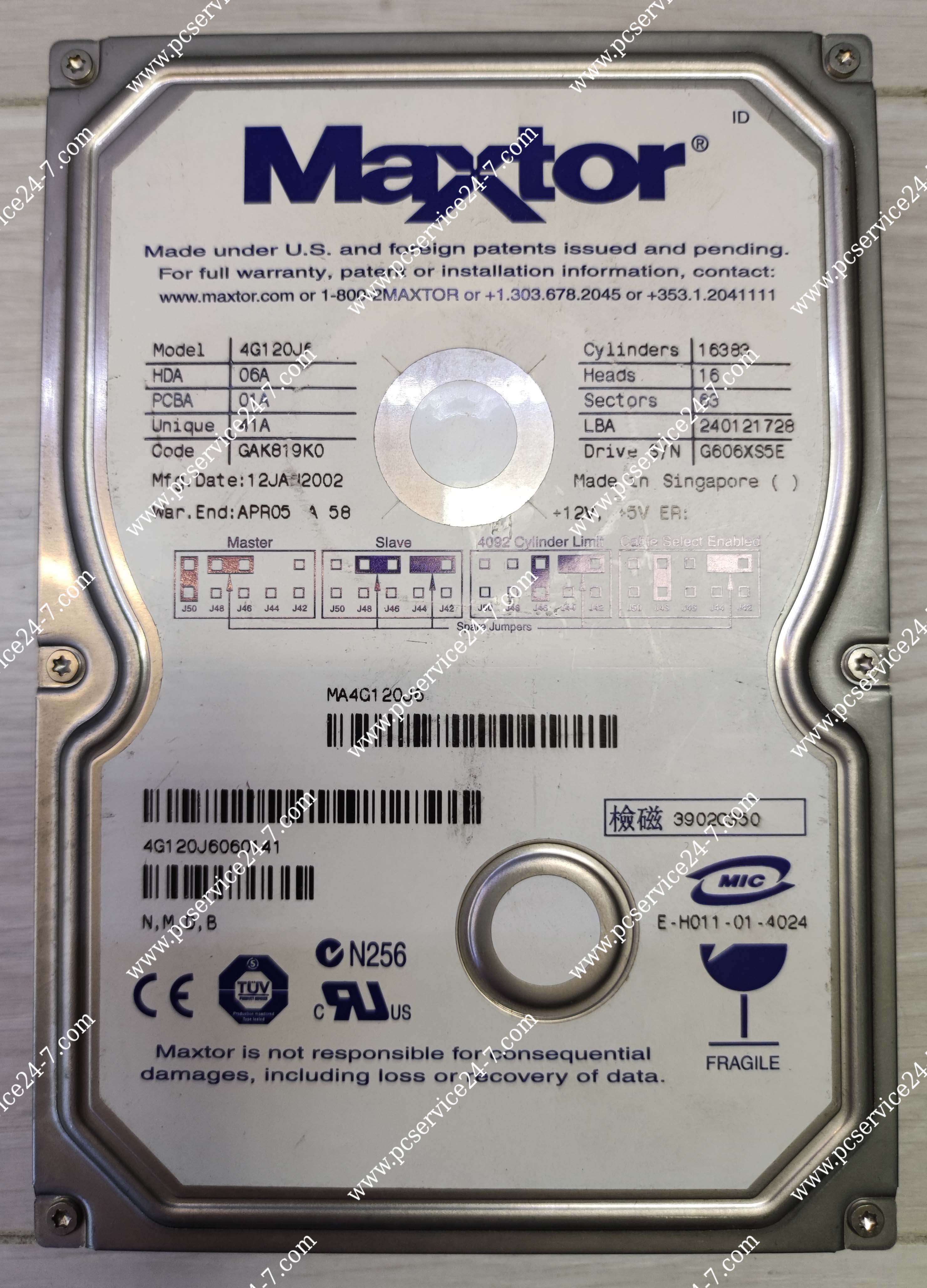
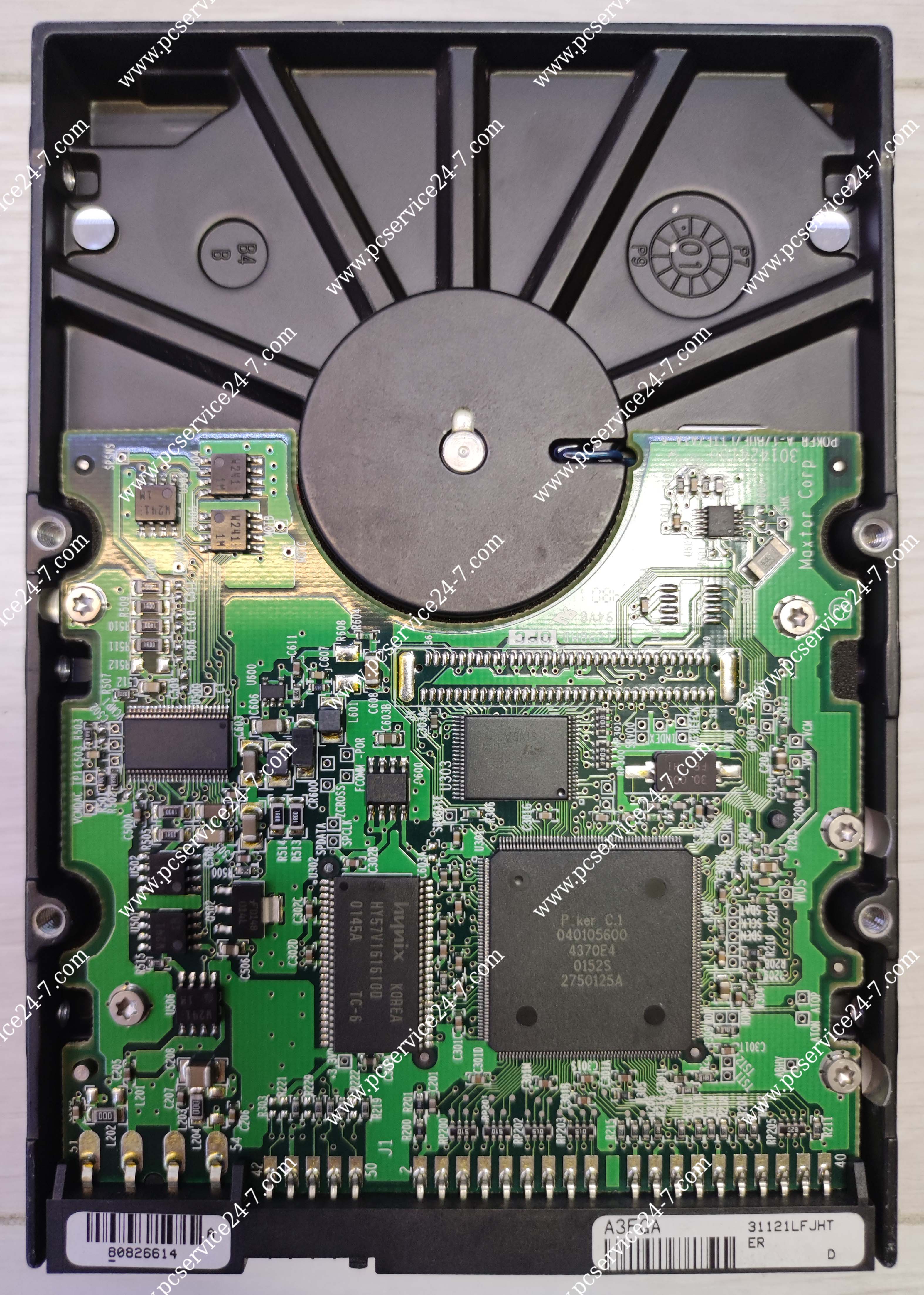
Quick Specs
| Feature | Specification |
| Model | 4G120J6 |
| Family | DiamondMax D540X-4G |
| Capacity | 120 GB |
| Interface | Ultra-ATA/133 (ATA-7) |
| Spindle Speed | 5400 RPM |
| Cache Buffer | 2 MB |
| Average Seek | 12.0 ms |
| Platters / Heads | 3 Platters / 6 Heads |
| Density | 40 GB per Platter |
| Release Year | ~2001 |