Deep Research & Description
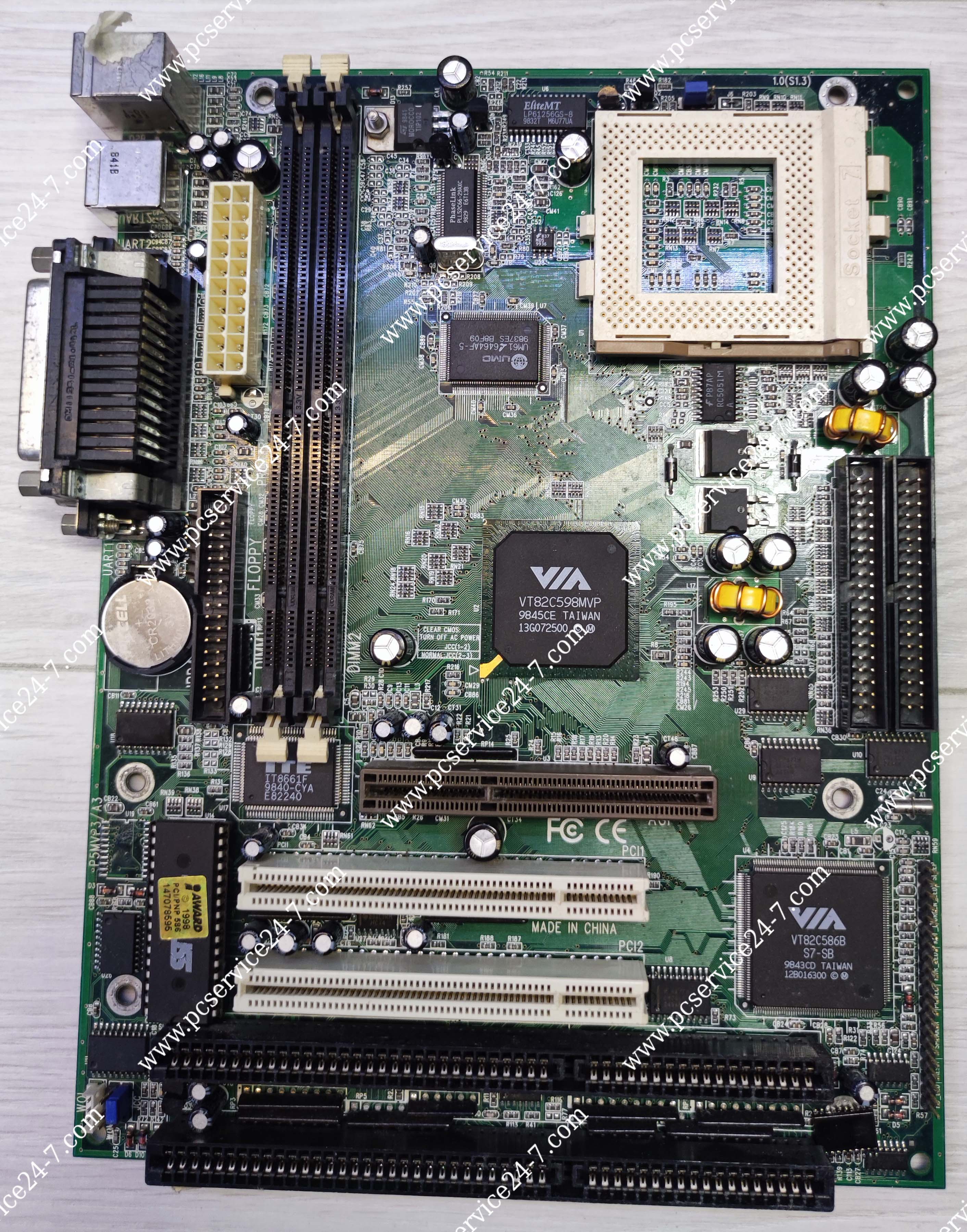
The Zida (Tomato Board) P5MVP3/A3 (Advance III) is a “Super Socket 7” heavyweight from 1998. While we’ve looked at other “Tomato Boards” today, the Advance III was their performance flagship. It was designed to pull Socket 7 kicking and screaming into the late 90s by adopting features that were previously reserved for the high-end Pentium II platform, specifically a 100MHz Front Side Bus and AGP support.
The P5MVP3/A3 is built around the VIA Apollo MVP3 (VT82C598) chipset. This chipset was the “Great Equalizer” of the late 90s. While Intel was trying to force everyone to move to the expensive Slot 1 platform, the MVP3 allowed users to stick with their Socket 7 CPUs while gaining the same high-speed 100MHz FSB and AGP 2x graphics capabilities found on the Pentium II.
Technically, the “Advance III” represents the peak of the AMD K6-2 era. By supporting the 100MHz bus, it allowed the K6-2 to run at its native speed, fully utilizing its 3DNow! instructions. It also addressed the “Cacheable Area” problem: Unlike Intel’s chipsets, which could only cache 64MB of RAM, the MVP3 on this board could cache up to 256MB (depending on the L2 cache size), making it a much better choice for early high-RAM Windows 98 workstations.
As a “Tomato” product, it maintained the signature Baby AT layout but packed it with modern flexibility. It features three 168-pin SDRAM DIMM slots and, importantly, a Voltage Regulator Module (VRM) that could go as low as 2.0V. This was critical because it allowed the board to support the later AMD K6-III and K6-2+ chips, which required much lower voltages than the original Pentium chips.
Era Context
-
The AMD Revolution: This board was the perfect host for the AMD K6-2 300 or 350. It was the first time an AMD system could actually trade blows with an Intel Pentium II in gaming performance, thanks to the 100MHz bus and AGP support.
-
The AGP “Teething” Phase: Early VIA AGP drivers were notoriously finicky. Getting a high-end graphics card to run stably on an MVP3 board was a rite of passage for 90s PC geeks—once you had the “4-in-1” drivers installed, though, it was a rock-solid performer.
-
Operating System: The definitive Windows 98 platform. It allowed for a high-performance 3D gaming experience without the high price tag of an Intel-based system.
-
Longevity: Because of its 100MHz support and low-voltage VRM, these boards remained relevant much longer than standard Socket 7 boards. Many were still in active use as budget gaming PCs well into the year 2001.
Component Gallery
Quick Specs
| Feature | Specification |
| Manufacturer | Zida Technologies (Tomato Board) |
| Model | P5MVP3/A3 (Advance III) |
| CPU Socket | Super Socket 7 |
| Supported CPUs | AMD K6-2 / K6-III, Intel Pentium MMX, Cyrix MII |
| Chipset | VIA Apollo MVP3 (VT82C598 / VT82C586B) |
| Bus Speed | 66 / 75 / 83 / 95 / 100 MHz |
| Memory | 3x 168-pin SDRAM DIMM Slots |
| Expansion | 1x AGP 2x, 3x PCI, 2x ISA |
| L2 Cache | 512 KB or 1 MB Onboard (Pipeline Burst) |
| Power Support | AT (12-pin) or ATX (20-pin) |
| Form Factor | Baby AT |