Deep Research & Description
The Fireball EX was a pioneer in the transition to the Ultra ATA/33 (Ultra DMA) interface. Before this, hard drives were stuck in the PIO Mode 4 era, which topped out at 16.6 MB/s and heavily taxed the CPU. The Fireball EX, with its ATA33 support, doubled the theoretical burst rate to 33.3 MB/s and allowed for direct memory access (DMA), which meant your Pentium II could focus on rendering Quake II instead of managing hard drive data.
Technically, this drive utilized Magnetoresistive (MR) heads, which allowed for much higher data density than older inductive heads. At 3.2 GB, this was a high-capacity drive for its time—enough to hold a massive library of early MP3s or a full install of the brand-new Windows 98.
However, the Fireball series is perhaps most famous for two things: its speed and its “voice.” Quantum drives used a unique spindle motor design that produced a high-pitched, melodic “whine” that many retro-enthusiasts can identify from across a room. It also featured Quantum’s Shock Protection System (SPS), a mechanical design meant to protect the delicate MR heads from head crashes during shipping or accidental bumps.
Era Context
-
The “Speed” Branding: Quantum chose the name “Fireball” to emphasize that their drives didn’t just store data—they moved it. In 1997, a 5400 RPM drive was the performance standard for home users, as 7200 RPM drives were still largely reserved for expensive SCSI workstations.
-
Operating System: The “power user” drive for Windows 95 OSR2 and the launch of Windows 98.
-
The Maxtor Legacy: Quantum was eventually acquired by Maxtor in 2000, making these original Fireball units some of the last “pure” Quantum-engineered drives.
-
The “Quantum Whine”: If your museum is interactive, the sound of this drive spinning up is a core memory for anyone who owned a high-end PC in 1998. It’s a mechanical symphony of 5400 RPM precision.
Component Gallery
Quick Specs
| Feature | Specification |
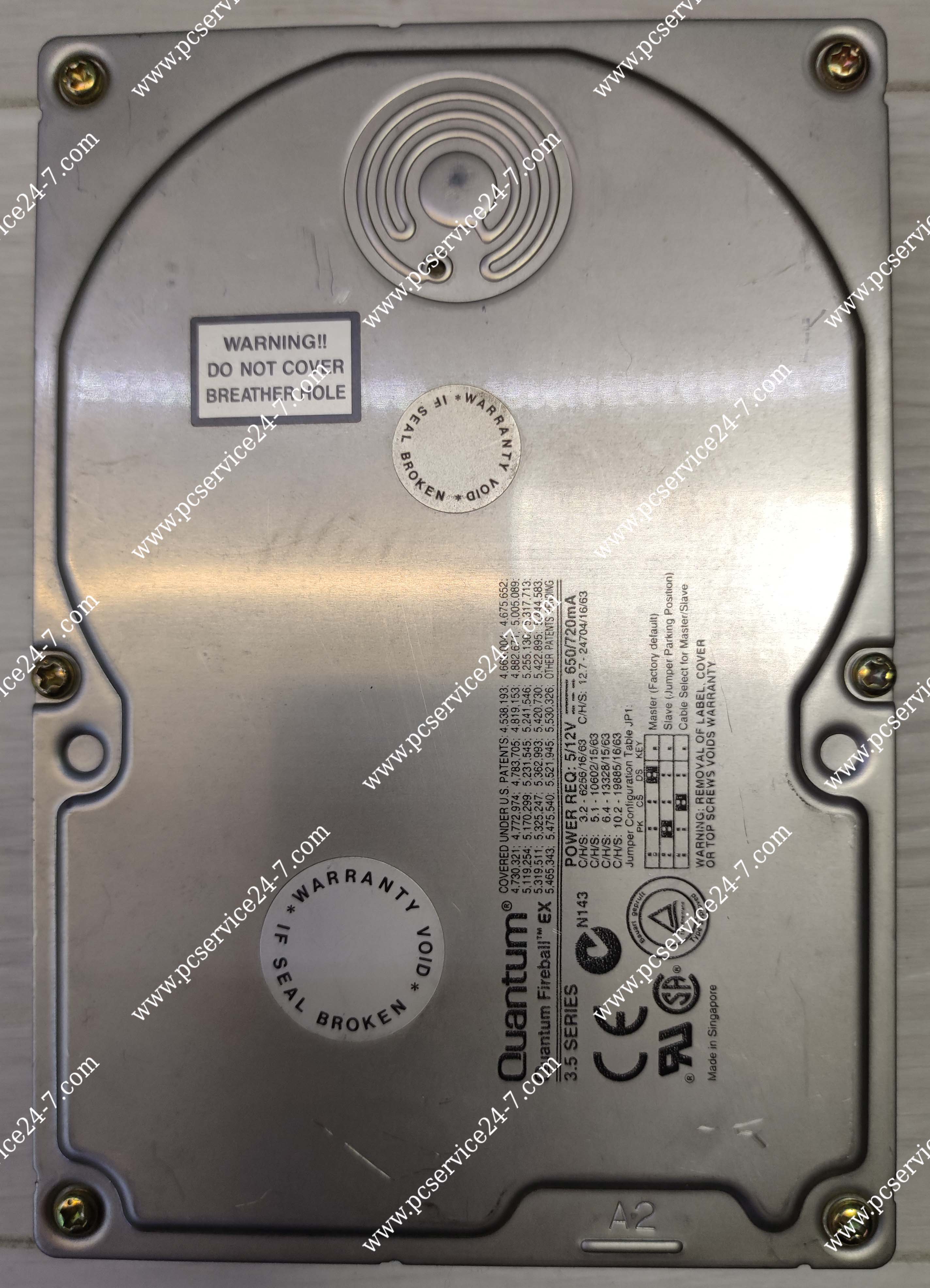
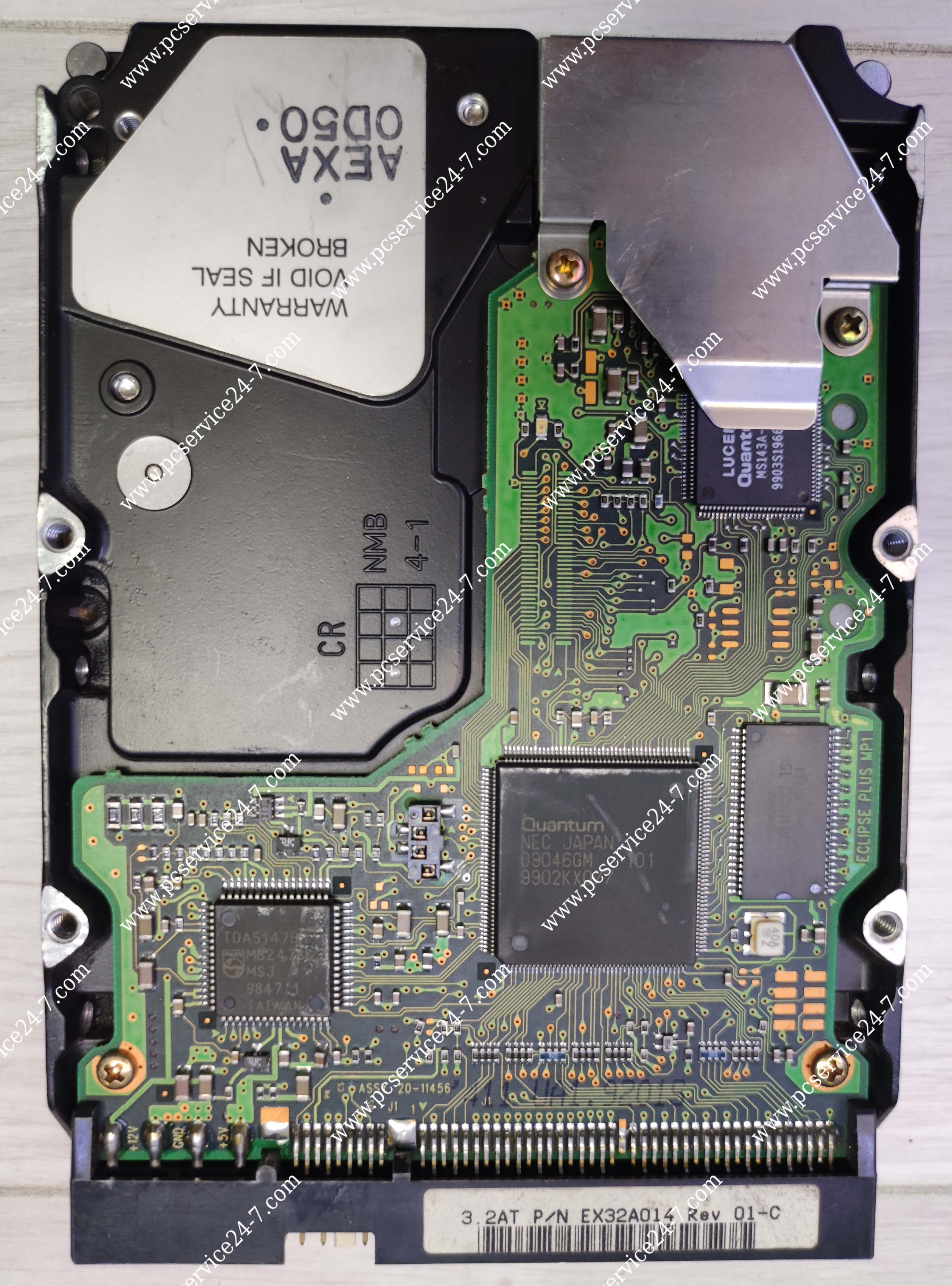
| Model | Fireball EX 3.2 AT |
| Capacity | 3.2 GB |
| Interface | Ultra ATA/33 (ATA-3) |
| Spindle Speed | 5400 RPM |
| Cache Buffer | 128 KB |
| Average Seek | 9.5 ms |
| Heads / Platters | 2 Heads / 1 Platter |
| Internal Transfer | Up to 153 Mbits/s |
| Release Year | 1997 |