
Deep Research & Description
The Barracuda 7200.7 represents the era when hard drives stopped being the loudest part of the computer. Before this, 7200 RPM drives were notorious for a high-pitched “whine.” Seagate solved this with their SoftSonic™ Fluid Dynamic Bearing (FDB) motors. By replacing traditional metal ball bearings with a microscopic film of oil, Seagate created a drive that was virtually inaudible at idle—a massive leap forward for home theater PCs and silent office builds.
Technically, the 7200.7 was a masterpiece of density. At its launch, it featured the highest storage density in the world, cramming 80 GB per platter. This meant your 40 GB model only needed a single platter side and one head, making it mechanically simpler, cooler, and more reliable than multi-platter drives. It also featured Seagate’s 3D Defense System™, which combined “Drive Defense” (physical protection), “Data Defense” (error correction), and “Diagnostic Defense” (SeaTools software) to combat the high failure rates that had plagued the industry in the early 2000s.
In the evolution of the PC, the 7200.7 40 GB was the “Standard of Excellence.” It provided the perfect amount of space for a full Windows XP SP2 installation, a music library, and several AAA games of the time like Doom 3 or Half-Life 2. It was the drive that moved 7200 RPM performance from a “luxury enthusiast” spec to the “minimum requirement” for a responsive desktop experience.
Era Context
-
The “Whisper Quiet” Era: This drive is the reason modern computers are so quiet. It proved that high-performance 7200 RPM speeds didn’t have to come with mechanical noise.
-
Operating System: The definitive Windows XP boot drive. It offered the high burst speeds needed for the “Luna” interface to feel snappy.
-
The PATA/SATA Bridge: While this model uses the classic 40-pin IDE ribbon cable, its internal architecture was identical to the SATA models, making it one of the most reliable PATA drives ever built.
-
Reliability Legend: Unlike some of its competitors of the era (like the infamous IBM “Deathstar”), the 7200.7 series earned a reputation for extreme durability, with many units still spinning today in retro-computing builds.
Component Gallery
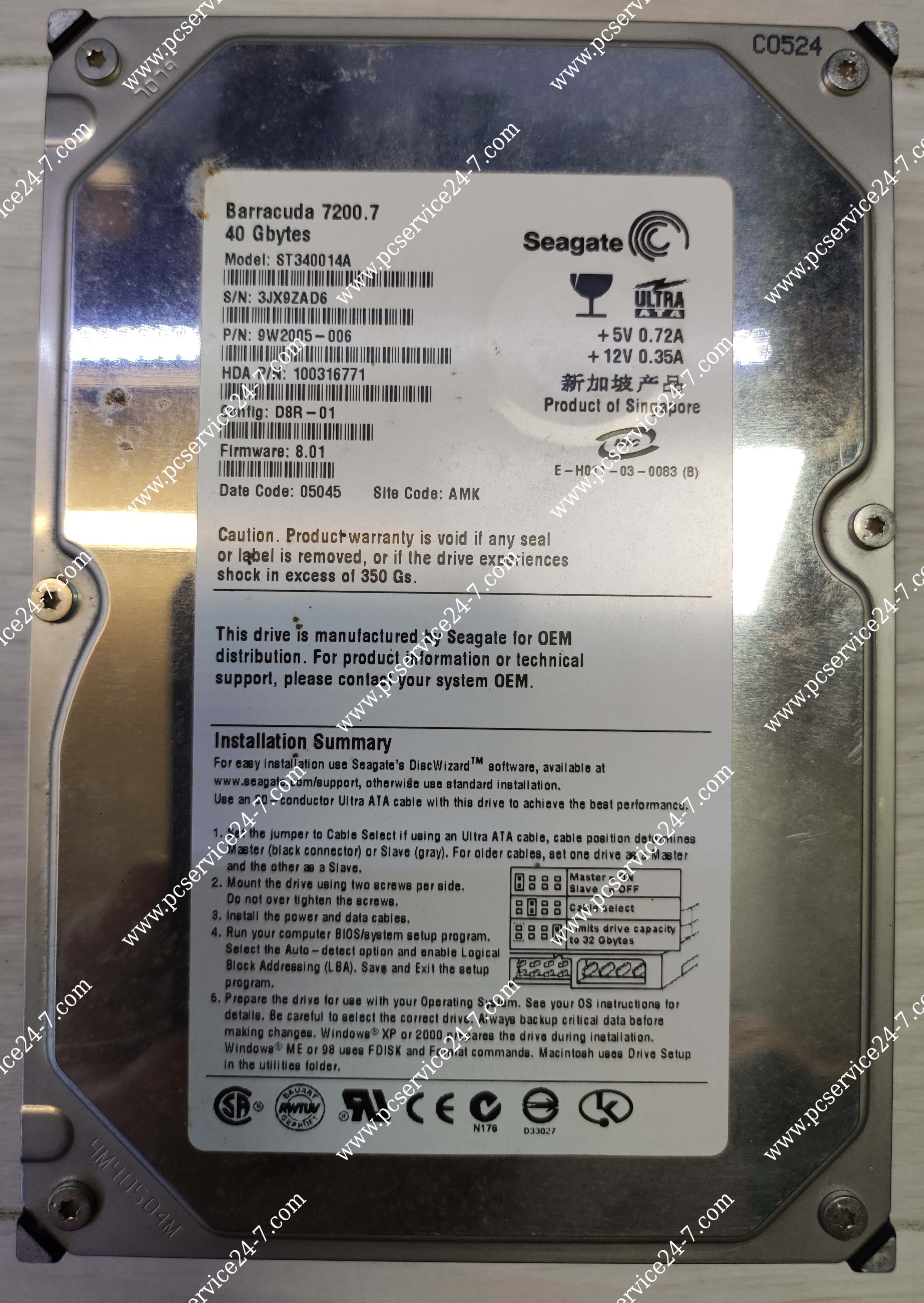
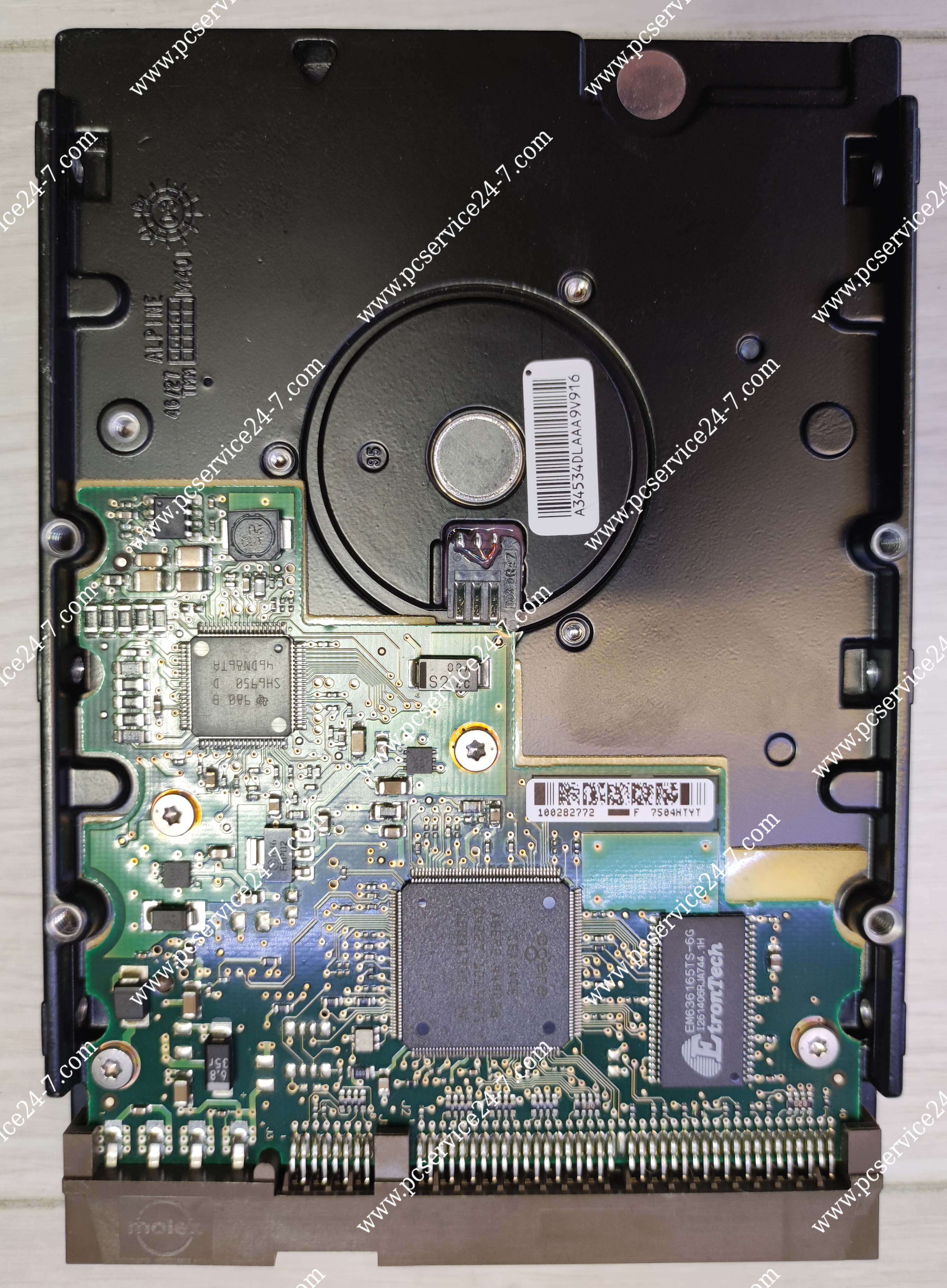
Quick Specs
| Feature | Specification |
| Model Number | ST340014A |
| Family | Barracuda 7200.7 |
| Capacity | 40 GB |
| Interface | Ultra-ATA/100 (PATA) |
| Spindle Speed | 7200 RPM |
| Cache Buffer | 2 MB |
| Average Seek | 8.5 ms |
| Sustained Rate | ~32 to 58 MB/s |
| Motor Technology | SoftSonic™ Fluid Dynamic Bearing (FDB) |
| Platter Density | 80 GB per Platter |