Deep Research & Description
The RIVA TNT2 M64 was built on the NV6 core, a direct derivative of the standard TNT2’s NV5 architecture. The “TNT” stood for “TwiN Texel,” referring to its ability to process two texels per clock cycle. However, the “M64” designation was the critical detail: it signified a 64-bit memory interface, which was exactly half the width of the standard TNT2’s 128-bit bus.
This reduction created a massive data bottleneck. While the core was clocked at a respectable 125 MHz, the 64-bit bus limited memory bandwidth to approximately 1.1GB/sec. In real-world terms, this meant the M64 performed brilliantly in 16-bit color at low resolutions (like 640×480), but its performance “fell off a cliff” as soon as a user tried to enable 32-bit “True Color” or high resolutions like 1024×768.
In the evolution of the PC, the TNT2 M64 was the king of the OEM market. It was the card Dell, HP, and Gateway used to put “32MB 3D Graphics” on their spec sheets without paying for the full-fat TNT2 price. It was often marketed as the “Vanta” in even lower-clocked configurations. Despite the bandwidth limit, it was a rock-solid performer for the time, featuring a high-quality 300 MHz RAMDAC that provided sharp 2D image quality on the CRT monitors of the era.
Era Context
-
The “TNT2 Trap”: Many consumers in 1999 bought PCs thinking they were getting high-end TNT2 performance, only to find the M64 struggled with the “32-bit color” marketing push of the time.
-
Operating System: The staple of Windows 98 Second Edition and early Windows 2000 workstations.
-
Gaming Legacy: It was the perfect entry-level card for the “Quake III Arena” launch. While it couldn’t handle the “High Detail” settings, it was the card that let millions of casual players experience the shift from 2D to 3D.
-
The Competition: It was designed to kill off the aging 3dfx Voodoo2 and compete with the ATI Rage 128 VR in the value segment.
Component Gallery
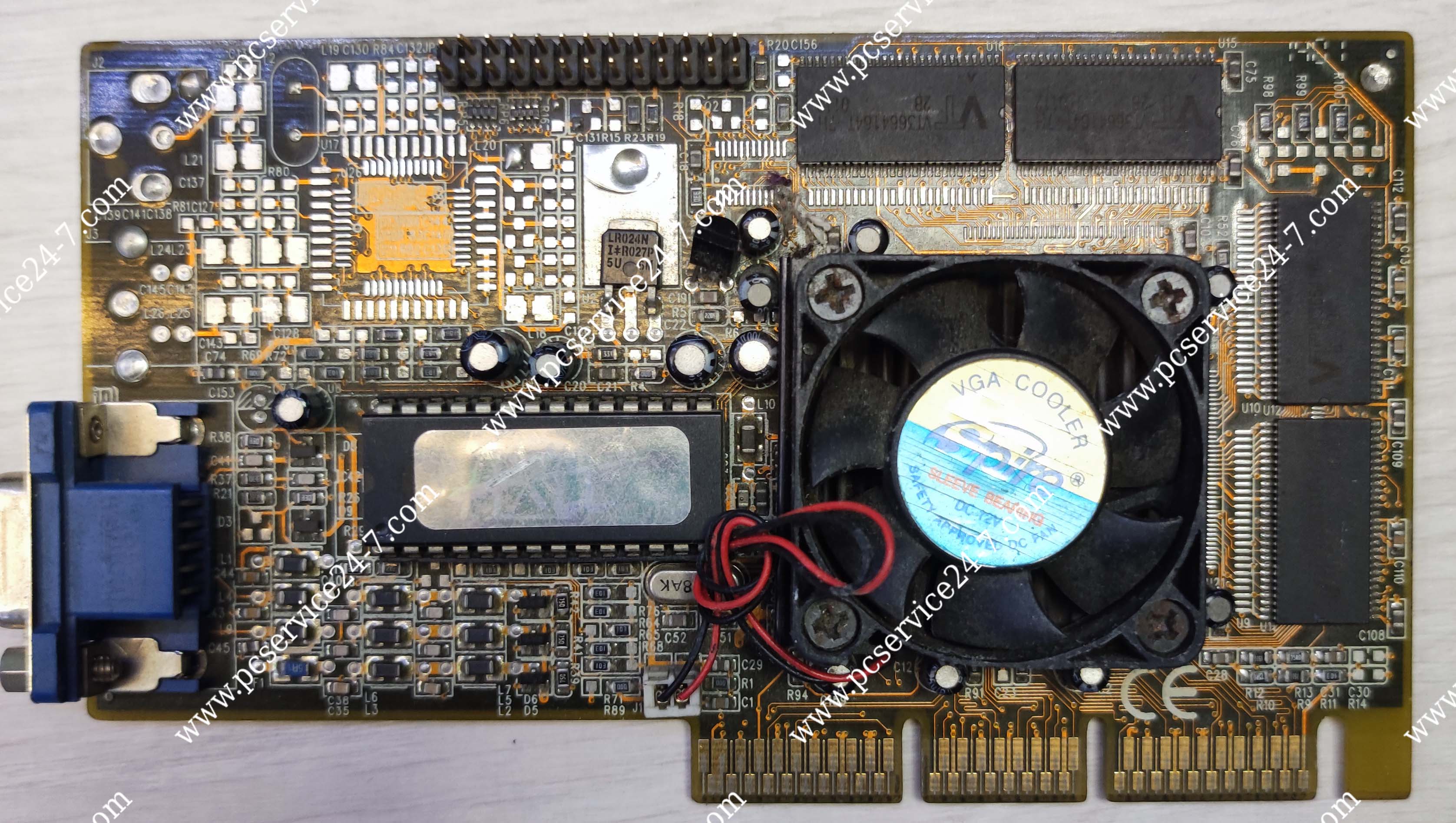
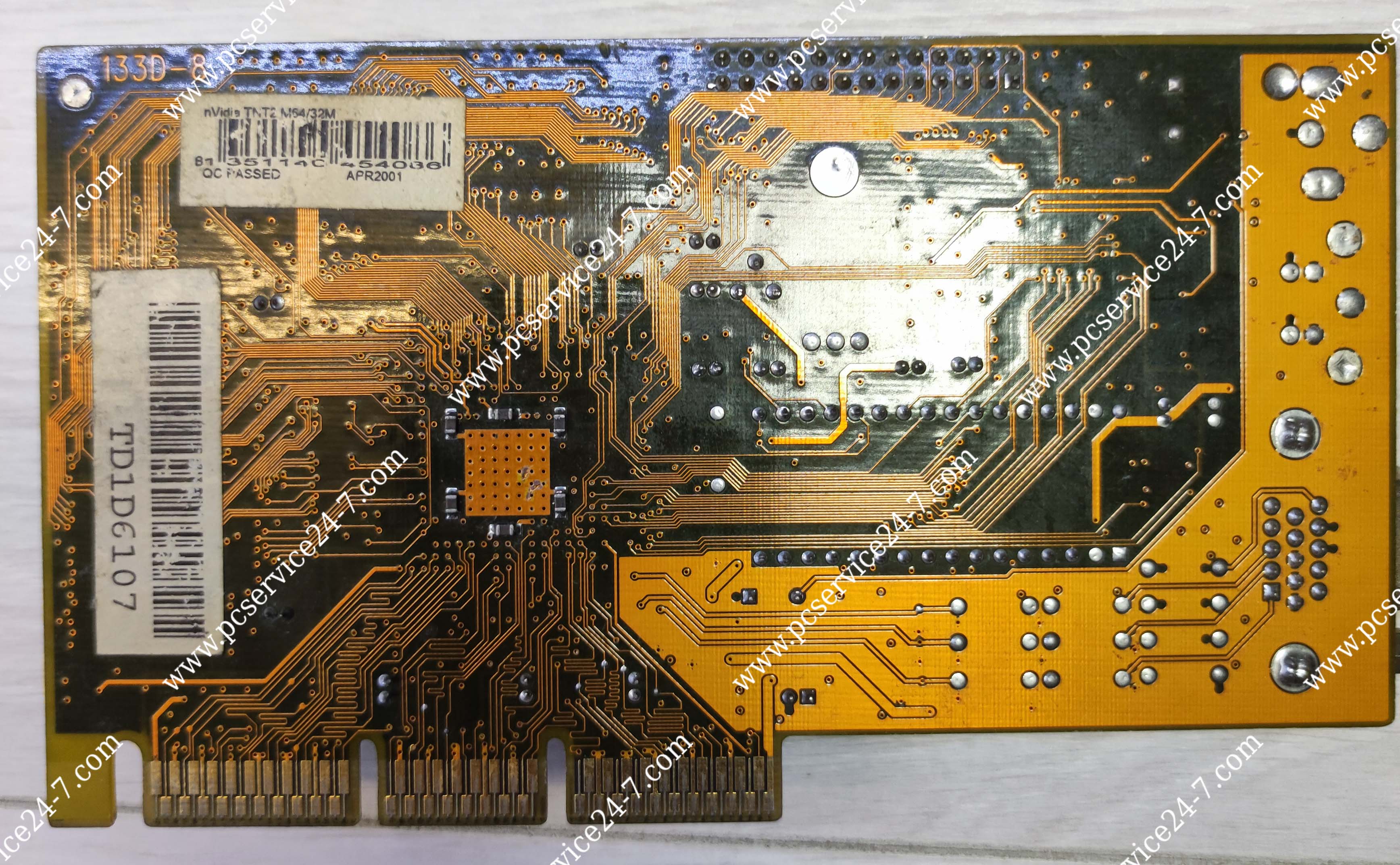
Quick Specs
| Feature | Specification |
| GPU Core | NV6 (RIVA TNT2 Architecture) |
| Interface | AGP 4x / 2x (PCI versions also existed) |
| Core Clock | 125 MHz |
| Memory Clock | 150 MHz |
| Memory | 32 MB SDRAM |
| Memory Bus | 64-bit (The “M64” Bottleneck) |
| Bandwidth | 1.2 GB/sec |
| DirectX Support | 6.0 |
| OpenGL Support | 1.2 |
| Process Node | 250 nm (0.25 micron) |