Deep Research & Description
The TGUI9440 series represented a massive architectural leap over Trident’s older TVGA-9000 series. While previous chips were basic SVGA controllers that left the heavy lifting to the CPU, the TGUI (Trident Graphical User Interface) 9440 featured a 64-bit internal graphics engine. This engine handled critical tasks like BitBLT (Bit Block Transfer), line drawing, and rectangle fills in hardware, which made Windows 3.1 and Windows 95 feel significantly more responsive.
Technically, the “64-bit” claim was a highlight of the marketing. While the memory bus width on a 1MB card was typically 32-bit, the internal 64-bit GUI engine allowed for much faster processing of graphical data. The TGUI9440-1 revision is a refined version of the original silicon, often found on “no-TTL” cards where the graphics core, RAMDAC, and clock generator were all integrated into a single high-density chip to reduce cost and heat.
In the evolution of the PC, the TGUI9440 was the “compatibility king.” Because Trident chips were so ubiquitous, almost every piece of software and every operating system from the era—including DOS, OS/2, and early Linux distros—had rock-solid built-in drivers for it. It was the card you bought when you needed a machine that “just worked,” making it a staple for OEM giants like Pine and Diamond.
Era Context
-
The “GUI” Revolution: Before cards like the 9440, dragging a window in Windows 3.1 would often result in a “ghosting” trail. This card helped eliminate that, making graphical interfaces a smooth reality for the masses.
-
DOS Legacy: This is widely considered one of the best “all-rounder” cards for DOS retro-gaming due to its near-perfect compatibility with older VGA games and its sharp output on CRT monitors.
-
Operating System: The heart of many Windows 3.11 and Windows 95 entry-level builds.
-
The High-Res Limit: While it technically supports 1280 x 1024, at 1MB of RAM it is limited to 256 colors at that resolution. To reach “High Color” (65,536 colors) at 1024 x 768, the 2MB expansion was required.
Component Gallery
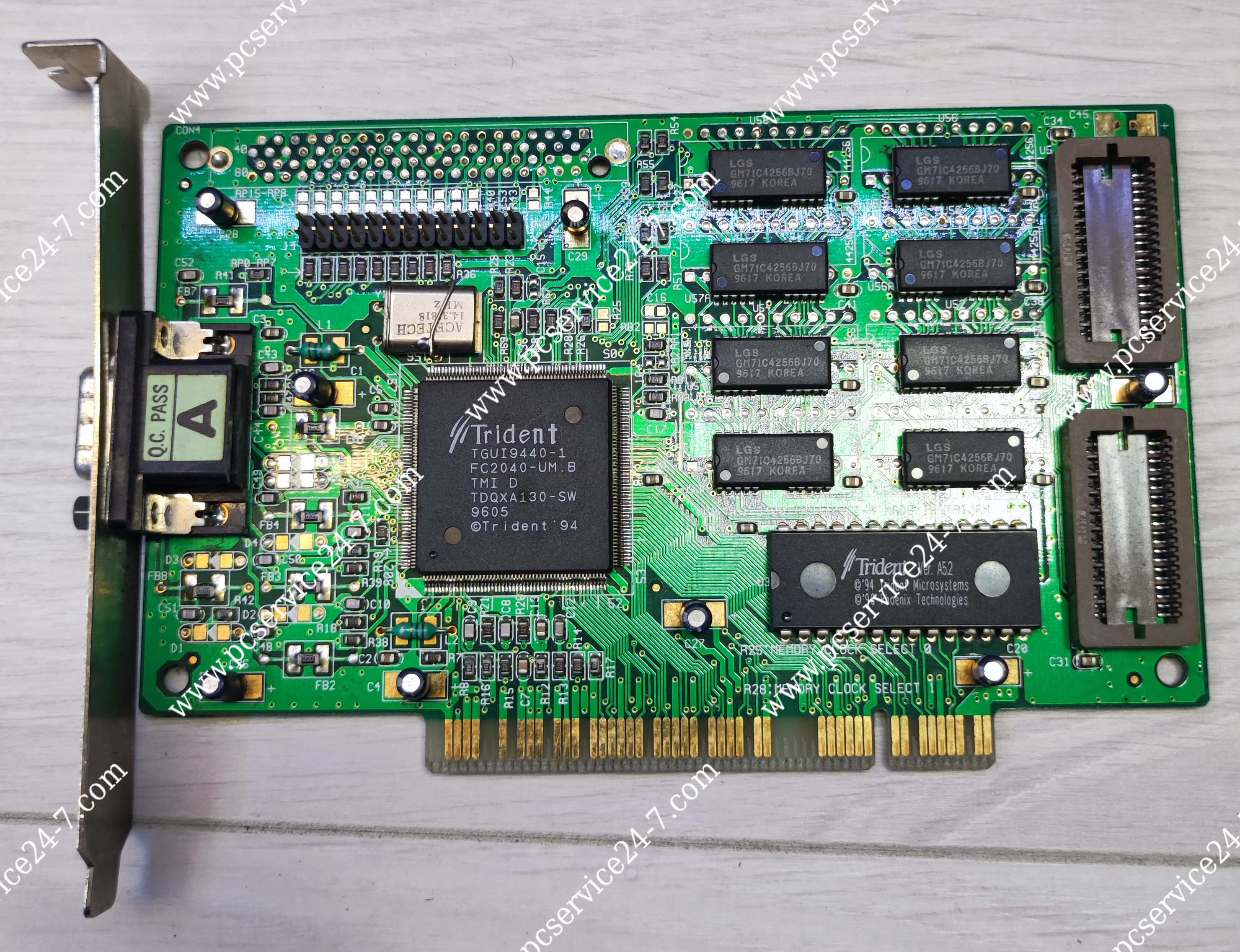
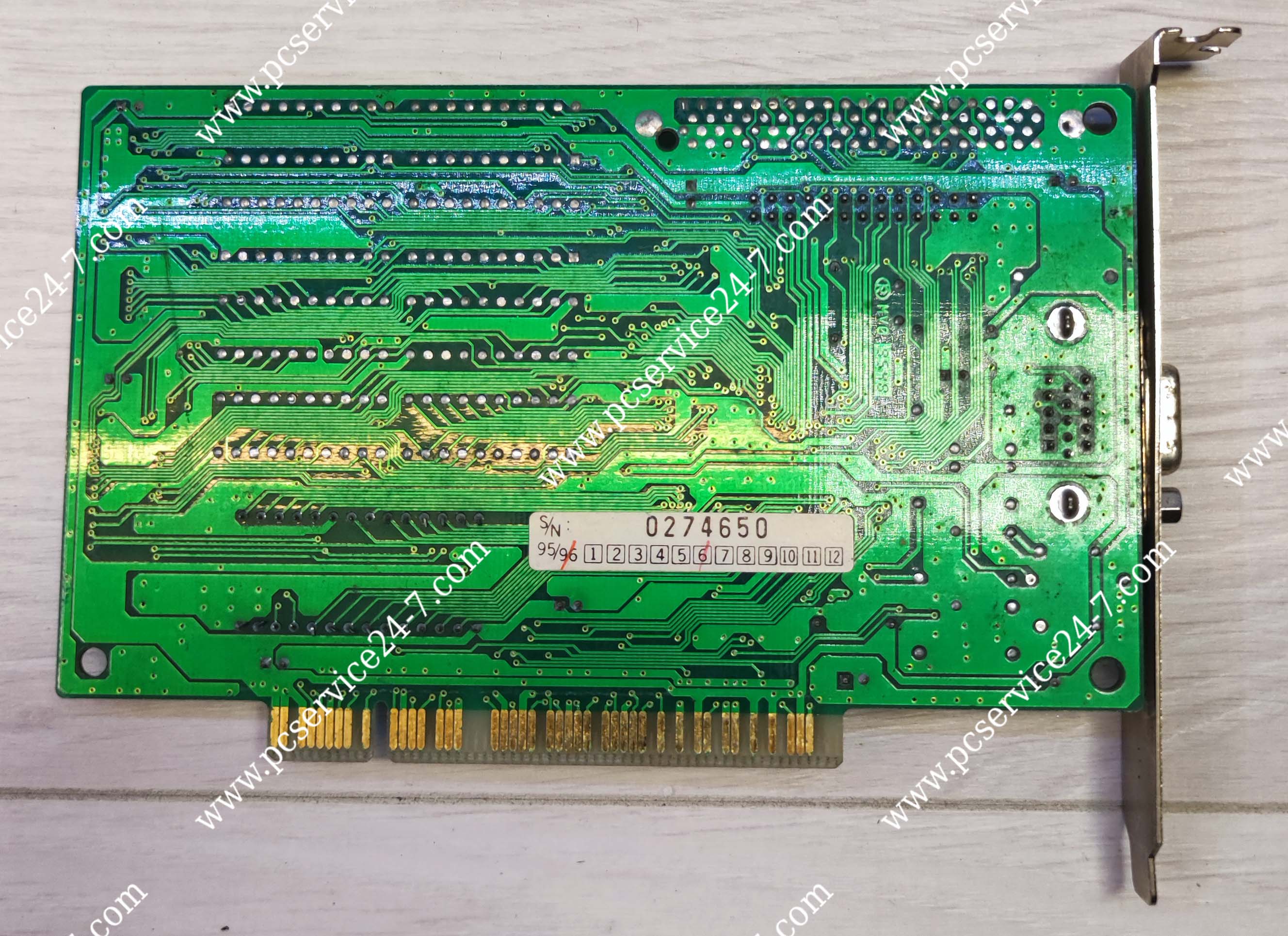
Quick Specs
| Feature | Specification |
| GPU Core | Trident TGUI9440-1 |
| Interface | PCI 2.1 (32-bit) |
| Memory | 1 MB FPM/EDO DRAM (Expandable to 2 MB) |
| GUI Engine | 64-bit Internal Accelerator |
| RAMDAC | Integrated 24-bit TrueColor (108 MHz) |
| Max Resolution | 1280 x 1024 (at 256 colors) |
| TrueColor Support | 640 x 480 (16.7 million colors) |
| Hardware Ops | BitBLT, Hardware Cursor, Polygon/Rectangle Fill |
| Manufacturing | ~0.6 micron |