Deep Research & Description
The TVGA9000C belongs to Trident’s third generation of VGA controllers. Its most significant engineering feat was integration. At a time when many VGA cards required a dozen discrete chips to function, the 9000C combined the VGA controller, the RAMDAC, and the clock generator into a single CMOS chip. This allowed for incredibly small “baby” cards that were cheaper to manufacture and more reliable due to fewer points of failure.
Technically, the “16-bit” designation refers to its ISA (Industry Standard Architecture) bus interface. This allowed the card to communicate with the motherboard twice as fast as the older 8-bit cards used in the original IBM PC and XT. With 512 KB of DRAM, the card pushed beyond standard VGA limits (640 \ 480 with 16 colors). It allowed users to experience 640 \ 480 at 256 colors or even the “Super” resolution of 800 \ 600 at 16 colors—a massive upgrade for early graphical operating systems.
In the evolution of the PC, the TVGA9000C is often remembered with a mix of nostalgia and frustration. While it was notorious for being slower than high-end cards from Tseng Labs or Cirrus Logic, it had a VGA BIOS that was nearly bulletproof. If a game or a piece of software ran on a VGA card, it would almost certainly run on the Trident. This made it a favorite for system builders who wanted to avoid technical support calls.
Era Context
-
The “386SX” Era: This card was the perfect companion for the mid-range 386SX and early 486SX machines. It provided enough “kick” for Windows 3.1 without breaking the bank.
-
DOS Compatibility Hero: In the retro-gaming community today, the TVGA9000C is prized for its perfect “backwards compatibility.” It can handle early 80s CGA and EGA software through hardware emulation better than many modern “retro” solutions.
-
Operating System: Optimized for Windows 3.0 and Windows 3.1. It was the card that let people see the “Standard VGA” driver in its full 256-color glory.
-
The Size Factor: The “C” revision allowed for very short cards (often only 4–5 inches long), which were essential for the new “Small Form Factor” and “Desktop” cases that were becoming popular as PCs moved from offices into living rooms.
Technical Note: Many of these cards featured a row of “DIP switches” on the back. These were used to manually set the refresh rate or to tell the card to act like an older CGA/EGA card for specific monitors. Always check your jumpers before plugging into a modern multi-sync monitor!
Component Gallery
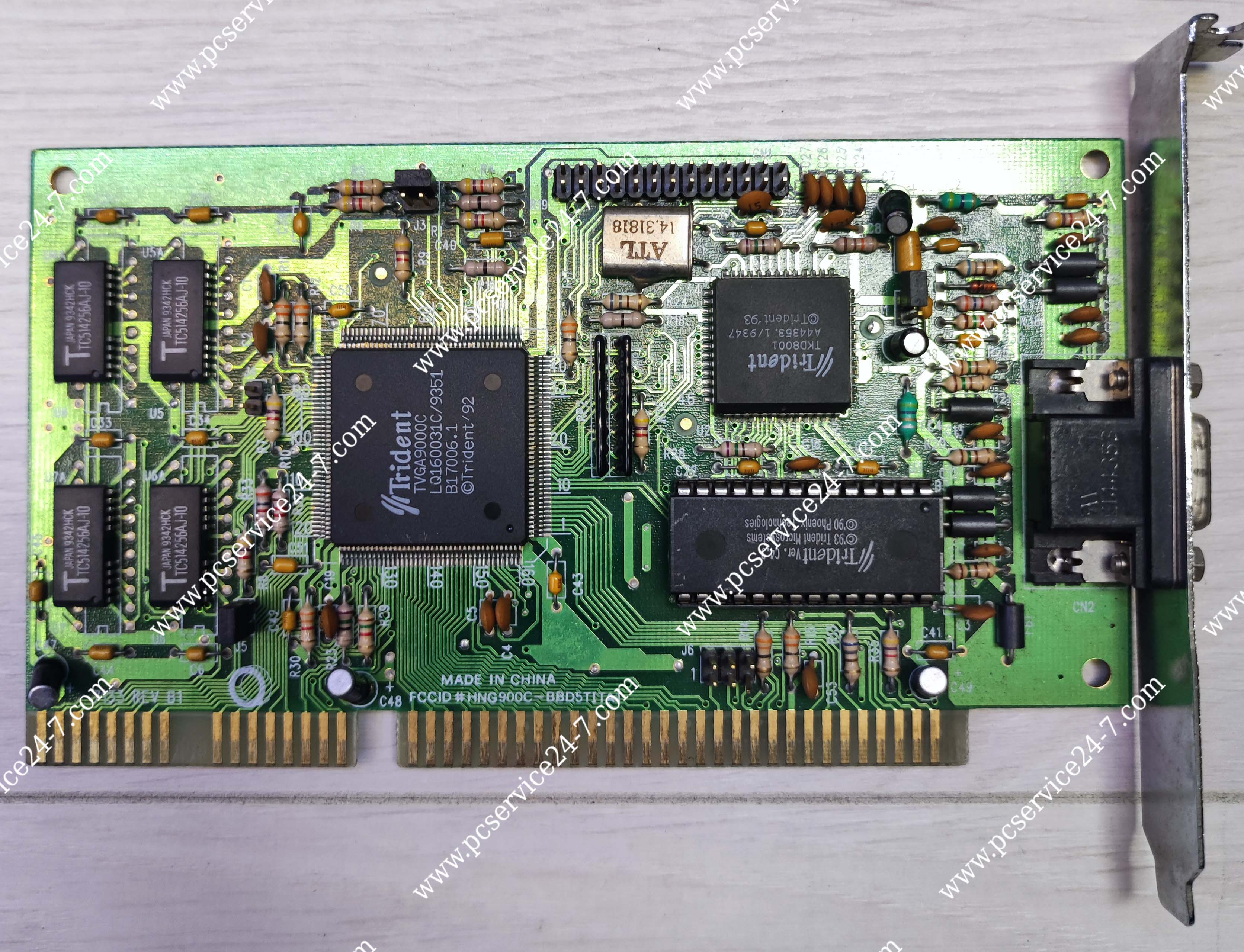
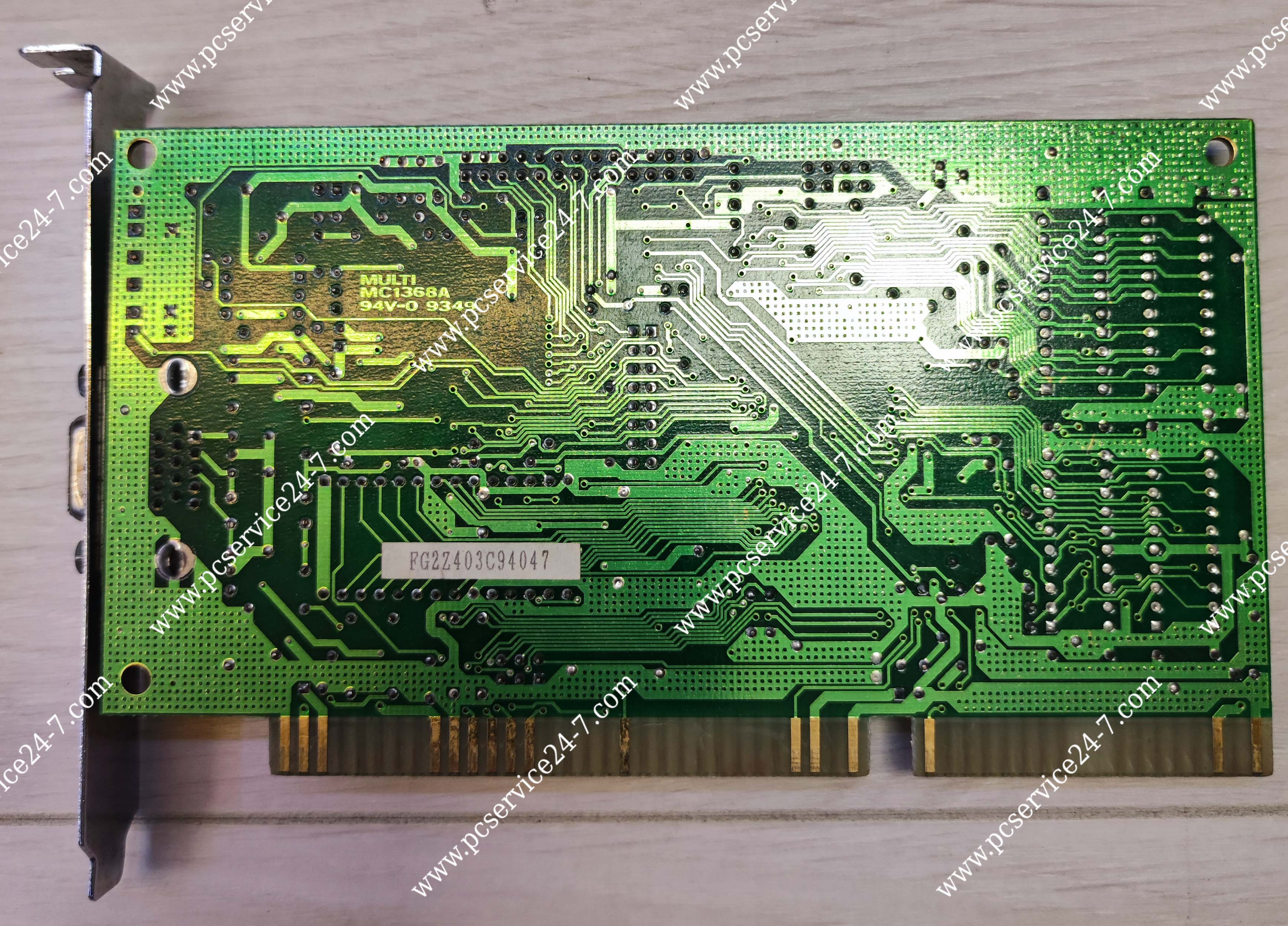
Quick Specs
| Feature | Specification |
| GPU Core | Trident TVGA9000C |
| Interface | 16-bit ISA |
| Memory | 512 KB DRAM |
| Max Resolution | 1024 \ 768 (16 colors, interlaced) |
| Common Res | 640 \ 480(256 colors) 800 \ 600 (16 colors) |
| Clock Generator | Integrated |
| RAMDAC | Integrated |
| Bus Width | 16-bit |
| Year | ~1992 |