Deep Research & Description
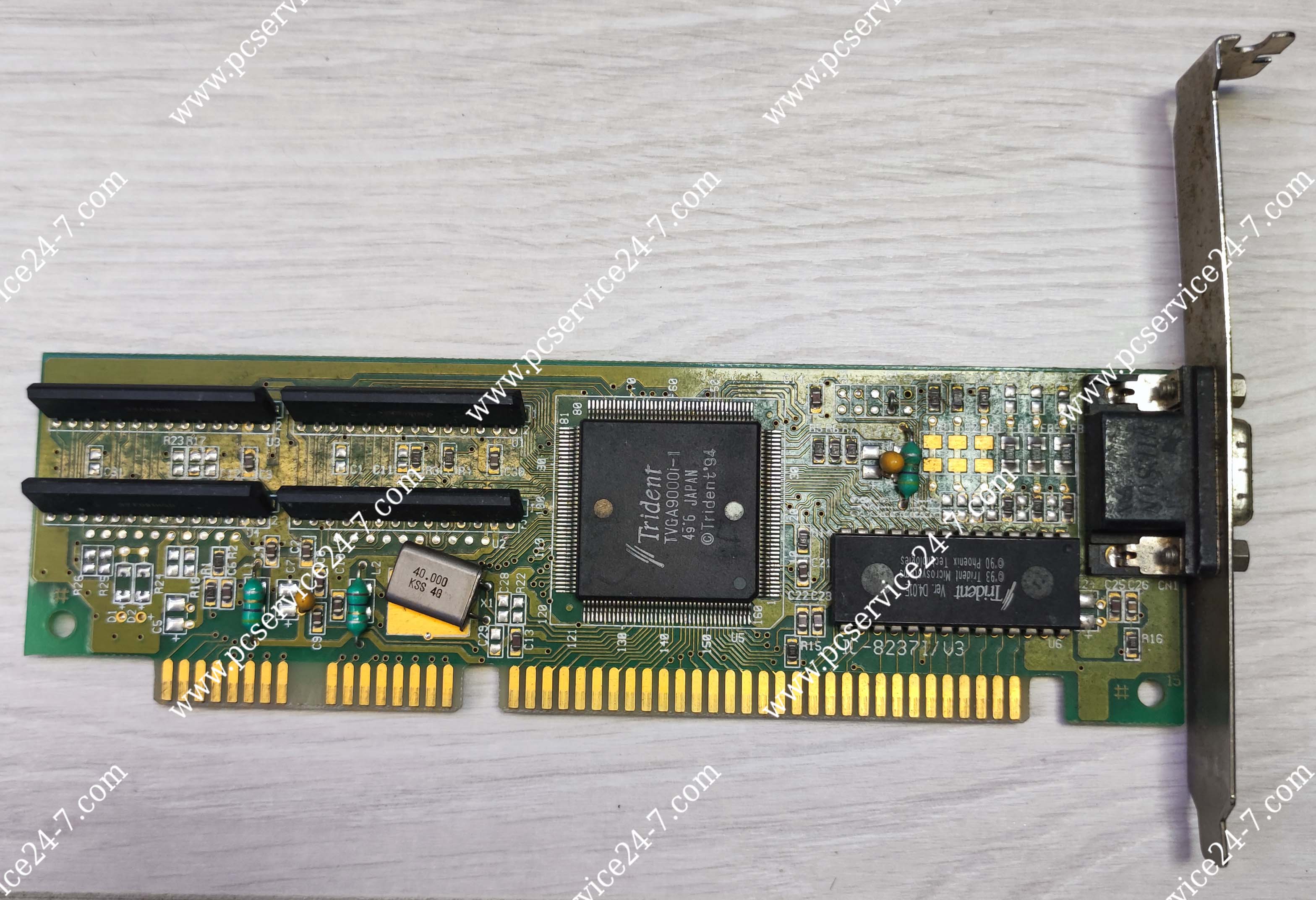
The TVGA9000i was engineered during a transitional period where many users were still clinging to their original IBM PC/XT (8088) machines but desperately wanted to upgrade from CGA or EGA to the new VGA standard. Most 16-bit ISA VGA cards of the time simply wouldn’t boot in an 8-bit slot. Trident solved this by designing the 9000i to automatically detect the bus width it was plugged into. This made it the “lifeline” card for the 8088/8086 era, allowing 1980s hardware to display 256-color graphics.
Technically, the “Integrated” nature of the 9000i meant that Trident managed to squeeze the VGA controller, RAMDAC, and clock generator into a single high-efficiency CMOS package. This version typically came with 256 KB of DRAM, which was the “sweet spot” for standard VGA. It allowed for a resolution of 640 x 480 at 16 colors or 320 x 200 at 256 colors (the legendary Mode 13h used by almost every DOS game of the early 90s).
In the evolution of the PC, the 9000i was the ultimate “compatibility insurance policy.” It didn’t matter if you had a 286, 386, or an old Turbo XT; if it had an ISA slot, the Trident would almost certainly work. It was the card that brought the colorful world of Windows 3.1 and Wolfenstein 3D to machines that were technically obsolete before the games were even written.
Era Context
-
The “XT” Lifeline: This is one of the most sought-after cards for modern XT-class hobbyists because it is one of the few VGA cards that can provide a stable signal to a VGA monitor using an 8-bit bus.
-
Operating System: The staple of Windows 3.0 and MS-DOS 5.0/6.22 environments.
-
The “Slow but Steady” Reputation: While it was often outperformed by Cirrus Logic or Tseng Labs in raw speed benchmarks, the Trident 9000i won on price and the fact that it would boot in machines where other cards failed.
-
DOS Gaming: The perfect card for the “Golden Age” of VGA gaming—handling Doom, Monkey Island, and Dune II with perfect color accuracy and zero “speed bugs.”
Technical Note: If you are running this in an original 8-bit IBM PC or XT, ensure the jumpers (if present) are set correctly. Some revisions require a manual toggle to force 8-bit mode, though the “i” variant is famous for its “plug-and-play” behavior on old iron.
Component Gallery
Quick Specs
| Feature | Specification |
| GPU Core | Trident TVGA9000i |
| Interface | 8-bit / 16-bit ISA (Auto-sensing) |
| Memory | 256 KB DRAM |
| Max Resolution | 800 x 600 (16 colors) / 640 x 480 (16 colors) |
| Standard Mode | 320 x 200 (256 colors) |
| Bus Logic | Supports XT, AT, and 386+ systems |
| Integration | Combined Controller, RAMDAC, and Clock |
| Year | ~1992-1994 |