Deep Research & Description
The W26361 (part of the S26361 series) is a line of industrial-grade motherboards manufactured by Fujitsu Siemens (and previously Siemens Nixdorf). When paired with the Intel 440BX chipset, these boards—such as the D1107 or D1115—represent some of the most stable and over-engineered platforms of the late 90s.
The “W26361” identifier is actually a Fujitsu Siemens part number found on the PCB, often corresponding to the Scenic or Professional line of desktop workstations. While consumer boards of the era were designed for speed, these German-engineered boards were built for industrial longevity and 24/7 reliability.
Technically, these boards utilized the legendary Intel 82443BX Northbridge. Because they were intended for corporate environments, they avoided the “flashing lights” and overclocking gimmicks of the era in favor of strict adherence to Intel’s specifications. The 440BX chipset allowed for a native 100MHz Front Side Bus, making these boards the perfect host for high-end Slot 1 processors like the Pentium III 450MHz through 600MHz+.
One defining technical feature of the Fujitsu Siemens 440BX series is the advanced system monitoring. Long before it was a standard consumer feature, these boards included sophisticated thermal management and “Silent Fan” technology, which could throttle fan speeds based on precise temperature sensors to keep office environments quiet.
Era Context
-
The “Scenic” Legacy: These boards were the heart of the Fujitsu Siemens Scenic line, the European equivalent of the Dell OptiPlex or HP Vectra. They were the standard-issue machines for banks and government offices across the continent in 1999.
-
Industrial Reliability: Unlike “enthusiast” boards that often suffered from the “capacitor plague” of the early 2000s, Fujitsu Siemens used exceptionally high-quality components. Many of these boards are still found today in CNC machines or industrial controllers because they simply refused to die.
-
Operating System: The definitive Windows NT 4.0 and Windows 98 Second Edition workstation. It was designed for a world where system “uptime” was measured in months, not hours.
-
The “Silent” Pioneer: These were some of the first motherboards to implement a “Low-Noise” BIOS philosophy, where the computer would intelligently manage its own acoustics—a major selling point for quiet corporate offices.
Component Gallery
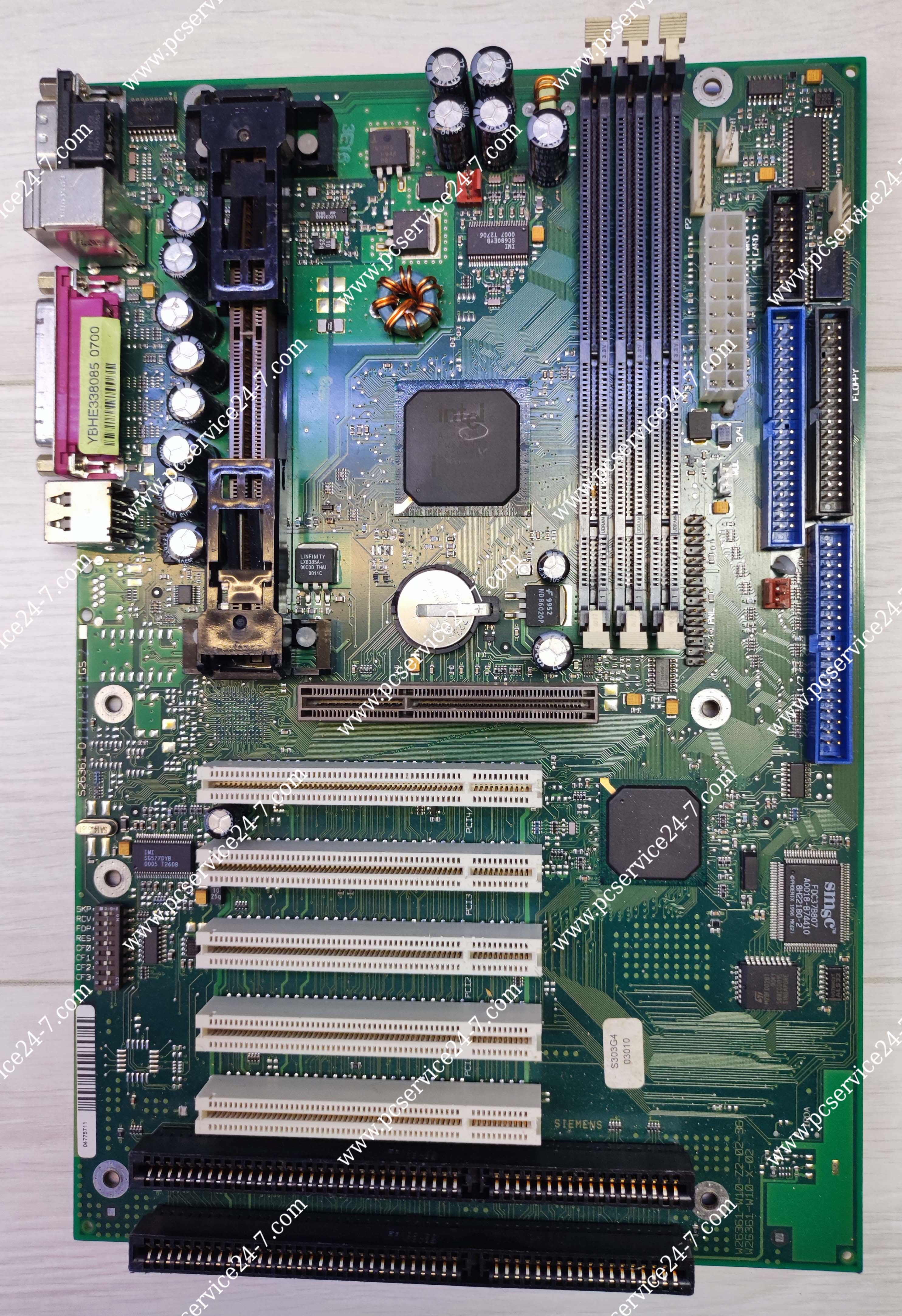
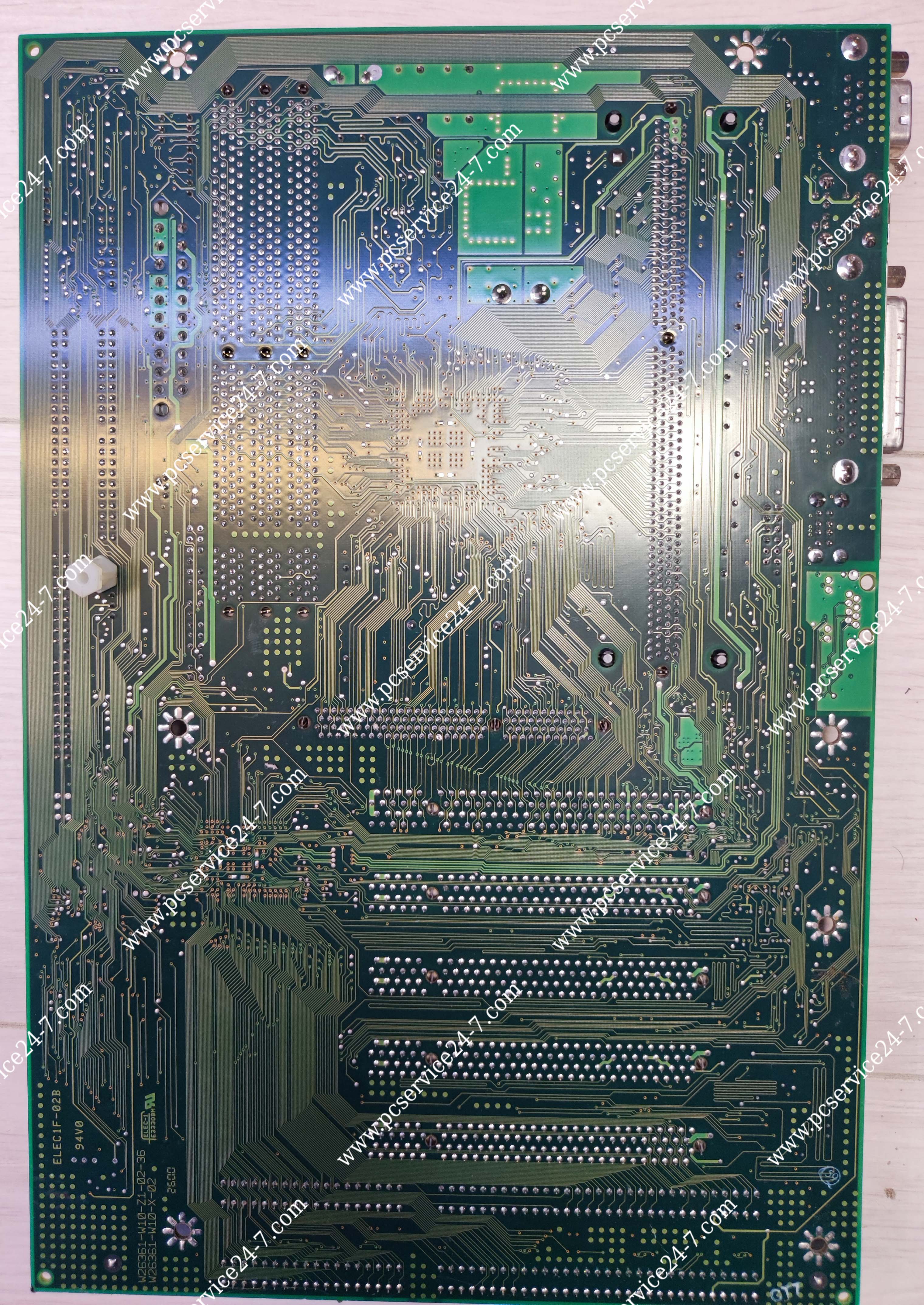
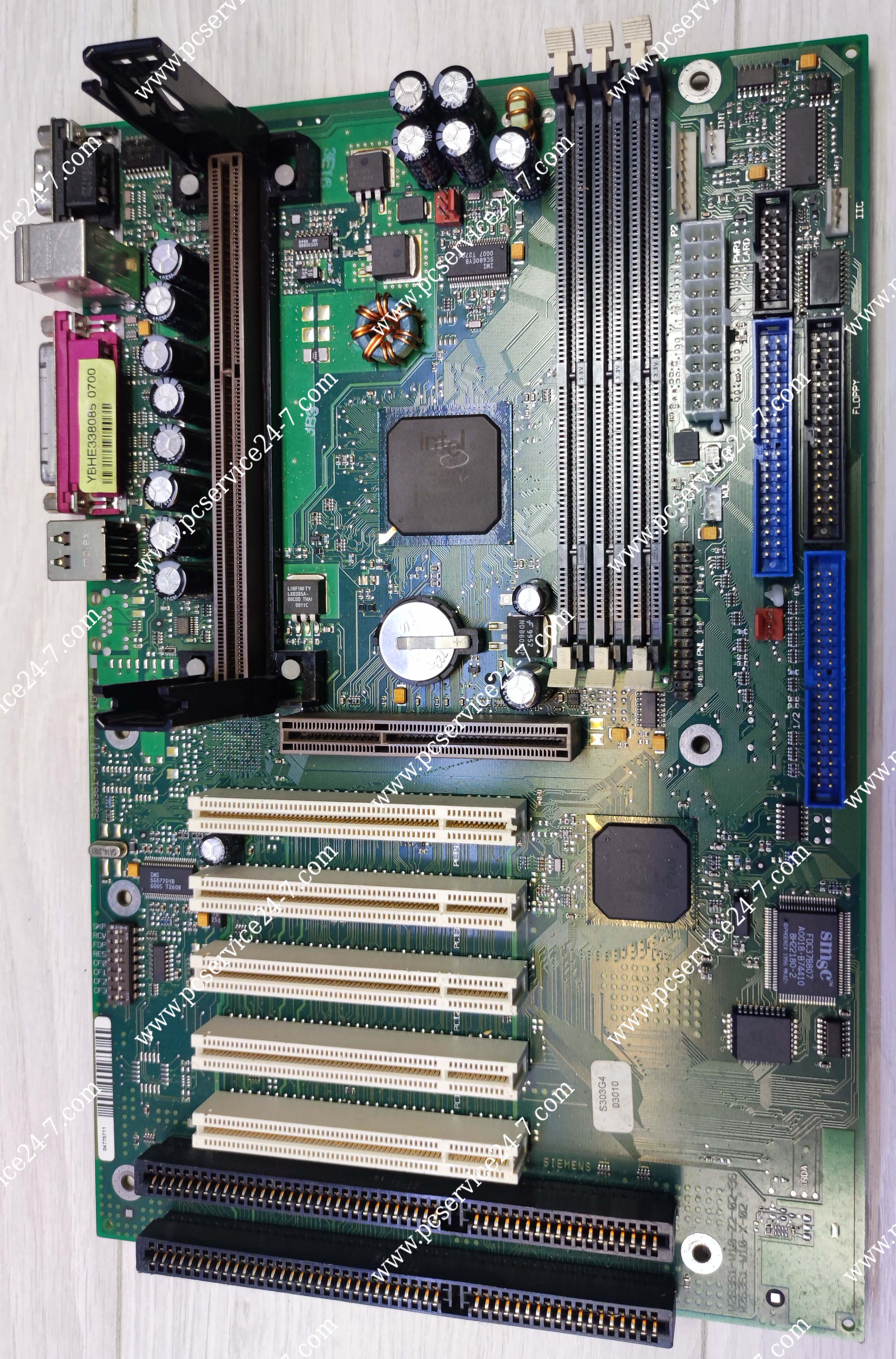
Quick Specs (Representative of D1107 model)
| Feature | Specification |
| Manufacturer | Fujitsu Siemens / Siemens Nixdorf |
| Model Number | W26361-XXXX (e.g., D1107, D1115) |
| CPU Socket | Slot 1 |
| Chipset | Intel 440BX (82443BX North / PIIX4E South) |
| FSB Support | 66 / 100 MHz |
| Memory | 3x 168-pin SDRAM DIMMs (Up to 768MB PC100) |
| Expansion | 1x AGP 2x, 4x PCI, 1x or 2x ISA (Shared) |
| Integrated I/O | 2x USB 1.1, 1x Serial, 1x Parallel, PS/2 |
| Form Factor | ATX (D1107) or mATX (D1115) |