Deep Research & Description
The Tomato Board LXe98-AT (Zida Technologies) is a legendary “budget-friendly” alternative to the more expensive Intel and ASUS boards of the late 90s. While some of your previous boards were from major players like Gigabyte or QDI, the “Tomato” brand (the marketing arm of Zida Technologies) carved out a massive niche in the “white-box” clone market by providing surprisingly capable hardware at a fraction of the cost.
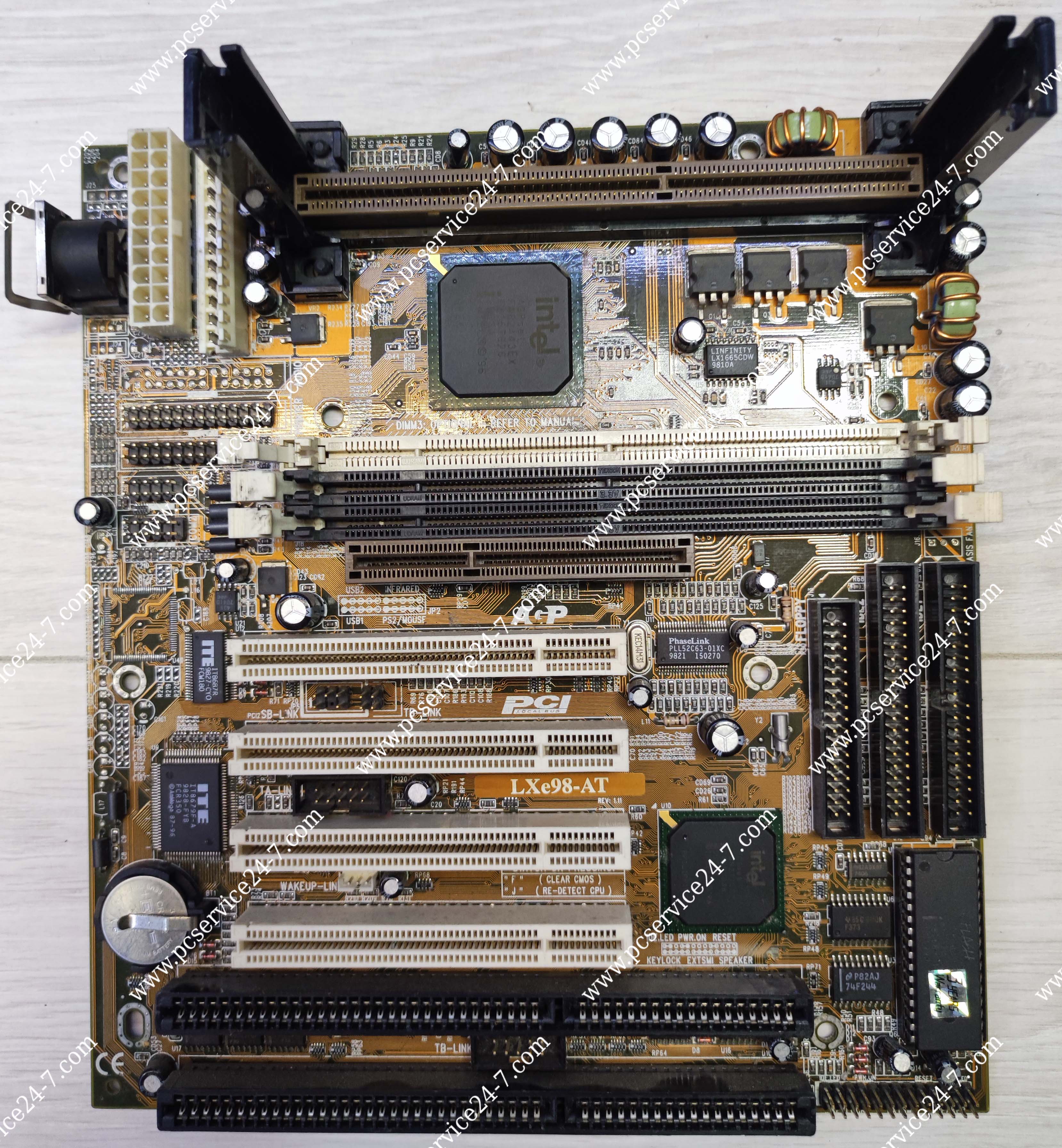
The LXe98-AT is a Baby AT motherboard designed for Slot 1 processors. It is built around the Intel 440LX (or the budget 440EX) chipset. In the hardware world of 1998, a “Tomato Board” was the go-to for someone who wanted to build a Pentium II system but didn’t have the budget for a brand-new ATX case and power supply. Like the QDI board we discussed, this “hybrid” design allowed you to drop a high-speed CPU into an older, existing desktop chassis.
Technically, the LXe98-AT was famous for its simplicity. Zida boards were often stripped of unnecessary “fluff” to keep costs down, but they didn’t compromise on the essentials. The board typically features two 168-pin SDRAM DIMM slots and a solid mix of expansion slots: a dedicated AGP 2x slot for your Voodoo or Riva TNT card, along with three PCI and two ISA slots.
The most “Tomato” feature of this board was the BIOS. Zida used a very straightforward Award BIOS that was remarkably good at handling a wide variety of “off-brand” memory modules and CPUs. While it lacked the advanced overclocking features of an Abit board, it was the “People’s Motherboard”—reliable, easy to set up, and almost impossible to kill.
Era Context
-
The “Budget King” Branding: The “Tomato Board” name was a stroke of marketing genius. In an industry full of technical acronyms, a “Tomato” stood out. It was known as the “no-nonsense” board for local computer shops that needed to build a dozen PCs in a day.
-
The AGP Breakthrough: Even as a budget board, the LXe98-AT included the AGP slot. This allowed entry-level users to experience “real” 3D gaming on a Celeron 300A—the chip that famously overclocked so well on these simple boards.
-
Operating System: The ideal platform for Windows 95 OSR2 or the launch of Windows 98. It provided the perfect “modern/legacy” balance.
-
The “Hybrid” Utility: Because it featured both AT and ATX power connectors, it was the ultimate tool for a technician’s workbench. You could test almost any 1998-era part using this one board.
Component Gallery
Quick Specs
| Feature | Specification |
| Manufacturer | Zida Technologies Ltd. (Tomato Board) |
| Model | LXe98-AT |
| CPU Socket | Slot 1 |
| Supported CPUs | Intel Pentium II / Celeron (66MHz FSB) |
| Chipset | Intel 440LX / 440EX |
| Memory | 2x 168-pin SDRAM DIMM Slots |
| Expansion | 1x AGP (2x Mode), 3x PCI, 2x ISA |
| Form Factor | Baby AT (220mm x 200mm) |
| Power Support | AT (12-pin) or ATX (20-pin) |
| Release Year | ~1998 |