Deep Research & Description
The Celeron D 325 was a significant “apology” from Intel for the previous generation of Celerons. While the older Northwood-based Celerons were famously sluggish due to their tiny 128 KB cache, the 325 utilized the Prescott-256 core. By doubling the L2 cache to 256 KB and increasing the Front Side Bus to 533 MHz, Intel finally gave the Celeron enough bandwidth to actually feel “snappy” in a Windows XP environment.
At a physical clock speed of 2.53 GHz, the 325 was a curious beast. It featured a very long 31-stage pipeline, which allowed it to hit high frequencies easily but meant it had to work harder to recover from “branch mispredictions” (errors in guessing what the software would do next). This made it a great chip for straight-line tasks like MP3 encoding or basic video playback, but it often struggled in complex games compared to AMD’s shorter-pipeline Sempron rivals.
In the evolution of the PC, the Celeron D 325 was the workhorse of the “Value PC” explosion. It was the chip found in the machines that populated school computer labs and small offices during the height of Windows XP Service Pack 2. However, like all Prescott-based chips, it was a “hot” processor, frequently pushing budget cooling solutions to their limits and making the 120mm case fan a necessity rather than an luxury.
Era Context
-
The “Prescott” Heat: This chip was part of the era where Intel began to hit the “thermal wall.” It produced significantly more heat than the AMD chips of the time, leading to the rise of more aggressive “shroud” cooling designs in OEM cases.
-
Operating System: The perfect companion for Windows XP Home Edition, though it was also a popular choice for early “budget” Linux distributions.
-
The Competition: In 2004, this chip was locked in a bitter struggle with the AMD Sempron 2500+. While the Celeron had the raw GHz advantage, the Sempron often won in gaming benchmarks.
Component Gallery
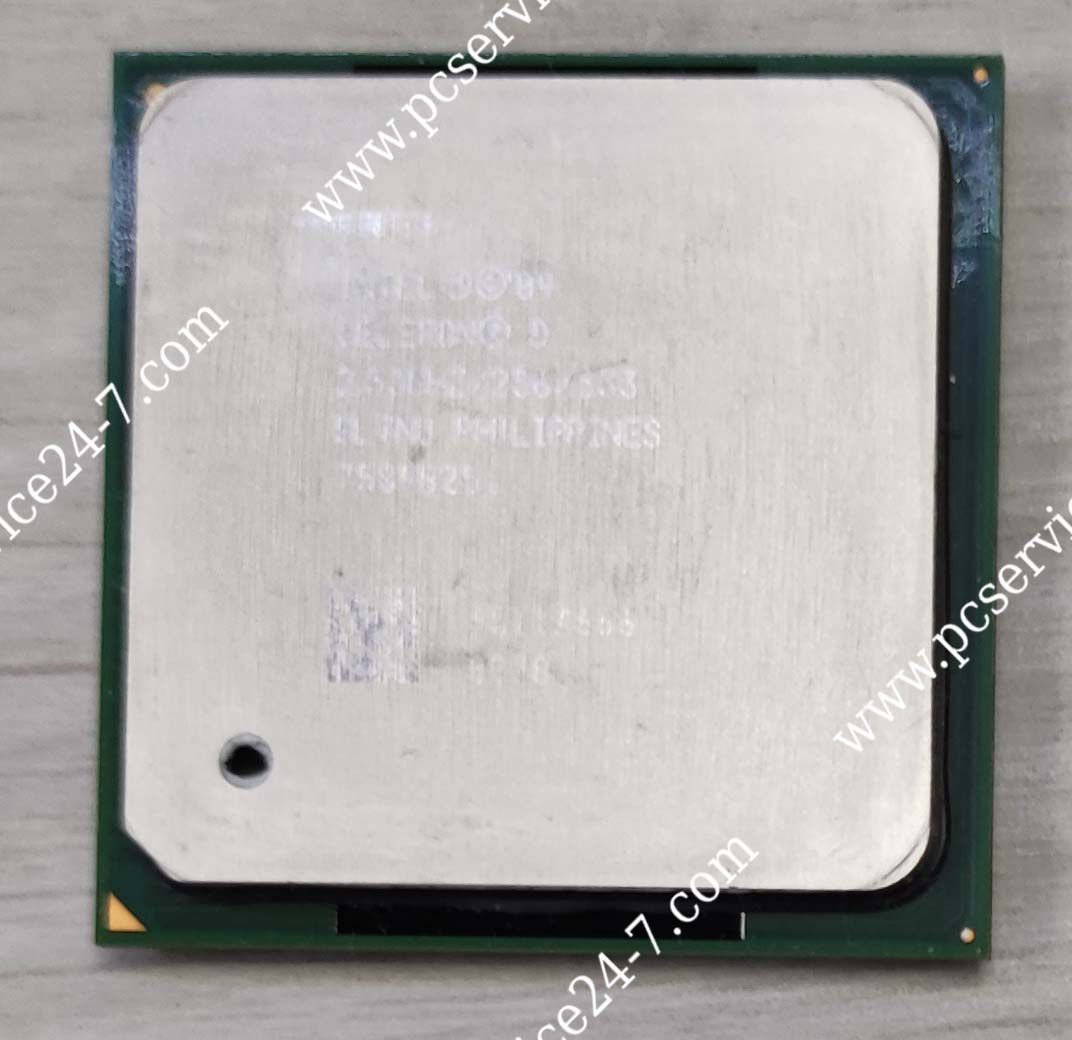
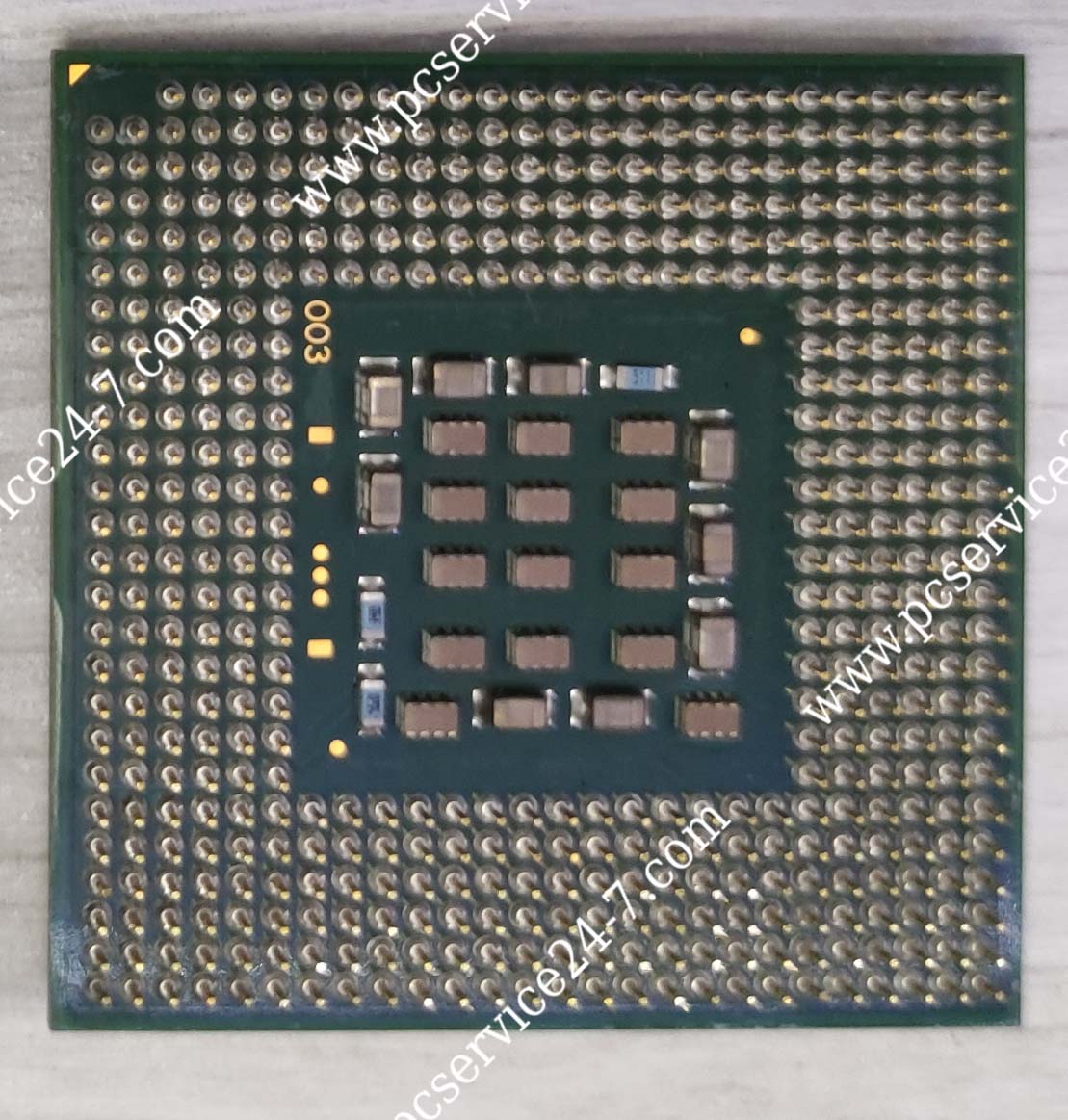
Quick Specs
| Feature | Specification |
| Model | Celeron D 325 |
| Part Number | RK80546RE061256 |
| Core Codename | Prescott-256 |
| Clock Speed | 2.53 GHz |
| Bus Speed | 533 MHz (FSB) |
| L2 Cache | 256 KB (On-Die) |
| Socket | Socket 478 |
| Manufacturing Process | 90 nm |
| TDP (Power) | 73 Watts |
| Voltage Range | 1.25V – 1.4V |