Deep Research & Description
The Cyrix MII (pronounced M-two) was essentially a rebranded and refined version of the earlier 6x86MX. The “233GP” in the name is one of the most famous examples of Performance Rating (PR) marketing. Despite the number, the chip actually runs at a physical clock speed of 200 MHz (usually on a 66 MHz bus with a 3.0x multiplier, though some versions ran at 100×2.0). Cyrix argued that because its integer execution was so efficient, it performed exactly like an Intel Pentium MMX running at 233 MHz in “real-world” office applications.
Technically, the MII-233GP was a beast of efficiency for text processing, spreadsheets, and basic web browsing. It featured a sophisticated superpipelined architecture that could often outpace a Pentium MMX in business benchmarks. However, it had a “Achilles’ heel” that every PC enthusiast of the era remembers: its Floating Point Unit (FPU).
In the evolution of the PC, the MII-233GP arrived just as 3D gaming was exploding. While it was a bargain-priced hero for office work, it struggled significantly in games like Quake or Tomb Raider, which relied heavily on the FPU for 3D math. This chip represents the era where the market realized that “performance” meant different things depending on whether you were writing a letter in Word or fighting demons in a 3D engine.
Era Context
-
The “Bargain” Choice: In 1998, you could build a complete Cyrix MII system for hundreds of dollars less than an Intel-based machine, making “The $999 PC” a reality.
-
The FPU Struggle: This chip is the reason many gamers from the 90s have a “love-hate” relationship with Cyrix. It was faster than a Pentium in Windows but slower than a 486 in some specialized math tasks.
-
Operating System: The staple of Windows 95 OSR2 and Windows 98 entry-level builds.
-
Motherboard Legacy: To run this chip, you needed a “split-rail” voltage motherboard. Many older Socket 7 boards would accidentally “fry” this chip if set to a single 3.3V or 5V rail.
Component Gallery
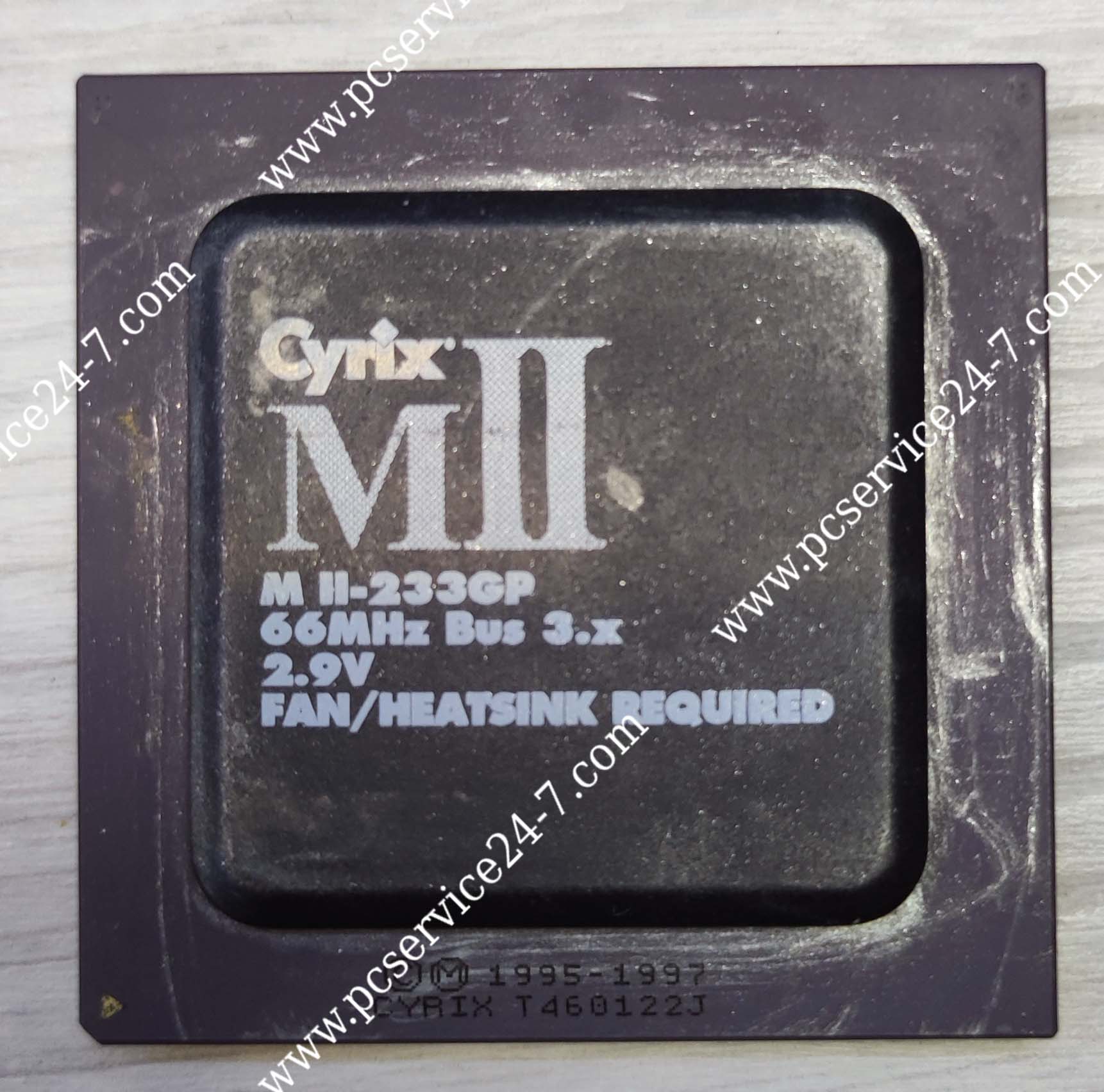
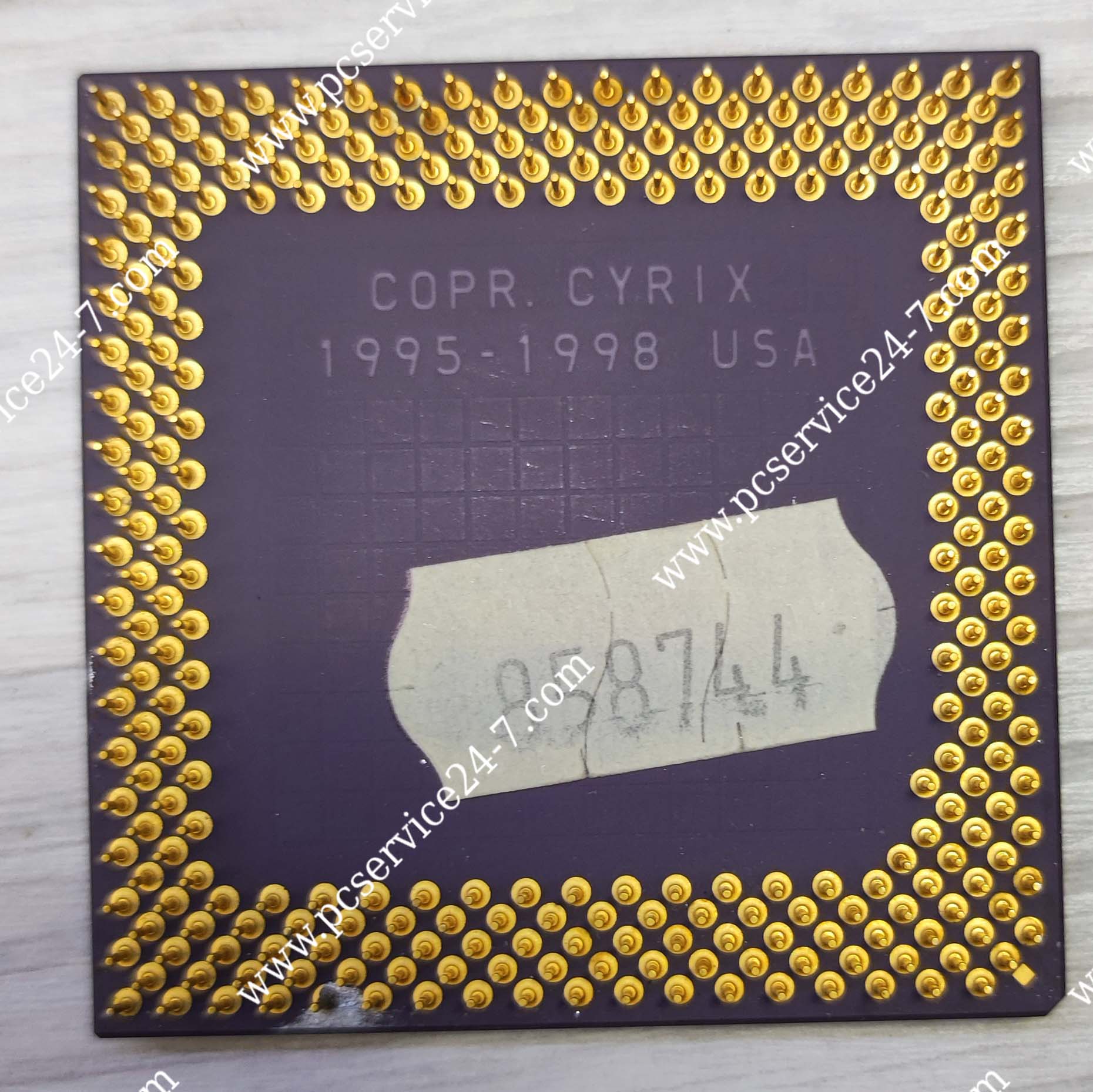
Quick Specs
| Feature | Specification |
| Model | Cyrix MII-233GP |
| Actual Clock Speed | 200 MHz |
| Performance Rating | PR233 |
| Bus Speed | 66 MHz (standard) / 100 MHz (some revisions) |
| L1 Cache | 64 KB (Unified) |
| Socket | Socket 7 / Super Socket 7 |
| Manufacturing Process | 0.35 micron / 0.25 micron (late) |
| Voltage | Dual Voltage (2.9V I/O / 2.2V Core) |
| Transistors | ~6.5 Million |