Deep Research & Description
The Rage 128 GL was built on a sophisticated 128-bit architecture, which gave it its name. At a time when many cards were still struggling to move from 16-bit to 32-bit color, the Rage 128 GL was one of the first mainstream cards to handle 32-bit rendering with minimal performance loss. This made games look significantly better, eliminating the “banding” effects seen in skies and shadows on older hardware.
Technically, the “GL” designation stood for its optimization for the OpenGL API, making it a favorite for both professional CAD work and the explosive growth of “Quake-engine” games. One of its most impressive features for the era was TwinCache architecture—using two separate buffers to handle texture and pixel data—which allowed it to punch well above its weight class in high-resolution textures.
However, its most enduring legacy isn’t just gaming; it was the DVD revolution. The Rage 128 GL featured dedicated hardware for Motion Compensation, which allowed a low-end Pentium II to play full-screen DVDs perfectly without stuttering. This made it the “must-have” card for the first generation of PCs designed for “Home Theater” use.
Era Context
-
The Competition: In 1999, the Rage 128 GL was the “third way” between the raw speed of the Nvidia Riva TNT and the high-compatibility of the 3dfx Voodoo3.
-
Operating System: The standard-bearer for Windows 98 and one of the first cards with stable, high-performance drivers for Windows 2000.
-
Gaming Legacy: It was the card that let users experience Quake III Arena and Unreal Tournament in rich 32-bit color at 800×600 resolutions—a high-end experience for the turn of the millennium.
-
Apple Connection: This chip was so successful that Apple chose it for the Power Mac G3 (Blue & White) and the early iMac G3 models, cementing ATI’s long relationship with Mac hardware.
Component Gallery
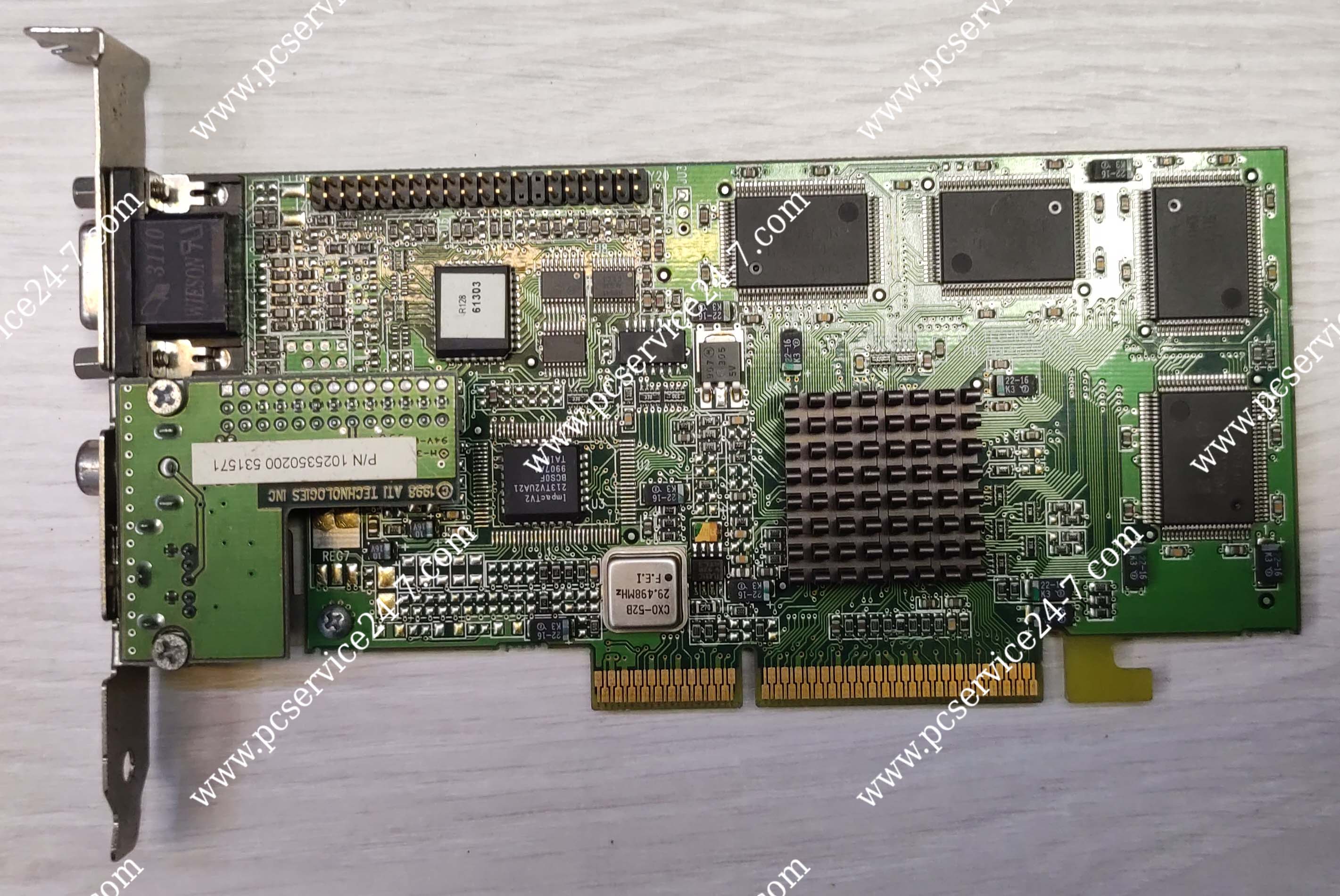
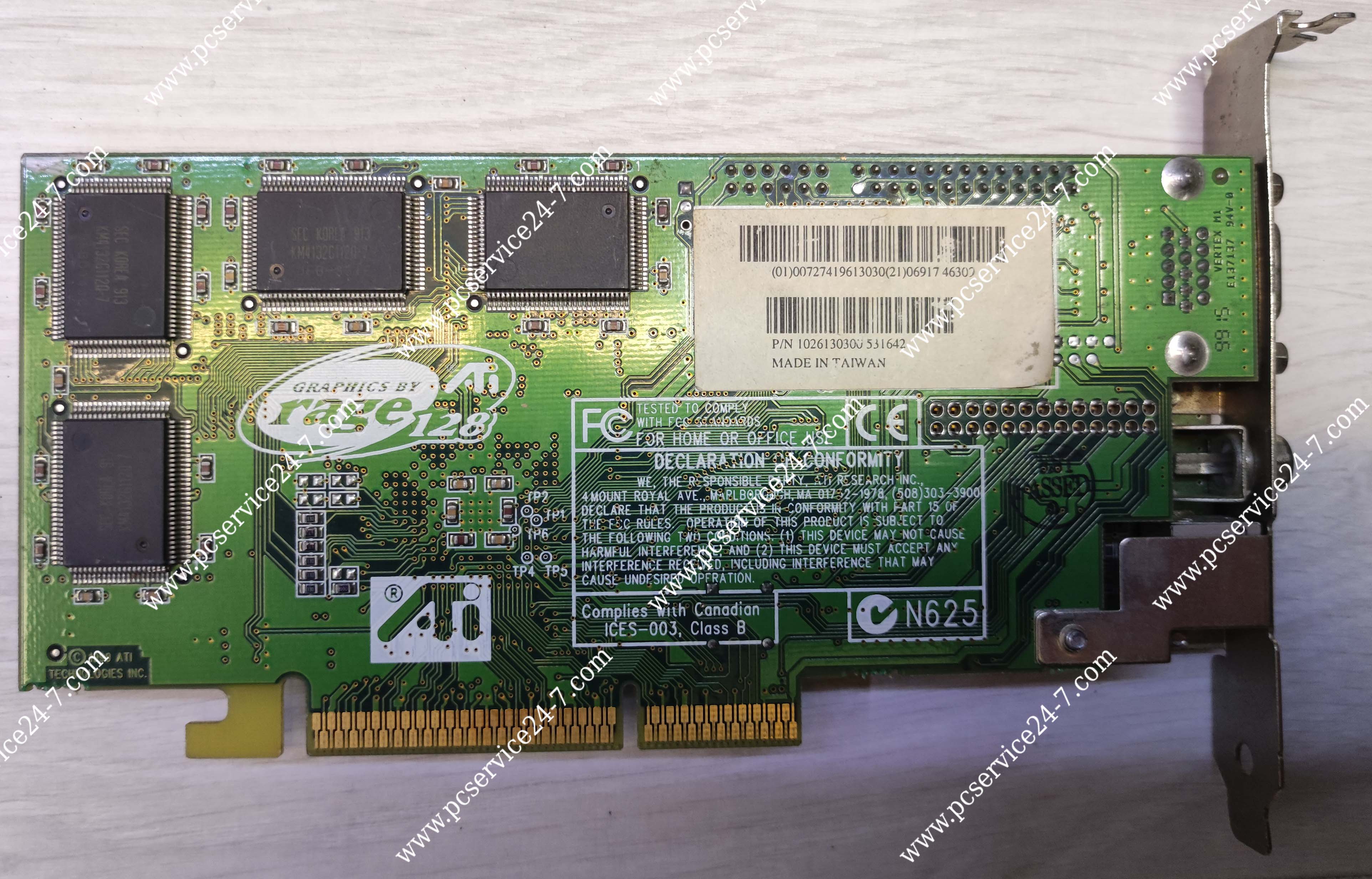
Quick Specs
| Feature | Specification |
| GPU Core | Rage 128 (Rage 4) |
| Interface | AGP 2x / PCI |
| Memory | 16 MB or 32 MB SDRAM / SGRAM |
| Memory Bus | 128-bit |
| Core Clock | 103 MHz |
| Memory Clock | 103 MHz |
| DirectX Support | 6.0 |
| OpenGL Support | 1.2 |
| Process Node | $0.25 \mu\text{m}$ (250 nm) |