Deep Research & Description
The S3 Trio64V2/DX is a masterpiece of integration. The “Trio” name refers to the fact that S3 combined three previously separate components—the graphics core, the RAMDAC, and the clock generator—into a single chip. This reduced manufacturing costs and increased reliability, making it the go-to choice for OEM manufacturers like Dell, HP, and Compaq.
Technically, the “DX” variant was the DRAM-based workhorse of the family. While its sibling, the GX, used more expensive SDRAM, the DX utilized EDO (Extended Data Out) DRAM on a full 64-bit memory interface. Its most significant upgrade over the older Trio64 was the addition of vertical bilinear filtering for video. In 1996, “Multimedia” was the big buzzword; the Trio64V2/DX featured the S3 Streams Processor, which allowed the card to upscale and “smooth out” pixelated video on the fly, making early MPEG-1 movies look significantly better than they did on standard VGA cards.
In the evolution of the PC, the Trio64V2/DX is arguably the most important card for compatibility. Its 2D core was so well-standardized and its VGA BIOS so robust that it became the “universal language” of PC graphics. Today, it remains the default emulated graphics card for software like DOSBox and Microsoft Virtual PC because it “just works” with almost every piece of software written between 1990 and 1998.
Era Context
-
The “Standard” Choice: This card was the engine of the Windows 95 revolution. It provided the rock-solid stability required for the move from DOS-based computing to a fully graphical user interface.
-
DOS Compatibility King: Even as 3D cards became popular, many gamers kept a Trio64 in their system (or on a shelf) because it had zero “speed bugs” and perfect scrolling in 2D DOS titles like Commander Keen or Jazz Jackrabbit.
-
The 1MB Limit: With only 1MB of memory, this card is a “True 2D” artifact. It can display 16.7 million colors at 640×480, but at 800×600, it drops to 65,536 colors (High Color). It was built for clarity, not for high-resolution textures.
-
The ViRGE Connection: The 2D core inside this chip was so successful that S3 essentially “glued” a basic 3D engine onto it to create the S3 ViRGE, the world’s first popular (though notoriously slow) 3D accelerator.
Component Gallery
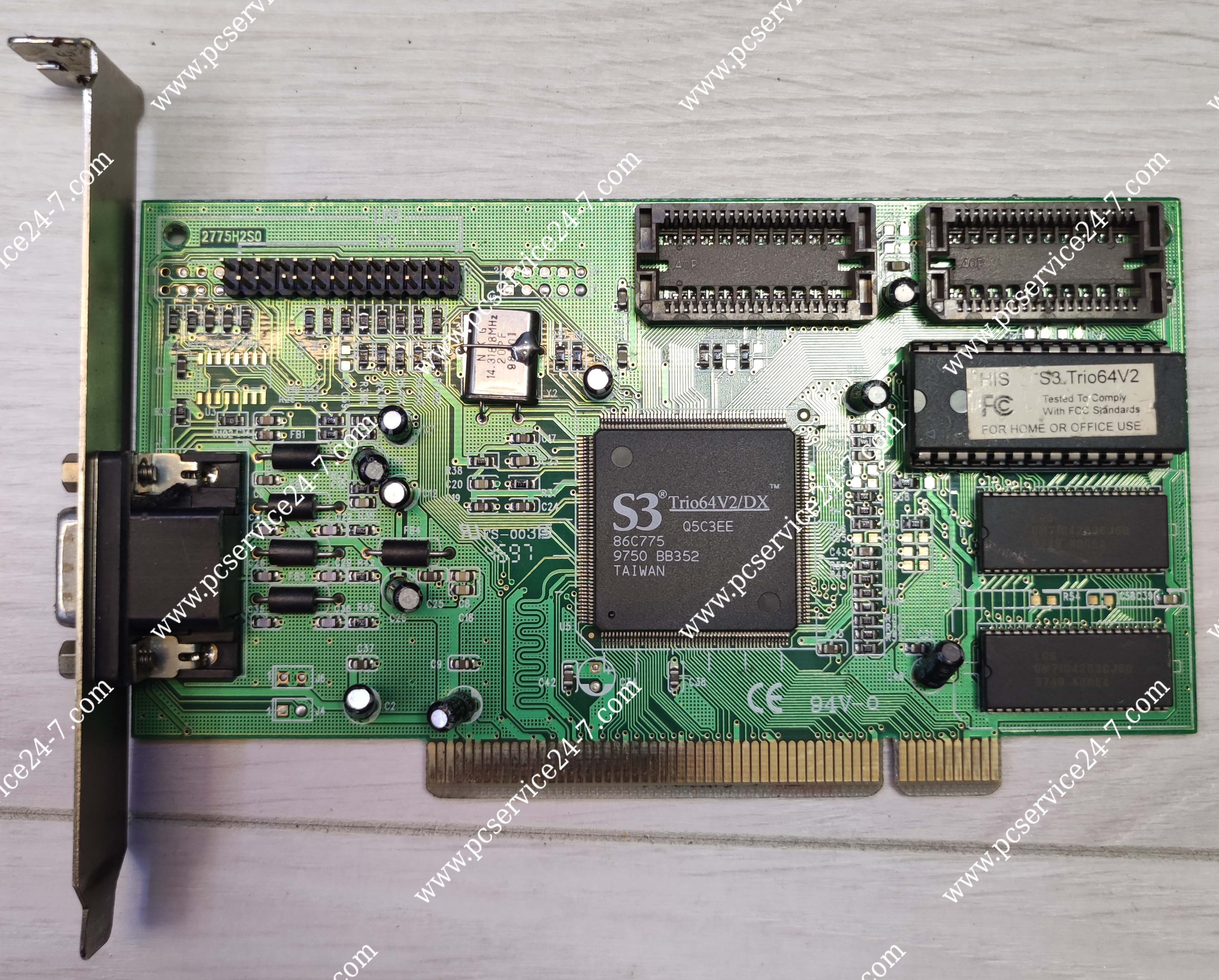
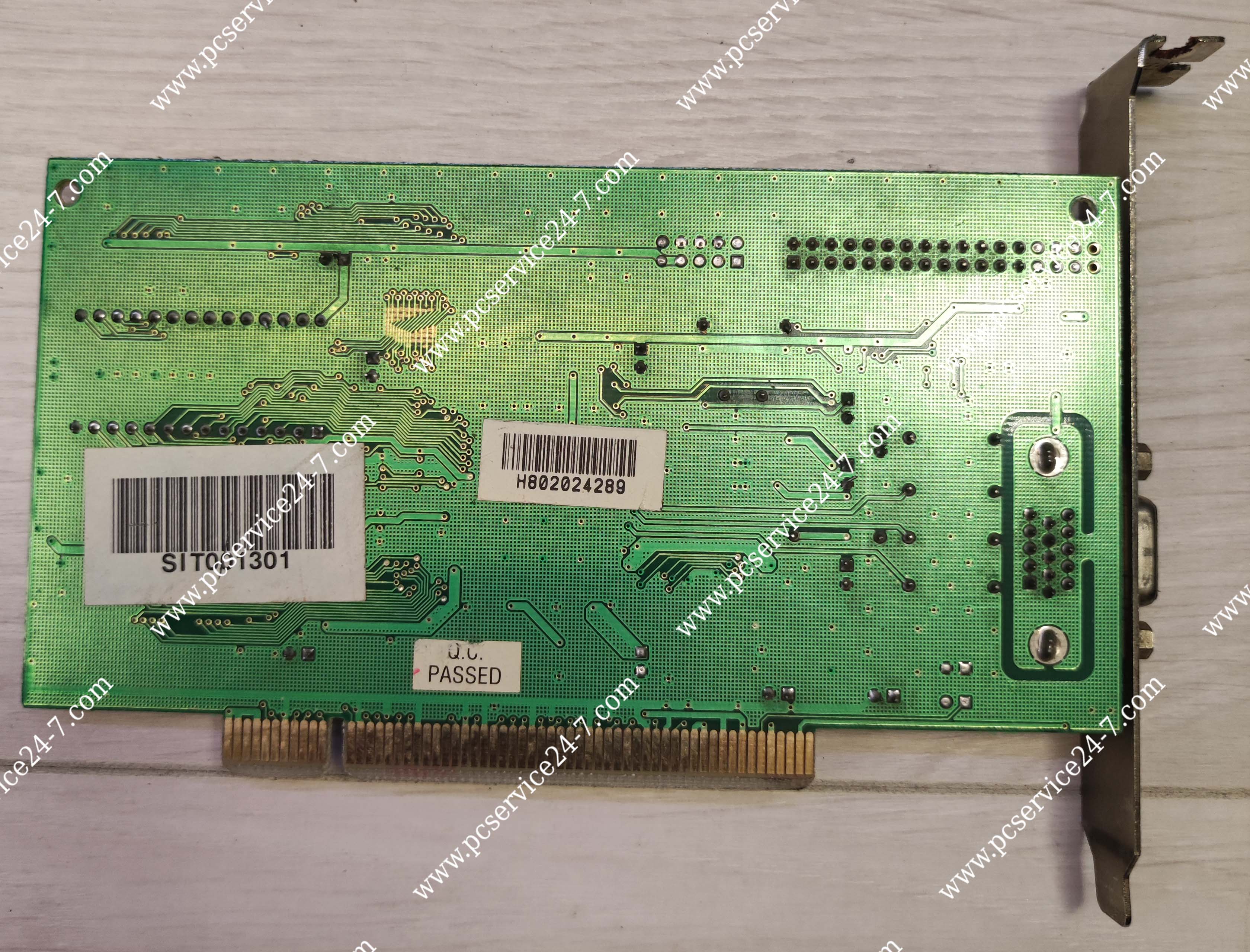
Quick Specs
| Feature | Specification |
| GPU Core | S3 Trio64V2/DX (86C775) |
| Interface | PCI |
| Memory | 1 MB EDO DRAM (Standard) |
| Memory Bus | 64-bit |
| RAMDAC | 170 MHz (Integrated) |
| Core Clock | ~50–60 MHz |
| Max Resolution | 1600 x 1200 (at 256 colors) |
| Video Acceleration | S3 Streams Processor (Bilinear Scaling) |
| Year | 1996 |