Deep Research & Description
The Voodoo Banshee was 3dfx’s response to the rising threat of Nvidia’s Riva TNT and the Matrox G200. While the original Voodoo and Voodoo2 required a separate 2D card and a clumsy external VGA cable to bridge them, the Banshee integrated a world-class 128-bit 2D engine directly onto the same die as its 3D hardware. This 2D core was so fast—implementing all Windows GDI functions in hardware—that it actually rivaled the legendary Matrox cards in office productivity and became a hero for DOS gaming.
The 3D side of the Banshee, however, was a point of controversy among enthusiasts. Architecturally, it is essentially a Voodoo2 core, but with a significant trade-off: it features only one Texture Mapping Unit (TMU), whereas the Voodoo2 had two. This meant that in “multitextured” games (like Quake II or Unreal), the Banshee was actually slower than a Voodoo2 at the same clock speed. To compensate, 3dfx pushed the Banshee’s clock speed to a default of 100 MHz (vs. the Voodoo2’s 90 MHz), and because it wasn’t limited by the Voodoo2’s internal memory architecture, it could finally render 3D at resolutions higher than 800×600.
In the evolution of the PC, the Banshee was the bridge to the Voodoo3. It supported Glide, DirectX 6.0, and OpenGL, and it introduced the 22-bit post-filter that made its 16-bit 3D rendering look remarkably close to 32-bit quality. For many users, it was the first card that allowed them to play Half-Life or Need for Speed III with 3dfx’s famous “Glide” smoothness without sacrificing 2D desktop clarity.
Era Context
-
The “TNT” Rivalry: The Banshee was locked in a brutal fight with the Nvidia Riva TNT. While the TNT supported 32-bit color, the Banshee was often preferred because of its superior Glide performance and rock-solid drivers.
-
AGP “Lite”: Although it was an AGP card, the Banshee did not support “AGP Texturing” (DIME). It treated the AGP slot as a fast 66 MHz PCI bus, meaning it relied entirely on its onboard 16MB for textures.
-
Operating System: The perfect companion for Windows 98. It made the desktop feel incredibly fluid while offering “instant-on” 3D acceleration for the gaming boom.
-
DOS Hero: Because of its VESA 3.0 compliance and fast 2D core, this is still one of the most highly-prized cards for “Ultimate DOS” builds today.
Component Gallery
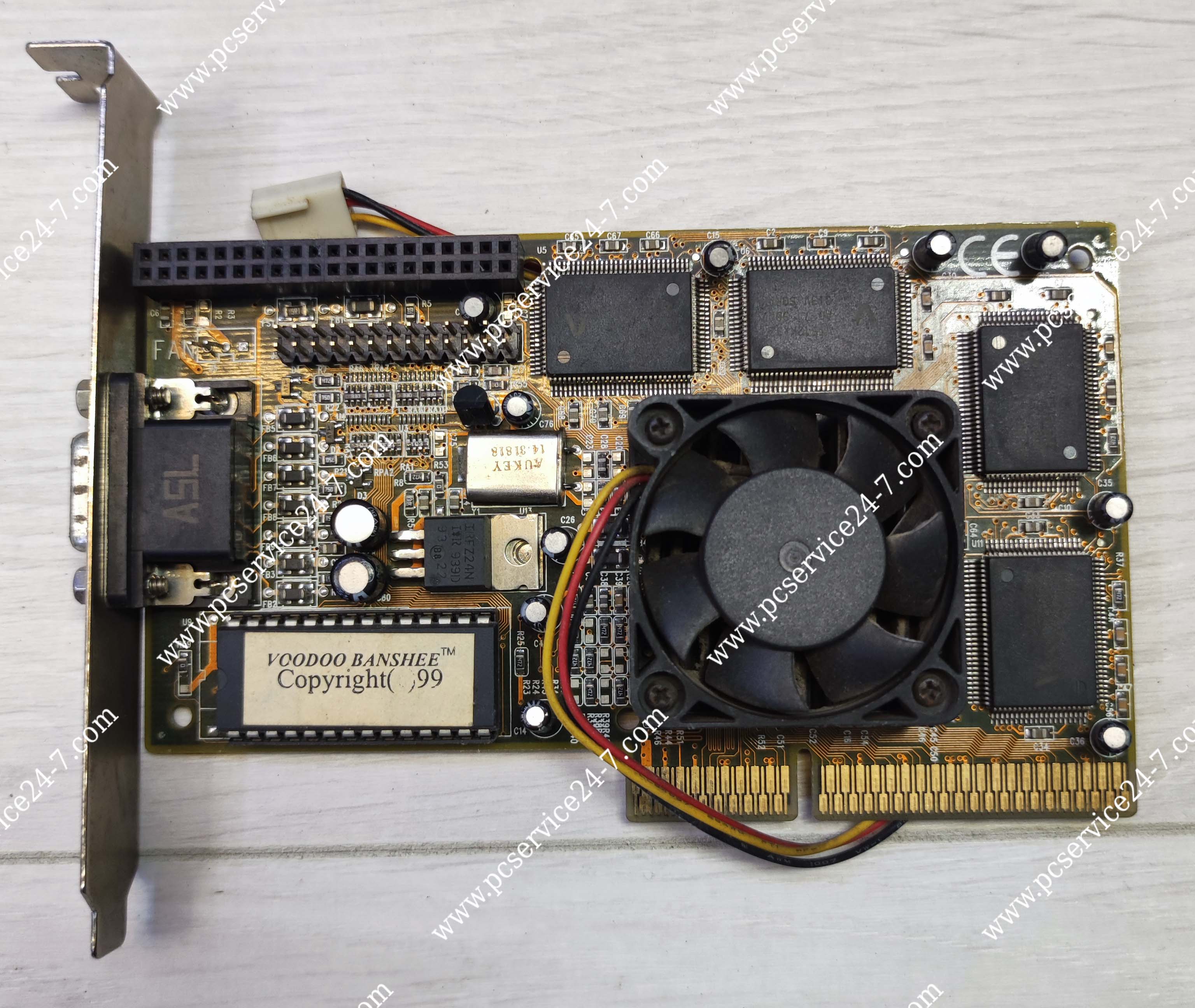
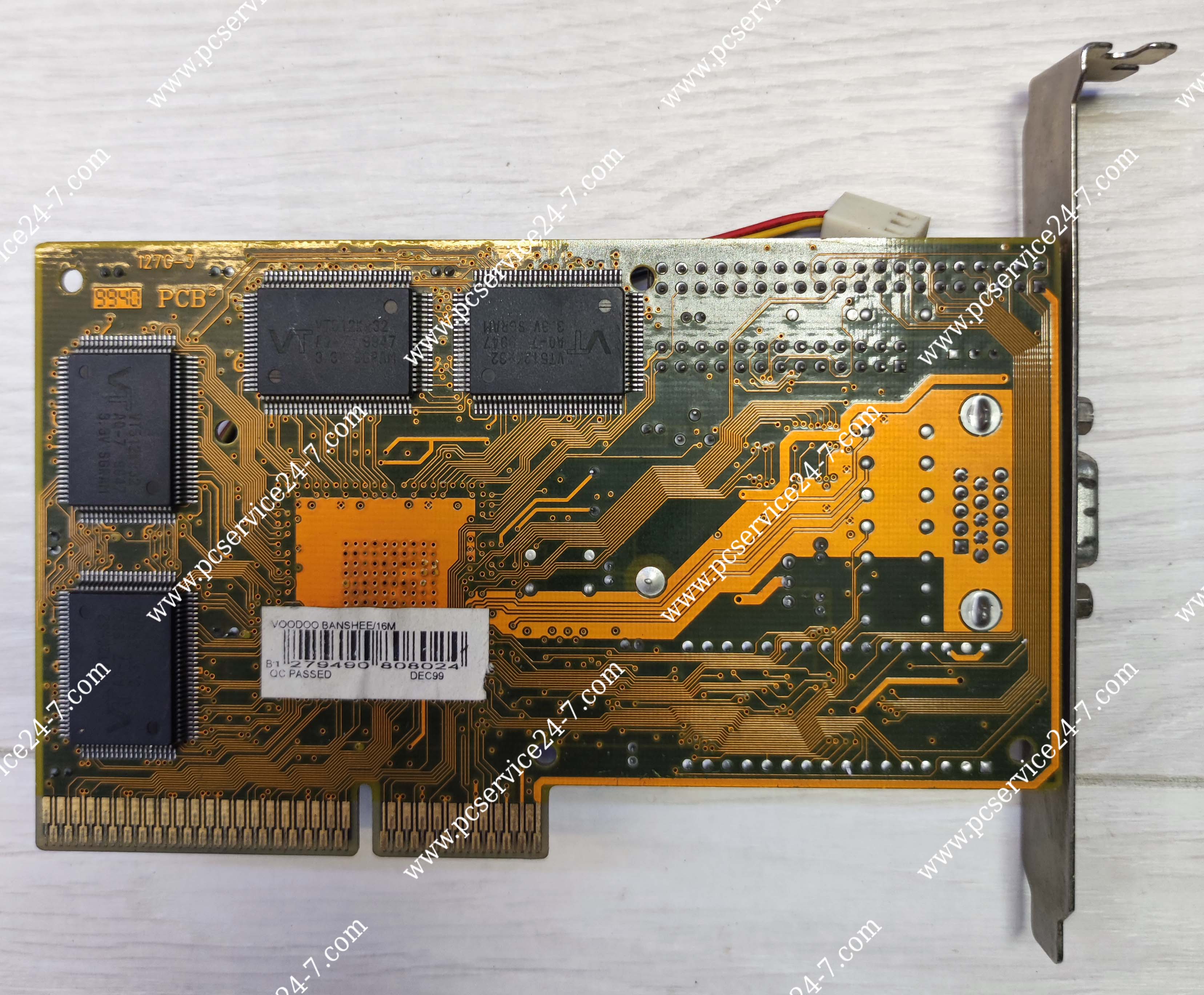
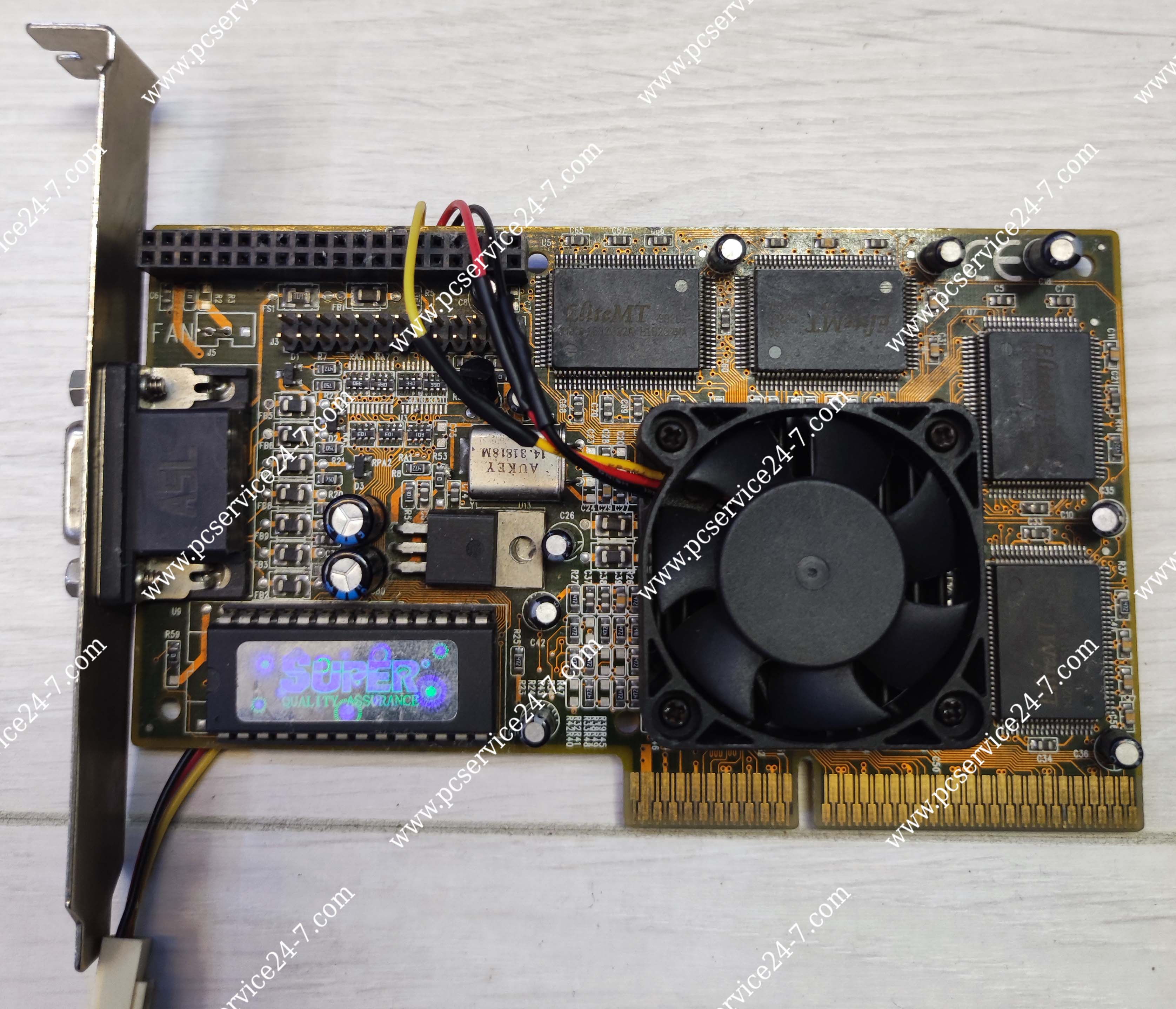
Quick Specs
| Feature | Specification |
| GPU Core | Banshee (0.35 micron) |
| Interface | AGP 1x / PCI |
| Core Clock | 100 MHz (Reference) |
| Memory | 16 MB SGRAM / SDRAM |
| Memory Bus | 128-bit |
| TMUs | 1 (Single-cycle Multi-texturing not supported) |
| RAMDAC | 250 MHz (Supports 1600×1200 in 2D) |
| DirectX Support | 6.0 |
| API Support | Glide, OpenGL 1.1 |
| 3D Rendering | 16-bit (with 22-bit post-filter) |