Deep Research & Description
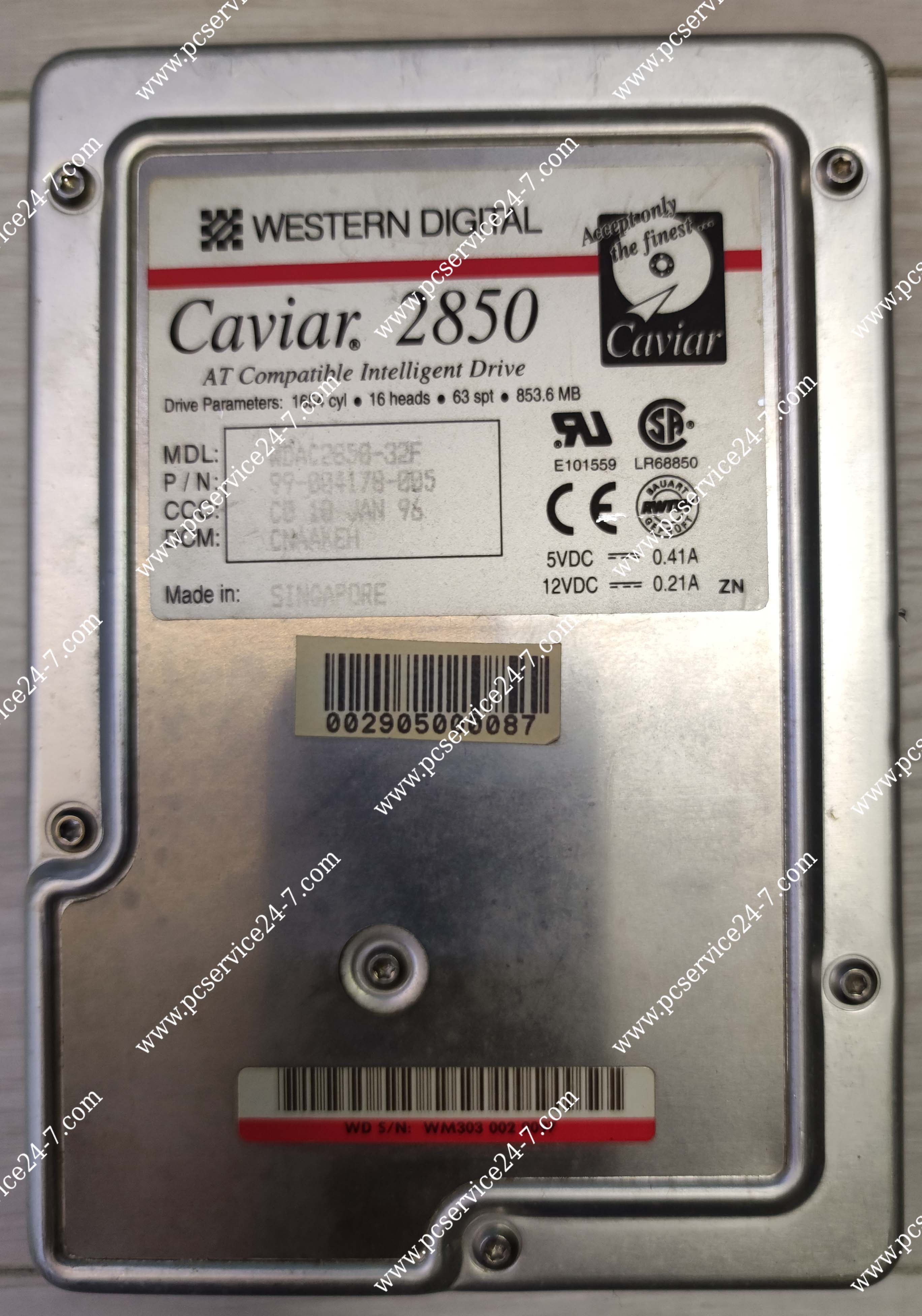
The Caviar 2850 was part of Western Digital’s “High-Performance” lineup. In an era where many budget drives were still spinning at 3,600 RPM, the 4,500 RPM spindle speed of the 2850 gave it a significant edge in seek times and data transfer rates. This was the drive you bought if you were tired of waiting for Doom II levels to load or if you were starting to experiment with early digital audio and video.
Technically, the 2850 was a pioneer of CacheFlow™, Western Digital’s proprietary multi-segmented caching transition. Even with just 64 KB of cache, the drive used clever algorithms to predict which data the CPU would need next, drastically improving the feel of “snappiness” in Windows 3.11 and 95.
However, its most famous technical hurdle was the 528 MB Barrier. Because of its 853.6 MB capacity, many older 486 and early Pentium motherboards couldn’t “see” the full size of the drive without a BIOS update or the use of Disk Overlay Software (like OnTrack Disk Manager). This drive, more than almost any other, forced the industry to adopt LBA (Logical Block Addressing) as a standard.
Era Context
-
The Windows 95 Launch: This drive was the “perfect” size for the launch of Windows 95. It had enough room for the OS (~40MB), a full office suite, and several “massive” 100MB CD-ROM games.
-
The Sound of Progress: The Caviar 2850 has a very distinct “chatter” when seeking. To a 90s tech enthusiast, that rhythmic clicking was the sound of a high-performance machine working at its limit.
-
Reliability: The 2850 was known for its “tank-like” build quality. Unlike the thinner drives that followed, these Caviars were heavy, robust, and many are still capable of booting up today without a single bad sector.
-
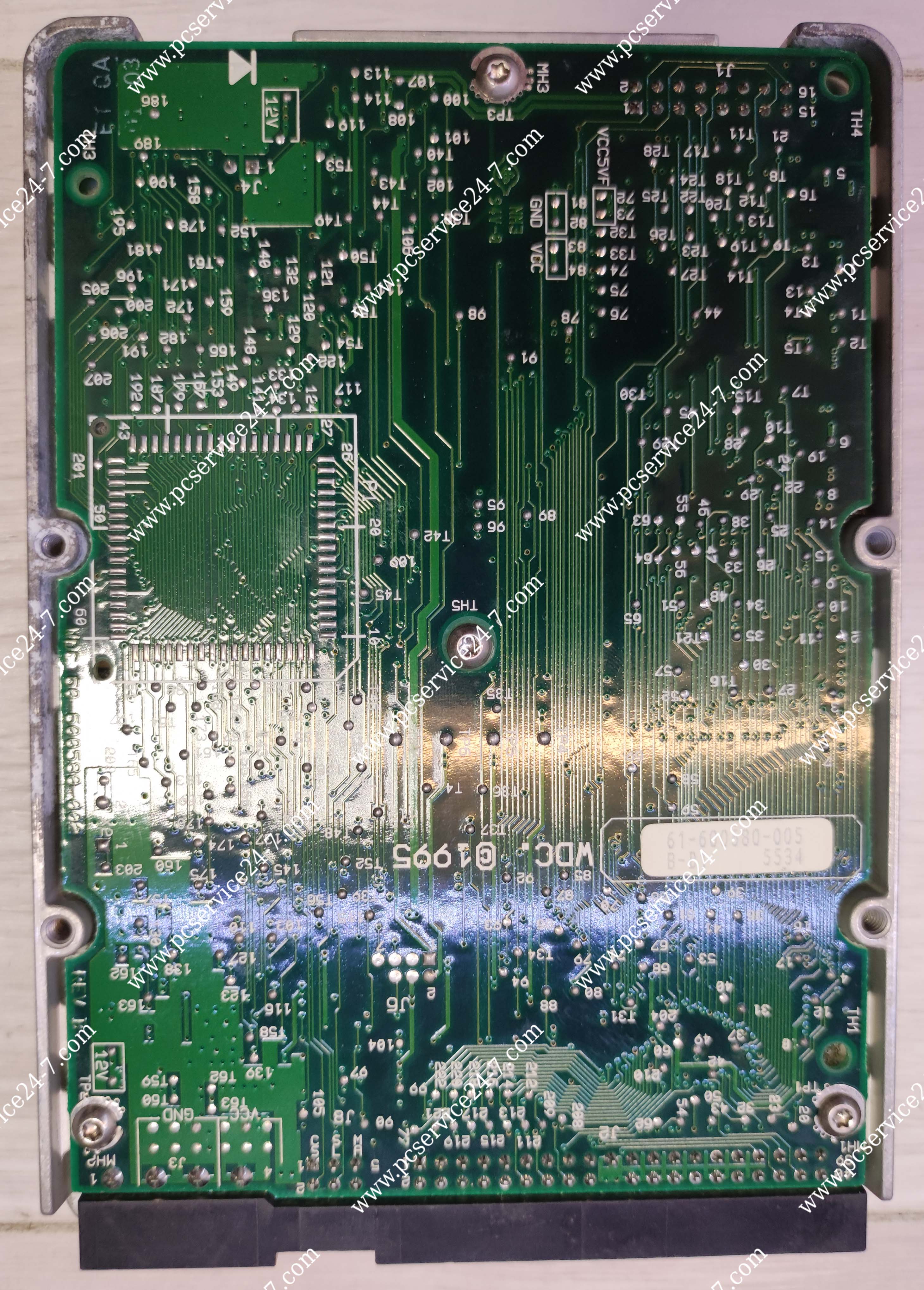
The Jumper Blocks: This was the era of “Master/Slave” settings. If you didn’t get that tiny plastic jumper in the right spot on the back of the drive, your PC simply wouldn’t post.
Component Gallery
Quick Specs
| Feature | Specification |
| Model | WDAC2850 |
| Formatted Capacity | 853.6 MB |
| Interface | EIDE / ATA-2 |
| Spindle Speed | 4,500 RPM |
| Cache Buffer | 64 KB |
| Average Seek Time | < 12 ms |
| Interface Speed | PIO Mode 3 / 4 (11.1 – 16.6 MB/s) |
| Platters / Heads | 3 Platters / 6 Heads |
| Release Year | 1995 |