Deep Research & Description
The Medalist 640xe represents a specific moment in mechanical engineering where spindle speeds hadn’t yet standardized to the 4500 or 5400 RPM marks we saw later. Its 3811 RPM rotation speed is a quirky hallmark of Seagate’s “Economy” (xe) line. While it wasn’t the fastest drive on the block, it was remarkably power-efficient and ran cool, which was a major selling point for the compact “pizza box” and small-form-factor desktop cases that were popular in corporate environments.
Technically, this drive utilized the Fast ATA-2 interface. This was a significant jump forward, as it supported PIO Mode 4 and Multiword DMA Mode 2, allowing for a theoretical burst rate of up to $16.6 \text{ MB/s}$. This was the era where LBA (Logical Block Addressing) became mandatory to bypass the old 528 MB limit. At 631.1 MB (formatted), this drive sat comfortably above that barrier, often requiring users to ensure their BIOS was “LBA compatible” to see the full capacity.
In the evolution of the PC, the Medalist 640xe was the “sensible” choice. It offered enough room for a full installation of Windows 95 plus a decent library of productivity software. It was the drive that proved Seagate could compete in the high-volume OEM market by producing a simplified, highly integrated mechanical design that was far more durable than the complex, multi-platter drives of the early 90s.
Era Context
-
The “xe” Identity: The “xe” stood for “Extended” or “Economy,” depending on who you asked at Seagate marketing. It signified that the drive used higher-density platters to keep the physical part count low.
-
Operating System: The staple drive for the Windows 95 launch. It was large enough to hold the OS and several “Multimedia” titles that were becoming popular on CD-ROM.
-
The Sound of the 90s: Unlike the “whine” of 7200 RPM drives, the Medalist 640xe has a lower-frequency hum and a very soft “thudding” seek noise. It’s one of the quieter drives of the pre-FDB (Fluid Dynamic Bearing) era.
-
Compatibility: Because it was so common in OEM machines (like the early Acer Aspire or Packard Bell desktops), this drive has excellent compatibility with almost any 486 or early Pentium motherboard.
Component Gallery
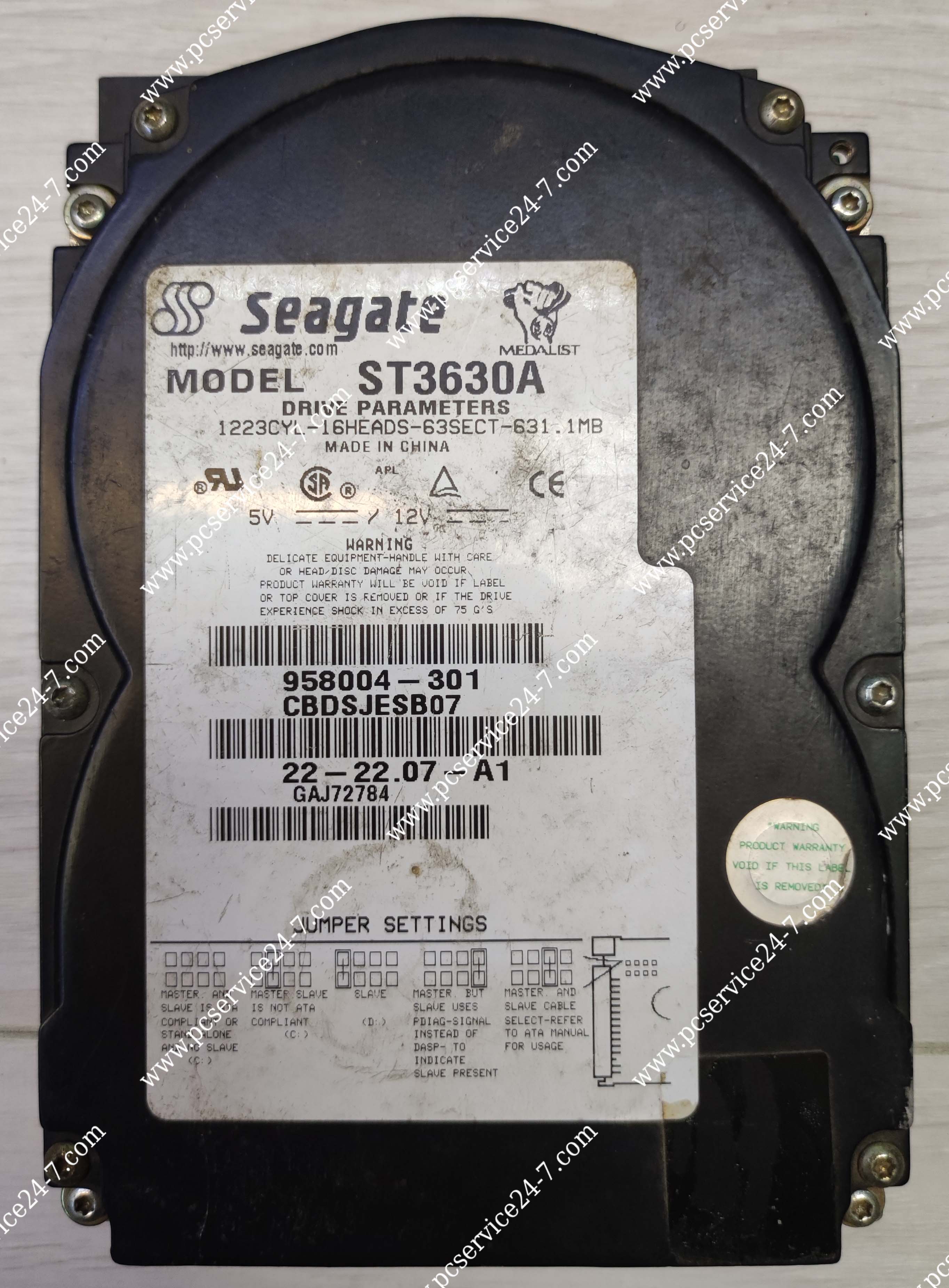
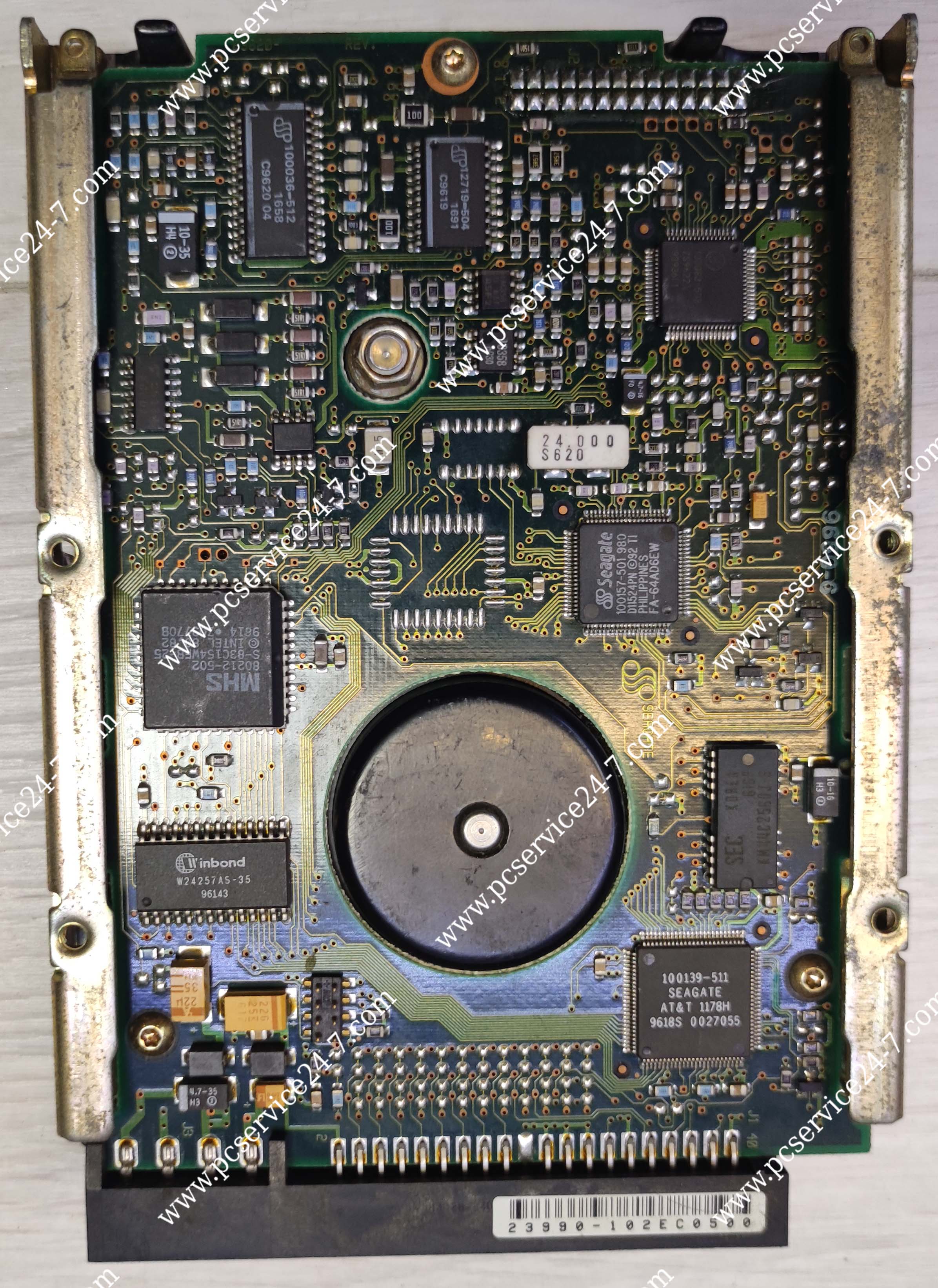
Quick Specs
| Feature | Specification |
| Model | ST3640A |
| Family | Medalist 640xe |
| Formatted Capacity | 631.1 MB |
| Interface | ATA-2 (Fast ATA) |
| Spindle Speed | 3811 RPM |
| Cache Buffer | 120 KB |
| Average Seek | 14 ms |
| Platters / Heads | 2 Platters / 3 Heads |
| Interface Speed | PIO Mode 4 ($16.6 \text{ MB/s}$) |
| Release Year | ~1995 |