Deep Research & Description
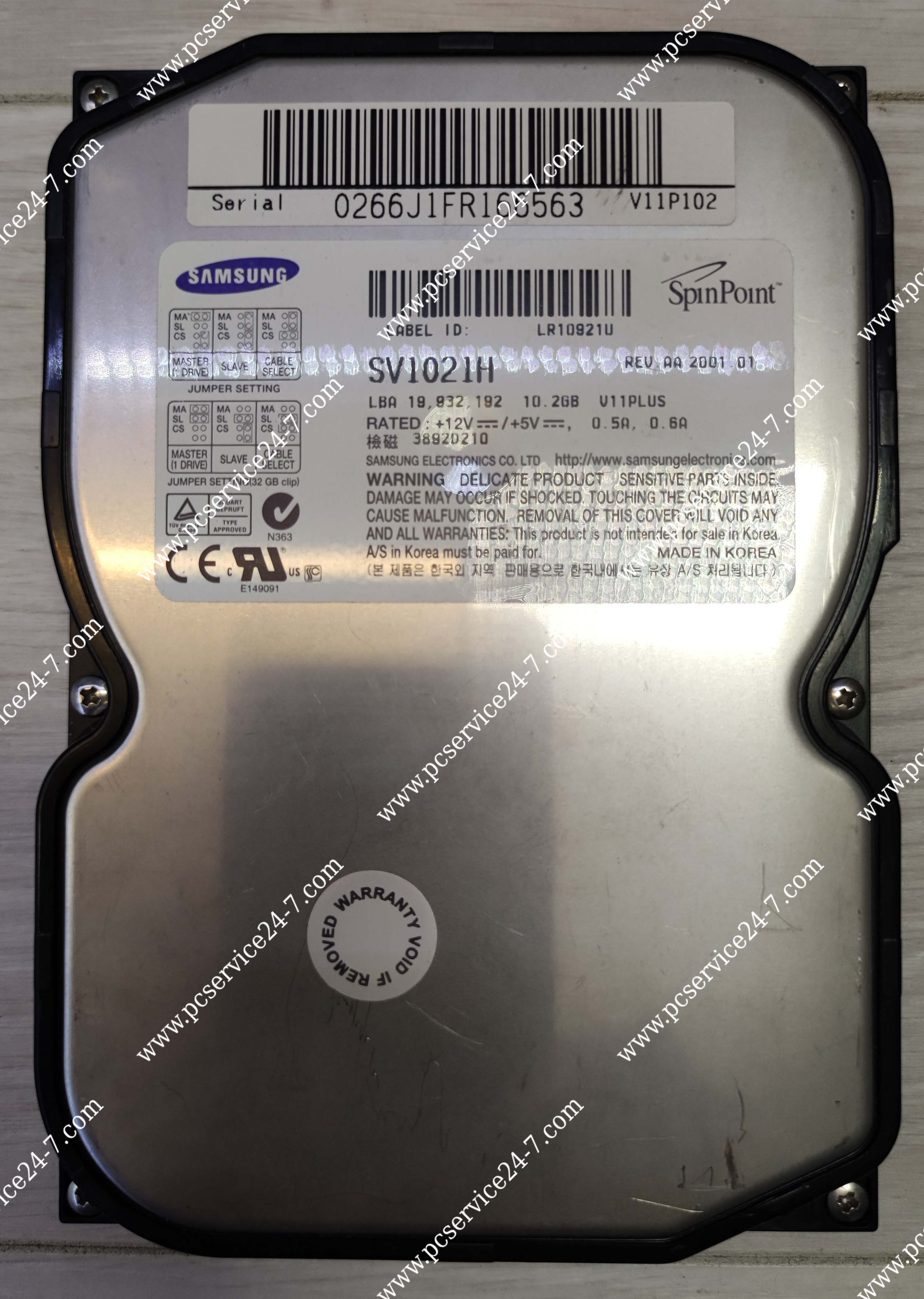
The SV1021H represents the “V-Series” (Value) of the SpinPoint family, balancing 5400 RPM spindle speeds with a high areal density. While 7200 RPM drives were becoming the standard for enthusiasts, Samsung targeted the massive OEM and home-user market with a drive that was designed to be felt but not heard. It was one of the first mainstream drives to heavily market NoiseGuard™ and SilentSeek™ technologies, which utilized advanced digital signal processing to smooth out the movements of the actuator arm, virtually eliminating the “chattering” sound during data seek operations.
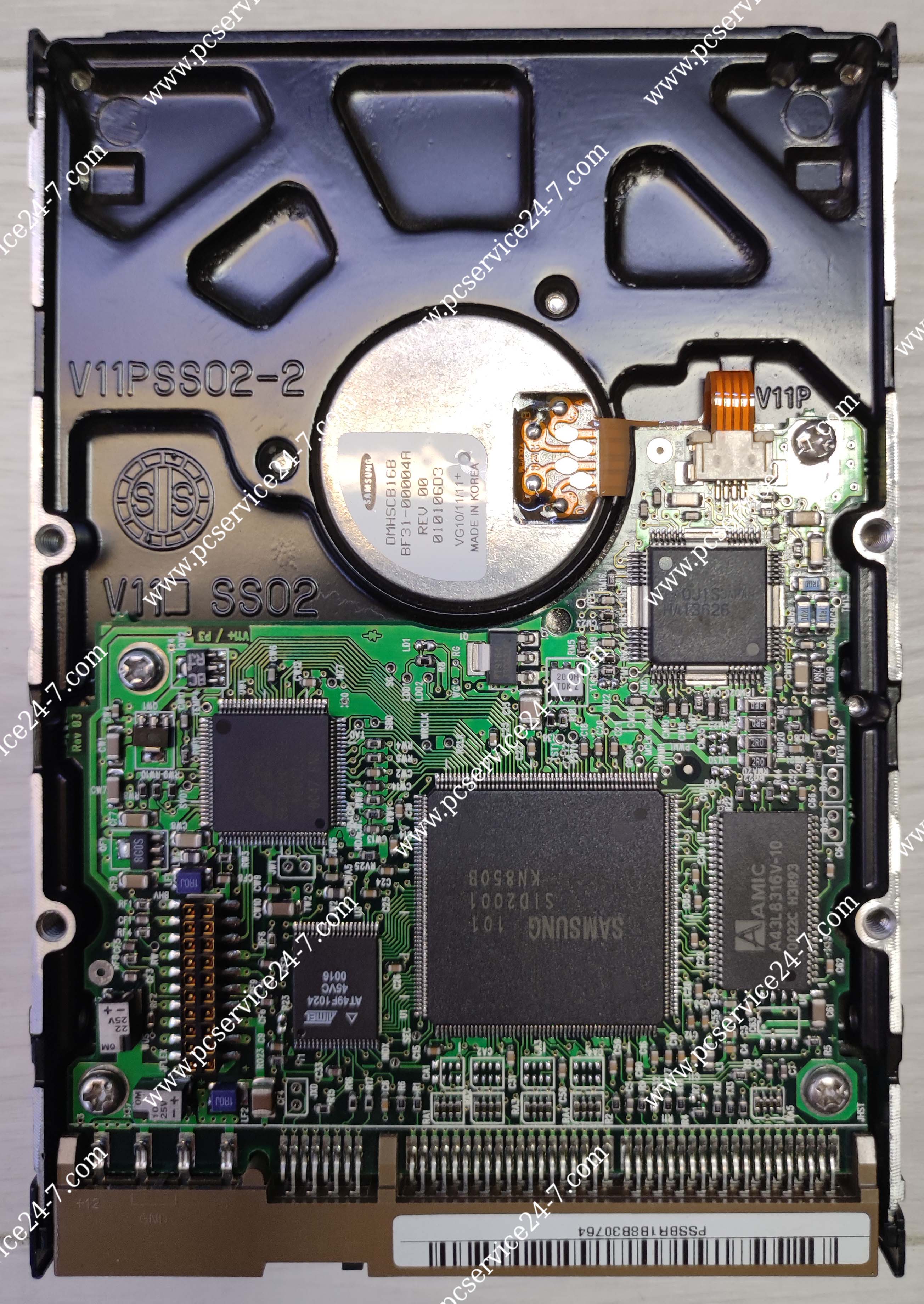
Technically, the “H” in the model number signifies its support for the Ultra ATA/100 interface. This was a critical upgrade from the previous ATA/66 standard, doubling the theoretical burst rate to $100 \text{ MB/s}$. This allowed the SV1021H to keep pace with the faster Front Side Buses of the Pentium III and early Pentium 4 eras.
Another standout feature was Samsung’s ImpacGuard™ and SSB (Shock Skin Bumper). Samsung recognized that most hard drive failures occurred during shipping or assembly; the SV1021H featured a unique mechanical design that parked the heads safely off the platter surface and used a reinforced frame to absorb physical shocks. In an era where “Click of Death” failures were a common fear, Samsung’s SpinPoint drives earned a reputation for being remarkably “tough” budget warriors.
Era Context
-
The “Silent” Revolution: Samsung was one of the first companies to realize that home users hated the high-pitched whine of hard drives. This drive helped move the industry toward the “Silent PC” movement.
-
Operating System: A rock-solid boot drive for Windows 98 Second Edition and the definitive choice for the early launch of Windows 2000 Professional.
-
The 10GB Sweet Spot: By late 2000, 10 GB was the standard “baseline” for a family PC. It was enough space to install the OS, a few encyclopedia programs on CD-ROM, and the early versions of Napster and Winamp.
-
Durability: These drives were frequently found in “white box” PCs built by local shops because they were less likely to fail during the warranty period than some of the more temperamental high-speed drives of the day.
Component Gallery
Quick Specs
| Feature | Specification |
| Model | SV1021H |
| Series | SpinPoint V20400 |
| Capacity | 10.2 GB |
| Interface | Ultra ATA/100 (PATA) |
| Spindle Speed | 5400 RPM |
| Cache Buffer | 512 KB |
| Average Seek | 9.5 ms |
| Platters / Heads | 1 Platter / 2 Heads |
| Proprietary Tech | NoiseGuard™, SilentSeek™, ImpacGuard™ |
| Release Year | ~2000 |