Deep Research & Description
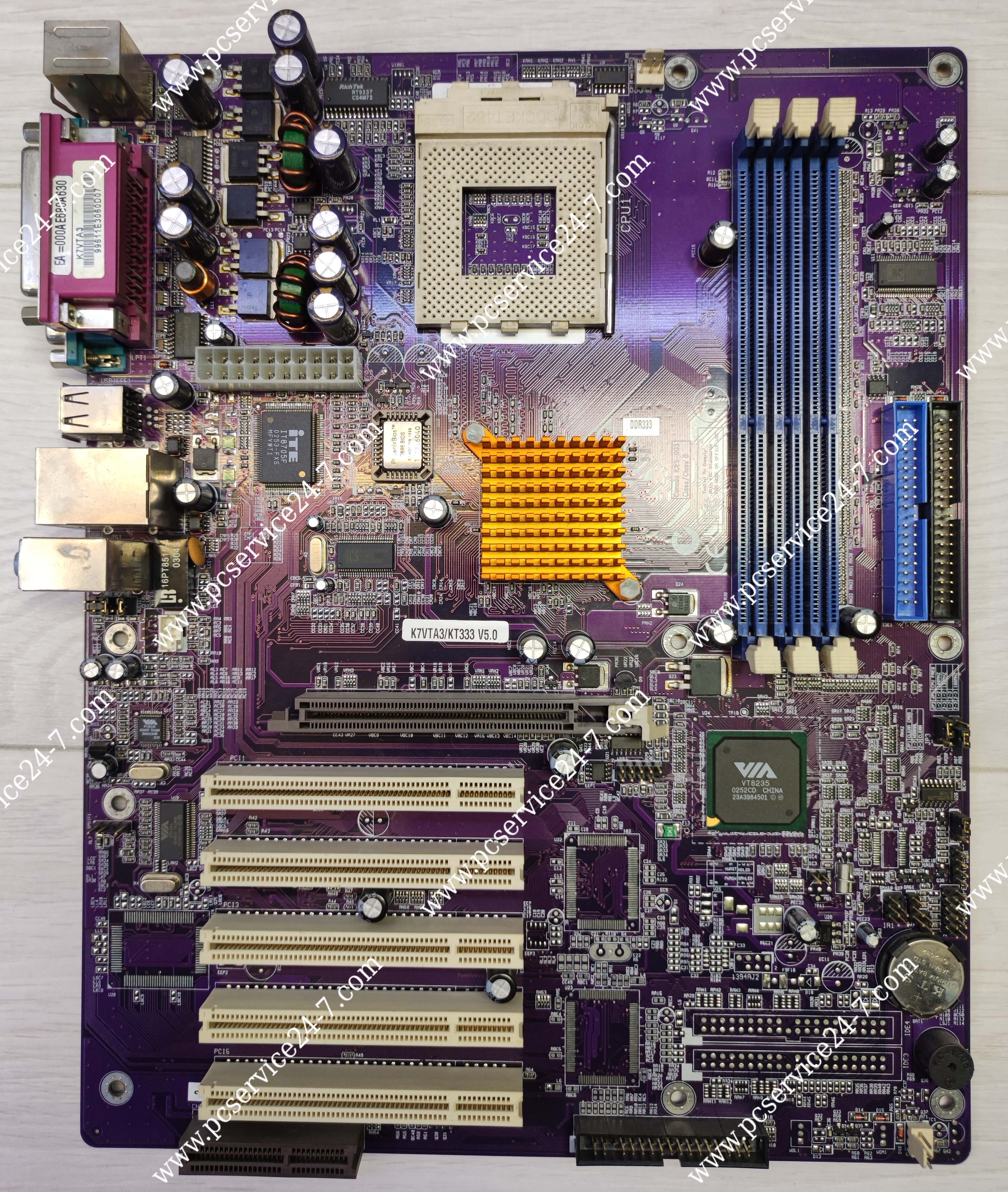
The K7VTA3 went through several revisions (from V1.0 to V8.0), but the variants featuring the VIA Apollo KT333 chipset are the most significant. This chipset was VIA’s attempt to reclaim the crown after the massive success of the KT266A. Its primary innovation was official support for DDR333 (PC2700) memory, which provided a crucial bandwidth boost to keep up with the evolving Athlon XP “Palomino” and “Thoroughbred” cores.
Technically, the board is a masterclass in cost-effective engineering. It paired the VT8367 North Bridge with the VT8233A or VT8235 South Bridge. On later revisions (V5.0 and V6.0+), the VT8235 South Bridge brought native USB 2.0 and ATA-133 support to the platform without the need for external controller chips. While it lacked the dual-channel memory of the high-end Nvidia nForce2 boards, the KT333 was famous for its rock-solid stability and near-perfect compatibility with older AGP cards.
One quirk of the K7VTA3 was its “optional” features. Depending on the specific box you bought, you might find a Promise RAID controller or FireWire (IEEE 1394) headers. It was a “modular” board for the OEM market, allowing vendors to scale from a basic office machine to a high-end multimedia workstation using the same base design.
Era Context
-
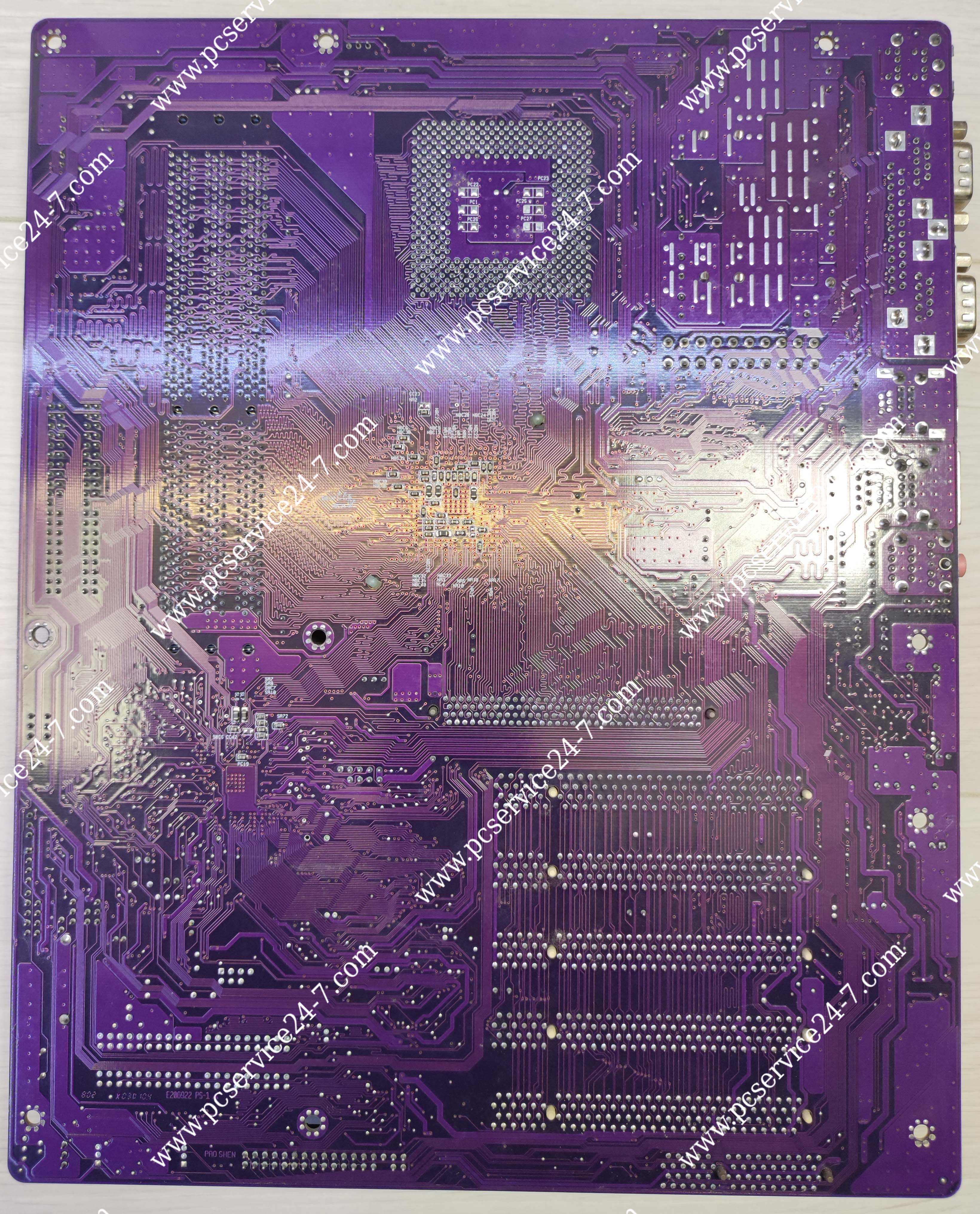
The “Purple” Reputation: ECS was one of the first brands to make brightly colored PCBs mainstream. In a world of boring beige and green, a purple K7VTA3 was a bold statement for a budget builder.
-
Athlon XP Powerhouse: This board was the perfect “bang-for-your-buck” companion for the Athlon XP 1800+ or 2100+. It offered modern features (DDR memory, ATA-133) at a fraction of the cost of its rivals.
-
Operating System: The definitive Windows XP board. Its VIA 4-in-1 drivers were a mandatory install for anyone wanting to avoid the “blue screens” of the early 2000s.
-
Legacy Connectivity: It retained a CNR (Communications and Networking Riser) slot, a short-lived standard for cheap modems and sound cards that most home users never actually used, but it’s a great historical marker of the era’s design philosophy.
This board represents the peak of VIA’s dominance in the AMD market before Nvidia’s nForce2 took over the enthusiast segment. It’s a rock-solid piece of history that likely powered a lot of Counter-Strike 1.5 and Diablo II sessions back in 2002.
Component Gallery
Quick Specs
| Feature | Specification |
| CPU Socket | Socket A (462) |
| Supported CPUs | AMD Athlon XP / Athlon / Duron (Sempron on V6.0+) |
| Chipset | VIA KT333 North / VT8233A or VT8235 South |
| FSB Support | 200 / 266 / 333 MHz |
| Memory | 2 or 3 DDR DIMM Slots (Up to 2GB/3GB DDR333) |
| Expansion | 1x AGP 4X, 5x PCI, 1x CNR |
| Storage | 2x IDE Ultra DMA 133/100/66 (RAID optional) |
| Audio | AC’97 2-channel (VIA VT1612A or Realtek) |
| USB | USB 2.0 (Integrated in VT8235 or VT6202) |
| Form Factor | ATX (305mm x 190mm or 244mm) |