Deep Research & Description
The Intel PRO/100+ series was designed for maximum stability and minimum CPU overhead. It utilizes the Intel 82558 (or 82559) chipset, which was revolutionary because it integrated many functions directly into the silicon that used to require separate chips.
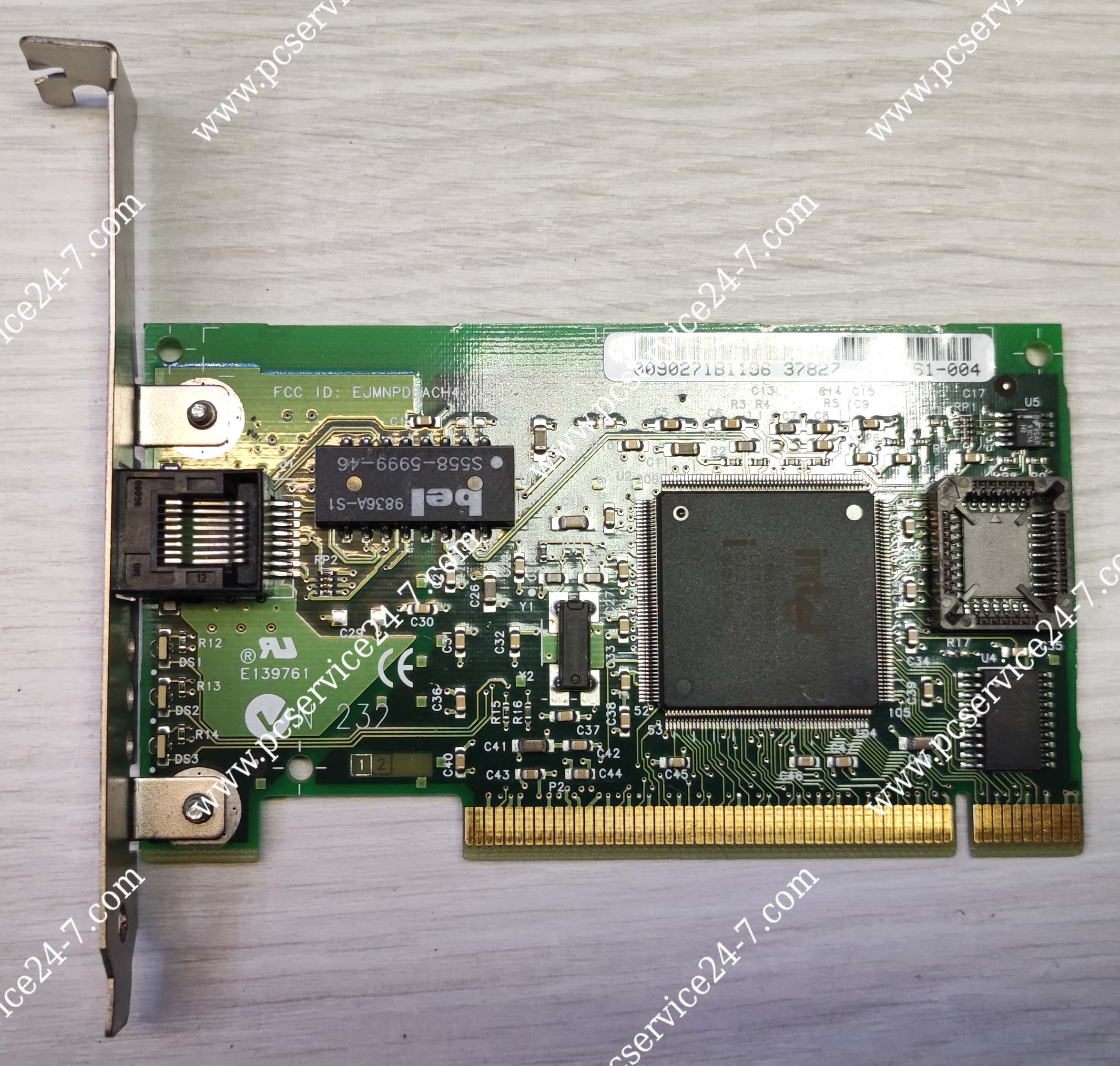
Technically, the “Management Adapter” designation (indicated by the FCC ID: EJMNPD8ACH on the board) meant this card was smarter than your average NIC. It supported Wake-on-LAN (WoL) via the 3-pin header (usually located near the top edge) and was fully compatible with Intel’s Wired for Management (WfM) baseline. This allowed IT managers to remotely wake, update, or troubleshoot a PC over the network—a feature that felt like pure sorcery in the late 90s.
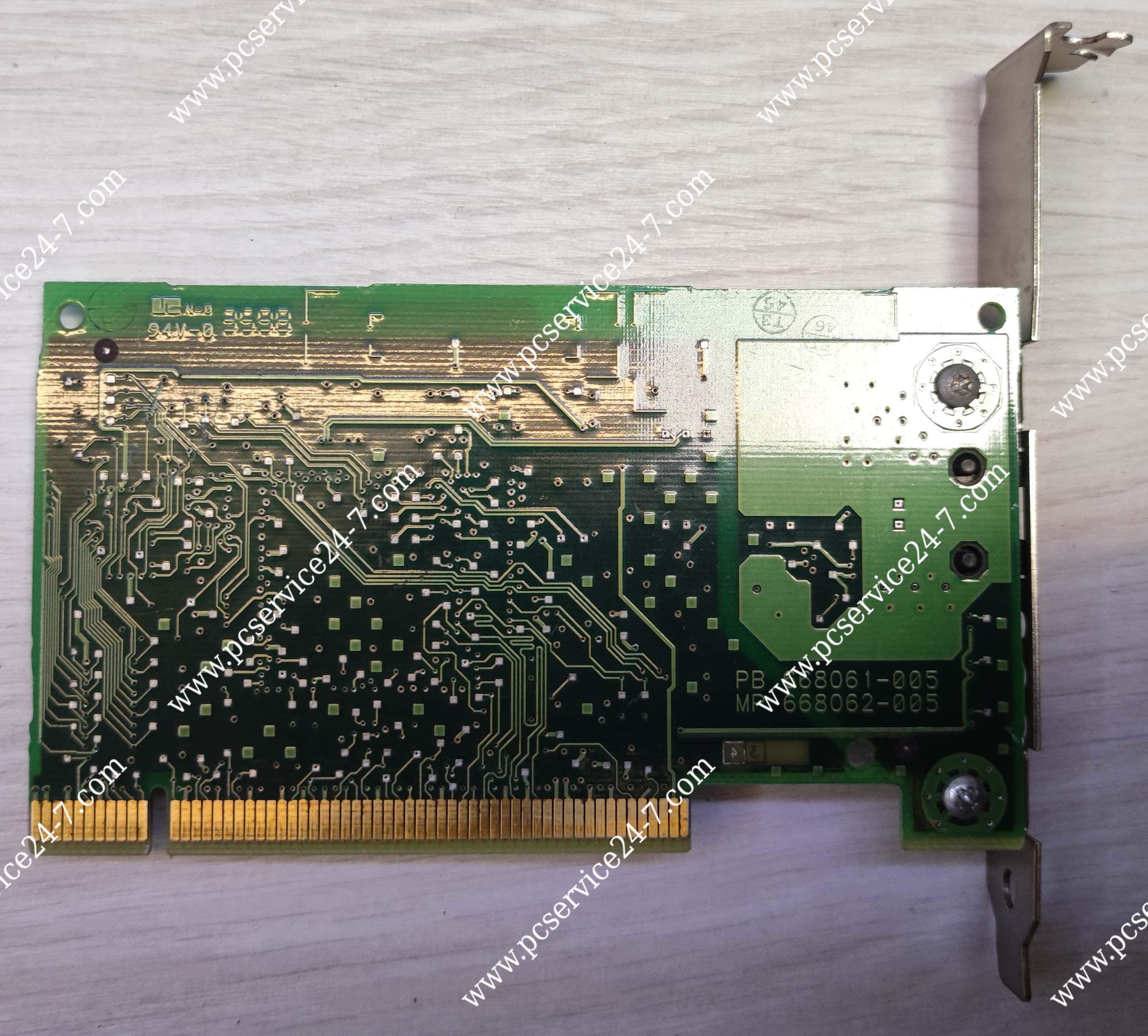
Architecturally, the card is built to be “lean.” You can see the large Intel controller chip doing the heavy lifting, the “bel” magnetics module (that black block near the port) handling signal isolation, and the empty PLCC socket. That socket was specifically for an optional Flash/Boot ROM, allowing the computer to boot directly from a network server (PXE) without needing a local hard drive.
Era Context
-
The “Anti-Realtek”: In the early 2000s, there was a massive performance gap between “soft-NICs” (cheap cards that used the CPU for processing) and “hard-NICs” like this Intel PRO/100+. Gamers and server admins avoided the cheap cards because they could cause “lag” or high CPU usage; the Intel card was the “set it and forget it” solution.
-
Driver Heaven: Intel’s PROSet drivers were legendary. They provided a unified interface for all Intel cards, allowing for advanced features like “Teaming” (combining two cards for double speed) and detailed cable diagnostics.
-
Operating System: The backbone of Windows NT 4.0, Windows 2000, and Windows XP. It was so standard that almost every OS from 2000 onwards included the drivers “in the box.”
-
Industrial Survival: Because of their incredible reliability, these cards are still frequently found in industrial machines and legacy medical equipment that hasn’t been turned off since the Y2K bug was a headline.
Component Gallery
Quick Specs
| Feature | Specification |
| Manufacturer | Intel Corporation |
| Model | EtherExpress PRO/100+ (PILA8460B family) |
| Interface | 32-bit PCI |
| Chipset | Intel 82558 / 82559 |
| Speed | 10/100 Mbps (Auto-Sensing) |
| Duplex | Full-Duplex Support (Up to 200 Mbps) |
| Connector | 1x RJ-45 |
| Special Features | Wake-on-LAN (WoL), PXE Boot ROM Socket, Adaptive Technology |
| Era | ~1998–2002 |